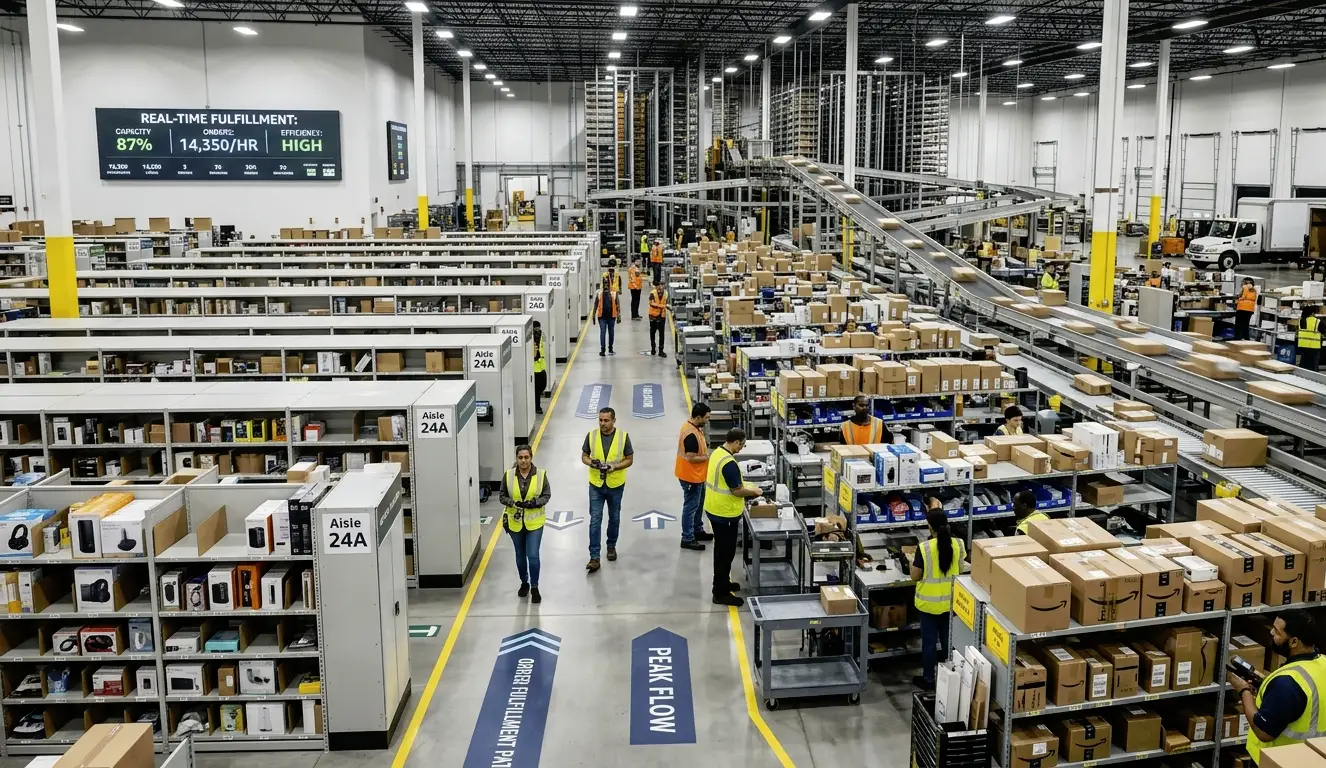
Managing sudden, massive order spikes is the ultimate test of an online retailer’s operational health. When daily transaction volumes multiply over the weekend, minor inefficiencies in your fulfillment pipeline quickly become catastrophic logjams.
Merchants who survive and thrive during these multi-day volume surges do not just work faster. They systematically rebuild their fulfillment architecture to handle extreme throughput long before the peak season arrives.
Success under pressure comes down to eliminating wasted motion. If your warehouse floor plan forces pickers to crisscross the facility repeatedly, throwing more seasonal labor at the problem will only create crowded aisles and worse bottlenecks. True scalability requires a tight marriage between smart physical storage layouts and real-time data orchestration.
Redesigning Physical Layouts for Maximum Velocity
Maximizing throughput requires evaluating exactly how inventory moves from the receiving dock to the final shipping carrier. Retailers are increasingly moving away from massive, centralized hubs in favor of localized facilities and distributed fulfillment networks that position stock closer to major consumer populations. Within the four walls of the warehouse, static shelving is no longer sufficient for high-volume piece-picking.
Dynamic slotting represents the most impactful operational adjustment a warehouse manager can make ahead of a known traffic surge. By placing your highest-velocity SKUs nearest to the packing stations and keeping them at waist height, you minimize travel time and physical strain for your floor personnel.
This level of operational agility relies heavily on smarter e-commerce storage designs that prioritize modular, high-density shelving configurations over rigid layouts. When your physical storage environment mirrors your real-time sales velocity, fulfillment speeds accelerate naturally without adding stress to your team.
Optimizing the floor plan also requires deploying specific, specialized picking strategies tailored directly to your current order profiles. Rather than having a single picker fulfill one order at a time, high-volume operations achieve immense success by transitioning to batch or zone picking.
You should establish specific layout rules to keep your warehouse floor organized when order volumes peak:
- Batch picking zones designed to consolidate multi-item orders in a single pass
- Clear one-way travel lanes that completely eliminate aisle congestion during peak shifts
- Dedicated kitting stations positioned entirely away from the main traffic walkways
Maximizing Data Velocity and Predictive Allocation
Software synchronization must keep pace with your physical warehouse enhancements, or your operational friction will simply move from the floor to the digital screen. Integrating a robust warehouse management system ensures that inventory counts update instantly across all your digital sales channels. This instant visibility prevents the absolute nightmare scenario of overselling out-of-stock items, which destroys customer trust and spikes your customer support ticket volume during your busiest sales windows.
Forward-thinking brands now leverage advanced forecasting models to analyze historical shopping data, emerging consumer trends, regional weather patterns, and marketing spend to forecast precise inventory needs. This deep data analysis allows you to position the exact SKUs your customers want in the right regional hubs well before they ever press the checkout button. When you remove the guesswork from inventory placement, your entire supply chain runs with greater predictability, shielding your bottom line from unexpected market shifts.
Automating the flow of information also allows for smarter batch processing of orders as they stream into your system. Grouping orders by single-item profiles or specific shipping carriers allows your packing teams to work like assembly lines, drastically cutting down the time it takes to get a package out the door.
Diversifying Carrier Networks for High-Volume Resilience

Relying on a single shipping carrier during an unprecedented surge in volume is an operational gamble that often results in delayed deliveries and inflated surcharges. When peak seasons stress national logistics infrastructure, primary carriers routinely enforce strict volume caps or experience localized sorting delays. Smart retailers mitigate this vulnerability by integrating multi-carrier shipping software that automatically rates and routes packages based on real-time regional performance.
Transitioning to a blended carrier model allows your warehouse to dynamically shift volumes between traditional postal services, regional parcel networks, and same-day crowd-sourced delivery fleets. This structural flexibility prevents single points of failure at your loading docks when a specific carrier experiences a system outage or a trailer shortage. By spreading your shipping volume across multiple specialized partners, you protect your delivery promises and gain significant leverage to negotiate better peak-season rates.
Future-Proofing Backend Infrastructure
Scaling your retail operations to survive massive order volumes requires a permanent commitment to infrastructure optimization. Temporary quick fixes and adhesive-tape solutions will fall apart when thousands of concurrent orders hit your system. Upgrading your physical space and digital backend protects your brand reputation, meets strict carrier deadlines, and maintains your profit margins during the highest-stress shopping days of the year.
Ensuring long-term resilience requires continuous evaluation of how your technology scales. Explore our site for more insights into e-commerce, health and beauty, fashion trends, and so much more besides.