If you have spent any time researching hair systems, you have probably run into the skin vs lace debate pretty quickly. It is one of the most common questions men have when they are choosing their first system, and honestly, it is also one of the most important. The base material affects how the system looks, how it feels, how long it lasts, and how much work it takes to maintain. Getting this decision right from the start saves you a lot of trial and error.
A good skin base hair system and a quality lace base system can both look completely natural when they are well matched and properly applied. But they are built differently, they wear differently, and they suit different types of men. This article breaks both options down honestly so you can make an informed choice rather than guessing and hoping for the best.
What a Skin Base Hair System Actually Is
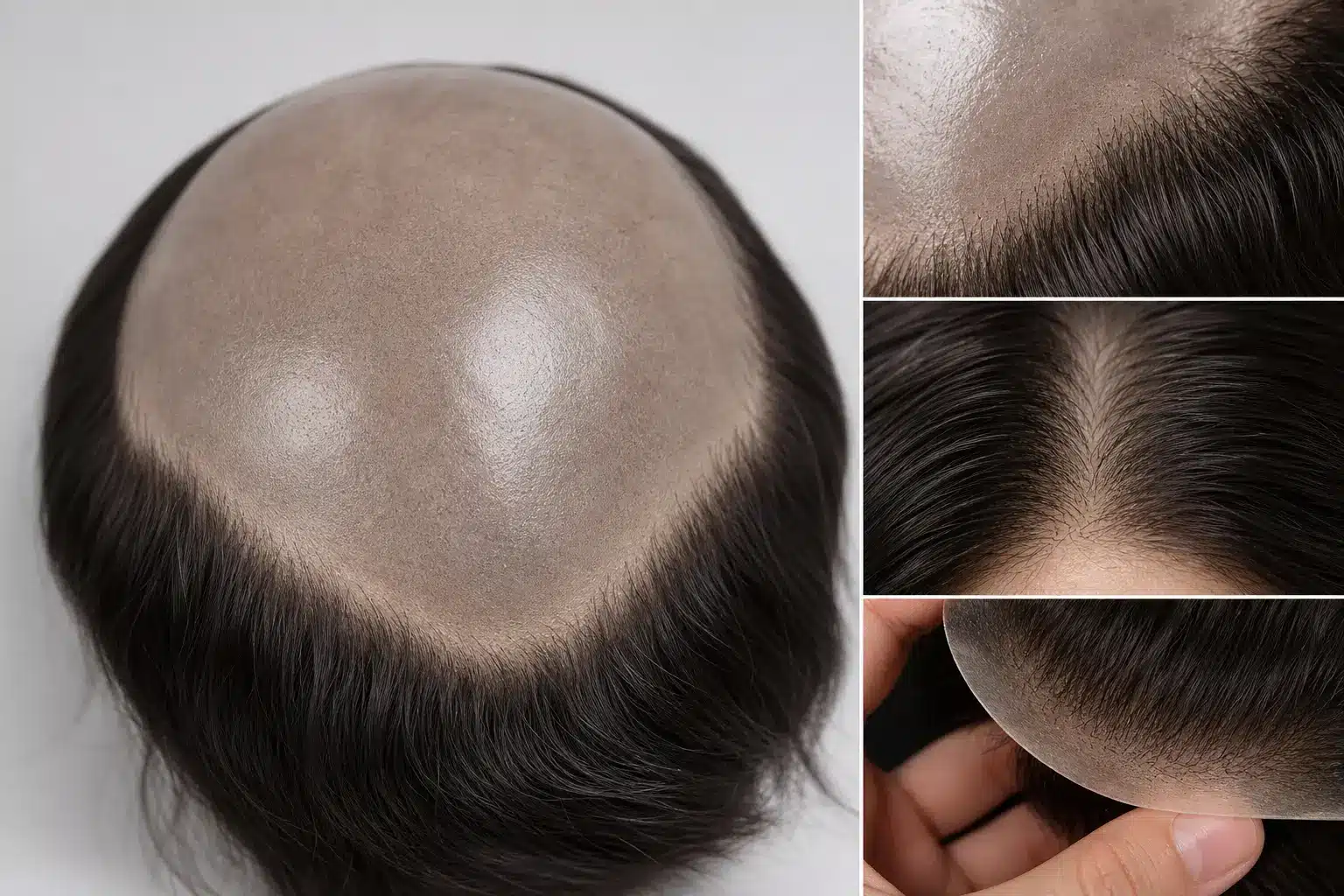
A skin base, sometimes called a poly base or thin skin base, is made from a thin layer of polyurethane material that mimics the appearance of your scalp. The hair is injected directly into the base rather than tied or knotted, which creates a look where the hair appears to grow straight from the skin rather than from a visible foundation.
The most advanced skin bases available today are as thin as 0.03mm. At that thickness the base is genuinely transparent against the scalp, which means the hairline and parting look as natural as possible. When you look at a well-made skin base system on someone’s head, you are not looking for a hairpiece. You are looking at what appears to be a natural scalp with hair growing from it.
Skin bases are available in different thicknesses depending on what you need. Ultra-thin versions at 0.03mm to 0.06mm deliver the most undetectable appearance but require more careful handling. Slightly thicker skin bases in the 0.08mm to 0.10mm range offer better durability for men who want a longer-lasting system without sacrificing too much in terms of natural appearance.
What a Lace Base Hair System Actually Is
A lace base is built on a fine mesh material, either French lace or Swiss lace, into which individual hairs are hand-tied one by one. The mesh is thin and breathable, and when it is applied correctly to the scalp it becomes virtually invisible, allowing the individual hairs to appear as though they are growing directly from the skin.
Swiss lace is the finer and softer of the two, which makes it the more natural-looking option at close range. French lace is slightly more durable and holds up better over time, making it a practical choice for men who prioritise longevity alongside appearance.
The hand-tied construction of lace bases means each hair is individually knotted into the mesh, which creates a very realistic movement pattern. The hair lies flat and moves naturally because each strand has some degree of independent movement rather than being held in a fixed direction by the base material.
How They Compare on Appearance
Both base types can look genuinely undetectable when they are the right match for the wearer. But they achieve that natural look in slightly different ways, and the result at close range is not identical.
Skin bases excel at replicating the appearance of a natural scalp. The transparent polyurethane material between the hairs looks like skin, which means the parting and hairline have a very realistic scalp-like quality. For men who style their hair in ways that expose the parting or scalp, a skin base often looks more convincing than lace because the material between the hairs is genuinely skin-toned and scalp-like.
Lace bases have a slight advantage in hairline naturalness when the lace is very fine and properly blended. The sheer mesh disappears against the skin and the individual hand-tied hairs create a hairline that looks like natural growth rather than a defined edge. For men whose priority is a completely undetectable perimeter, fine Swiss lace does this exceptionally well.
In practice the difference at normal viewing distance is minimal for both well-made options. The distinction matters more at very close range, which is relevant if you spend time in situations where people are physically close to you.
How They Compare on Durability
This is where the two base types diverge most clearly, and it is a factor that genuinely affects which one makes more practical sense for your life.
Skin bases, particularly the ultra-thin varieties, are more delicate than lace. The polyurethane material can tear if handled roughly during cleaning or reattachment, and repeated adhesive removal puts stress on the base over time. A very thin skin base typically lasts around one to three months with regular wear depending on how it is maintained and how active the wearer is.
Lace bases, especially French lace, hold up better to daily wear and the mechanical stress of regular maintenance. A well-maintained lace system can last several months longer than a comparable thin skin system. The trade-off is that lace requires more careful application and is more susceptible to tearing if it catches on something or is handled roughly at the perimeter.
For men who are hard on their hair systems, whether through sport, manual work, or simply a fast-paced daily routine, a slightly thicker skin base or a French lace option will give better longevity than the most delicate ultra-thin skin varieties.
How They Compare on Breathability and Comfort
If you live somewhere warm, or you are physically active and tend to run hot, breathability matters more than it might seem before you have worn a hair system through a hot summer.
Lace bases have a clear advantage here. The open mesh construction allows air to circulate between the base and the scalp, which reduces heat buildup and keeps things more comfortable through extended wear. Men who wear lace systems consistently report that they feel lighter and less noticeable on the scalp compared to solid bases.
Skin bases, being a solid material rather than a mesh, trap more heat against the scalp. The thinner the base the less pronounced this effect is, but it is still a consideration. For men in cooler climates or those who spend most of their time in air-conditioned environments, the breathability difference is less of a concern. For men in hot climates or those who exercise regularly while wearing their system, lace is usually the more comfortable daily choice.
How They Compare on Maintenance
Maintenance is where a lot of men make their final decision, because the effort involved in keeping a hair system looking good is a real part of the ownership experience.
Skin bases are generally more straightforward to clean and reattach. The solid base makes tape and adhesive application cleaner and more predictable. Removing adhesive residue from a smooth polyurethane surface is easier than cleaning it from a mesh. For first-time wearers who are still building their maintenance routine, many find that skin bases have a gentler learning curve.
Lace bases require a bit more precision during application to ensure the mesh lies flat and the perimeter blends cleanly. Cleaning requires care to avoid stressing the knots that hold the individual hairs in place. Over time lace knots can loosen slightly, which affects the appearance, so keeping on top of maintenance matters more with lace than with skin.
Which One Should You Actually Choose
The honest answer is that it depends on what matters most to you and what your daily life looks like.
If your priority is the most natural scalp appearance at close range, and you are willing to handle the base with care and replace it more frequently, a thin skin base is likely your best option. It delivers a genuinely undetectable look that is hard to match.
If breathability, durability, and comfort through active wear are higher on your list, a lace base suits you better. The slightly longer lifespan and better airflow make it a more practical choice for men with active lifestyles or those in warmer environments.
If you genuinely cannot decide, a hybrid system combines lace at the front for a natural hairline with a skin or mono back section for durability. It is a practical middle ground that many men find works well as both a first system and a long-term choice.
The best way to find out which works for you is to try one. Most men who commit to a well-made system in either base type are pleased with the result once they get past the initial adjustment period. The base material is important, but getting the hair colour, density, and style right matters just as much to the final outcome.