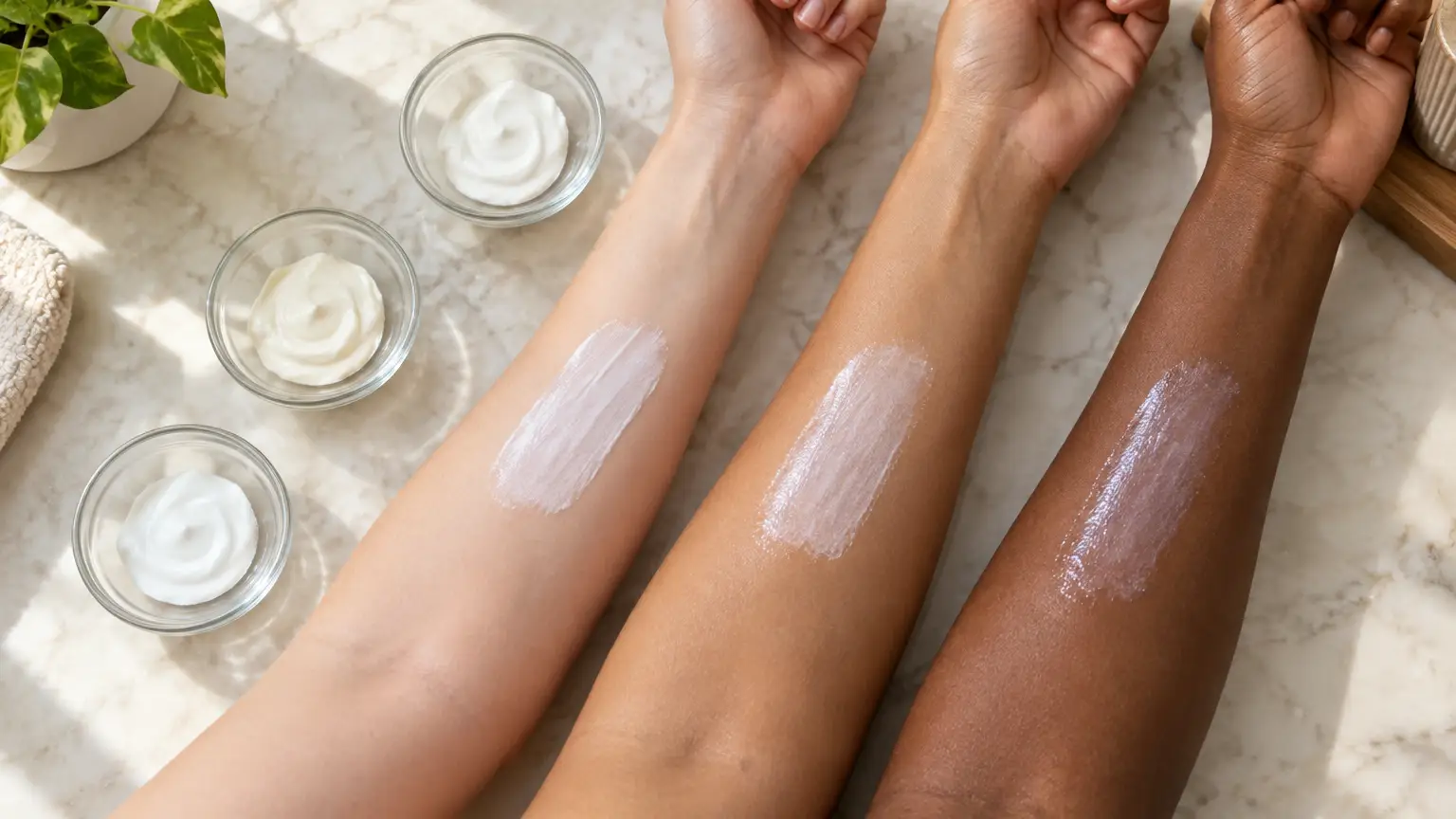
You’ve probably seen it happen. Someone recommends a sunscreen, calls it their holy grail, and insists it disappears into the skin like magic. You buy the same product, apply it in front of the mirror, and suddenly you’re wondering whether you’ve accidentally put on face paint.
Same sunscreen. Completely different experience.
It’s one of the most frustrating things about shopping for skincare. A formula that looks invisible on one person can leave a noticeable white cast on another. Something that feels lightweight to your friend might feel heavy or greasy on your face.
And no, it doesn’t necessarily mean you’re applying it incorrectly.
The way sunscreen looks and feels depends on more than the SPF number printed on the bottle. Your skin tone, the product’s ingredients, its texture, and even how the formula is put together can influence the experience.
So why does one sunscreen work beautifully for some people and disappoint others?
The White Cast Nobody Asked For
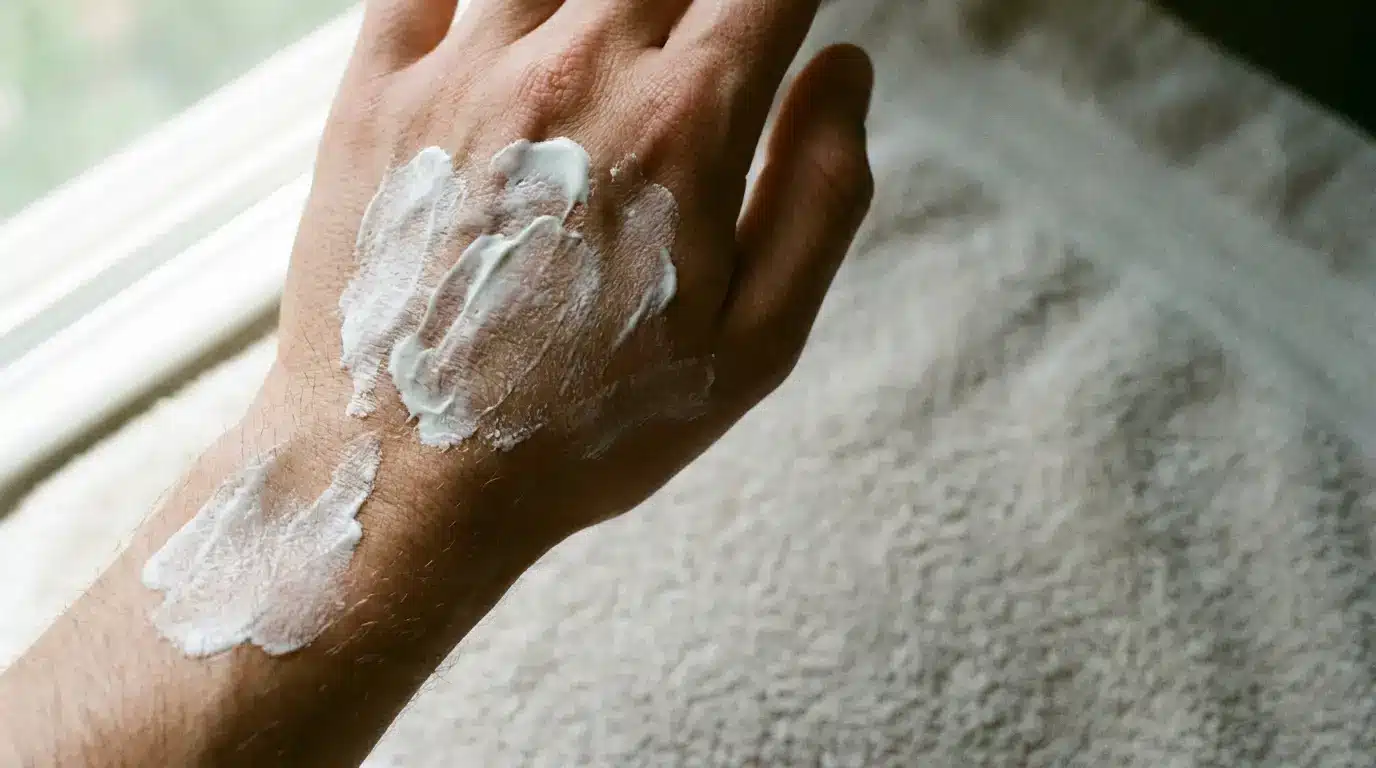
Let’s start with the most obvious difference: white cast.
You’ve probably heard the term, especially if you’ve ever tried a mineral sunscreen. It’s the pale or grayish residue that can remain visible after application.
Mineral sunscreens use zinc oxide, titanium dioxide, or both as UV filters. These ingredients help protect the skin from ultraviolet radiation, but they can also scatter visible light, contributing to that familiar whitish appearance.
How noticeable the cast looks depends on the finished formulation and the person’s skin tone. A product that seems almost invisible on lighter skin may appear considerably more obvious on deeper complexions.
That difference has real consequences for the user experience.
Nobody wants to choose between wearing sunscreen and feeling comfortable with how their skin looks. If a product consistently leaves someone looking gray or chalky, they’re less likely to enjoy applying it every morning.
Fortunately, mineral sunscreen formulations have evolved. Manufacturers can work with different particle characteristics, dispersions, coatings, and other formulation ingredients to improve appearance and application.
But there’s no universal guarantee that a particular mineral sunscreen will look invisible on every complexion.
That’s why trying a product on your own skin remains so valuable.
Why Texture Matters More Than We Admit
Now imagine two sunscreens with the same SPF rating.
One feels like a light moisturizer. The other takes several minutes to spread, feels sticky around the hairline, and leaves your face looking unusually shiny.
Both might provide the protection stated on their labels when used correctly. But which one would you actually want to wear every day?
Texture matters because sunscreen is something we need to use consistently, not simply purchase and leave on a bathroom shelf.
Some people prefer a rich cream, particularly when their skin feels dry. Others want a fluid or gel-like texture that feels less noticeable throughout the day.
Climate and personal preferences can also influence how a product feels. A heavier formula that seems comfortable during winter may feel less appealing on a humid summer afternoon.
These differences don’t automatically make one sunscreen better than another.
They simply show why the experience of wearing a product matters alongside its tested protection.
The SPF Number Doesn’t Tell You Everything
When comparing sunscreens, most of us look at the SPF first.
SPF 30, SPF 50, SPF 50+. The number is easy to understand, or at least it seems that way.
But SPF doesn’t tell us whether a sunscreen will feel oily, leave a cast, spread easily, or sit comfortably on the skin.
According to the FDA’s explanation of sunscreen labels, SPF primarily describes protection against the ultraviolet radiation responsible for sunburn. Broad-spectrum labeling indicates that the product also meets requirements for UVA protection.
Those are important details, but they describe protection rather than cosmetic elegance.
Two products can have the same SPF while feeling completely different during application.
The American Academy of Dermatology recommends choosing a broad-spectrum, water-resistant sunscreen with SPF 30 or higher. Beyond those essentials, personal comfort and suitability are useful considerations.
After all, a sunscreen’s benefits depend on actually wearing enough of it and reapplying it when necessary.
What’s Happening Inside the Formula?
Here’s where things get interesting.
Sunscreen isn’t simply a UV-filter ingredient poured into a bottle. It’s a carefully developed formulation containing ingredients that help create the product’s texture, stability, spreadability, and overall performance.
Consider zinc oxide.
It’s widely used as a mineral UV filter, but how it is incorporated into a sunscreen matters. The particles need to be distributed appropriately throughout the formulation, and the surrounding ingredients influence how the product spreads and feels.
That’s why the development of zinc oxide sunscreen ingredients and dispersions is relevant to the way modern mineral sunscreens are formulated. The choice of material is only one part of achieving a finished product that provides tested UV protection and an acceptable appearance.
Looking at different mineral sunscreen formulation examples also helps illustrate how ingredients can be combined in different product formats, from creams to lighter-feeling applications.
This doesn’t mean a particular ingredient automatically guarantees a transparent finish. The final result depends on the complete formulation and its testing.
For consumers, the practical takeaway is simple: two sunscreens containing zinc oxide can look and feel surprisingly different.
The ingredient list tells you what’s inside, but it can’t fully describe the experience of applying the product.
Your Skin Tone Changes the Experience
One of the biggest problems with sunscreen recommendations is that they’re often treated as universal.
Someone posts a glowing review, shares a photograph, and describes a formula as completely invisible.
But invisible on whom?
Skin tone plays a major role in how certain products appear. A slight whitish residue might be barely noticeable on one complexion and immediately visible on another.
This is particularly important for mineral sunscreens, where visible residue has historically been a common complaint.
Tinted sunscreens can offer an alternative. Some contain pigments that help reduce the appearance of white cast, although finding a suitable shade can present its own challenges.
The American Academy of Dermatology also explains that tinted sunscreens containing iron oxides can provide additional protection against visible light, which may contribute to dark spots and hyperpigmentation.
Of course, a tint only works cosmetically if it suits your complexion.
A shade that looks natural on one person may appear too orange, too pink, or too dark on someone else.
That’s why inclusive shade options and realistic product demonstrations matter. Sunscreen shouldn’t require people to compromise their appearance to protect their skin.
Why Applying Less Isn’t the Answer
Here’s a situation many people recognize.
You find a sunscreen that looks slightly white when applied generously. So you use a smaller amount, blend it carefully, and suddenly it looks much better.
Problem solved?
Not quite.
The SPF displayed on a sunscreen label is determined through standardized testing using a specified application amount. Applying substantially less than the tested amount can reduce the protection you receive.
The American Academy of Dermatology’s application guidance emphasizes using enough sunscreen to cover exposed skin and reapplying approximately every two hours when outdoors, as well as after swimming or sweating.
So if a sunscreen only looks acceptable when you apply a tiny amount, it may not be the right product for you.
A better approach is to find a formula you can comfortably apply in the recommended quantity.
That might mean experimenting with different textures, trying a tinted option, or choosing a product specifically developed to minimize visible residue.
The goal isn’t to make sunscreen disappear by using less of it.
It’s to find one that works for your skin without compromising how you use it.
Stop Expecting One Sunscreen to Work for Everyone
We all have different preferences when it comes to skincare.
Some people enjoy a dewy finish. Others prefer something matte. One person wants a sunscreen that doubles as a moisturizer, while another prefers a product that feels almost weightless.
Skin tone adds another layer to those preferences.
And that’s perfectly reasonable.
A sunscreen doesn’t have to become everyone’s favorite to be a good product. It needs to provide appropriate, tested protection and be suitable for the person using it.
When shopping, it helps to look beyond enthusiastic reviews. Pay attention to demonstrations on skin tones similar to yours, consider your preferred texture, and check the protection claims on the label.
If possible, try a sample before committing to a full-size product.
Most importantly, don’t assume that a sunscreen that looks wrong on your skin means there’s something wrong with your skin.
Sometimes it’s simply the wrong formula for you.
The Best Sunscreen Is One You’ll Actually Wear Properly
Sunscreen has come a long way from the thick, chalky creams many of us remember. Today, there are more textures, finishes, and formulations to choose from.
But that variety also means finding the right product can take some experimentation.
The SPF number matters. Broad-spectrum protection matters. So does applying enough sunscreen and reapplying it as directed.
And the way the product looks and feels matters, too.
Because a sunscreen that looks wonderful in an advertisement isn’t necessarily going to behave the same way on your face.
Your skin tone, preferences, and daily routine deserve consideration.
The next time someone tells you they’ve found the perfect sunscreen, there’s only one question worth asking.
Perfect for whose skin?