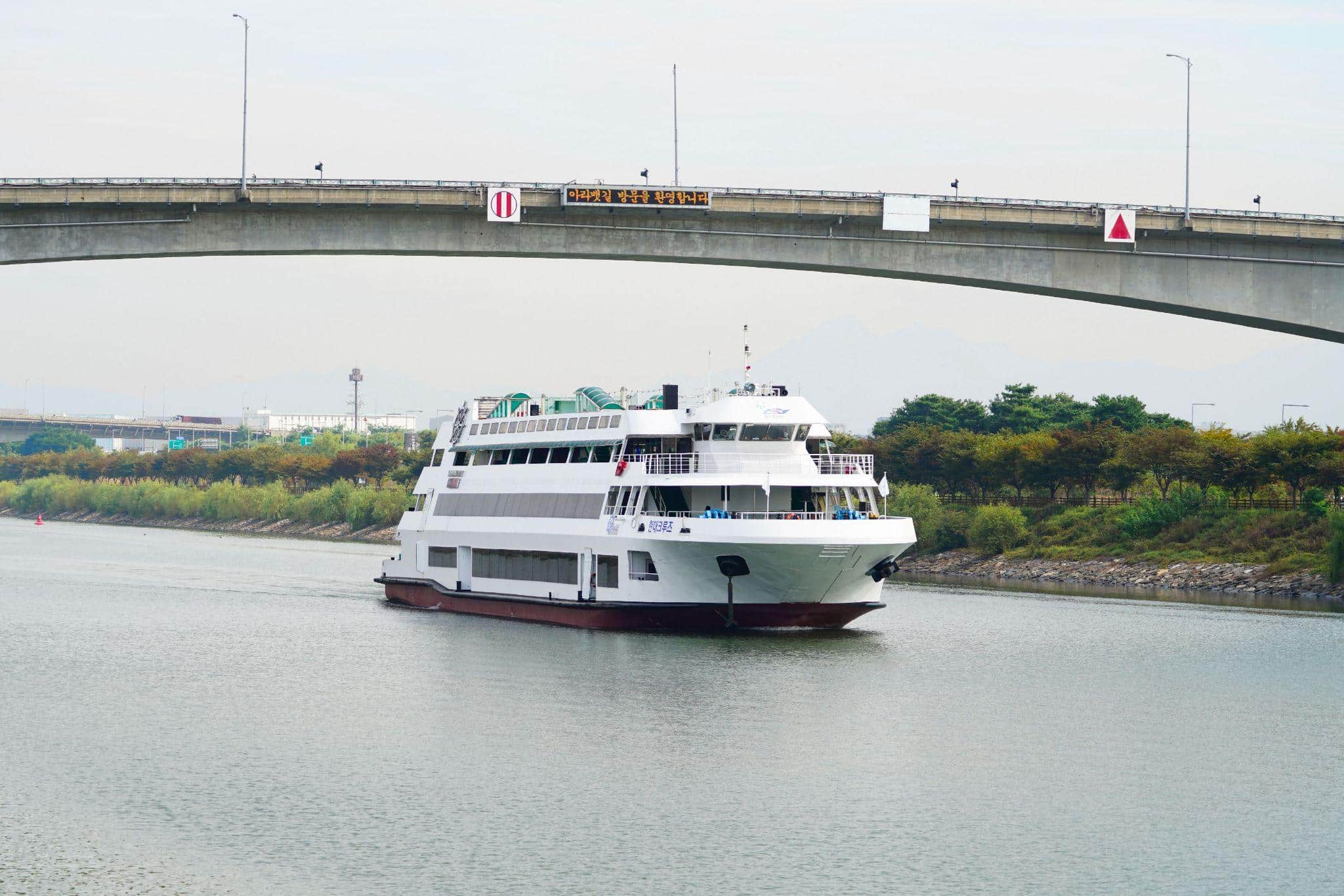
There exists a specific form of historical understanding available only to travelers who move at the speed of water.
Watching the Danube corridor unfold between Vienna and Budapest from a vessel’s deck produces something fundamentally different from the knowledge acquired by flying into airports and taking taxis between museums, regardless of how excellent those museums are.
The Wachau Valley preserves in an intact and visible form many traces of its evolution since prehistoric times, including architecture such as monasteries, castles, and ruins, as well as towns and villages that reveal their agricultural history. The river itself served for centuries as the boundary successive empires used to define and defend their limits.
Dürnstein Castle, where King Richard I of England was held captive by Leopold V, Duke of Austria, remains visible from the water as a ruined fortress above the river.
Melk Abbey sits on a rocky outcrop overlooking the Danube river at the edge of the Wachau valley, a Benedictine abbey that has occupied this strategic position since 1089. The landscape changes as you move downstream from Austria into Slovakia and then Hungary. The river widens, the terrain flattens, and the architectural vocabulary shifts from Habsburg Baroque to something carrying more Ottoman and Eastern inflection, revealing the different historical pressures that shaped each stretch of the corridor.
This is the central truth that river travel delivers: the Danube between Vienna and Budapest functions as a single historical document whose narrative can only be properly read from the water.
The Format Question and What US Operators Are Bringing to the Danube
The continuous visual relationship with landscape that river travel provides cannot be replicated by land-based itineraries covering the same geography. Sleeping on the river means waking already inside the landscape rather than arriving at it through urban friction and hotel check-ins.
The ability to move between cities without logistical interruption maintains an experiential continuity that trains and cars cannot sustain. Vienna seen from the Danube reveals a different city than Vienna seen from the Ringstrasse. Budapest viewed from mid-river at night delivers an experience of the city’s architectural ambition and geographic drama that no street-level perspective fully captures.
A meaningful shift has occurred in how US travelers access this corridor.
There’s a new standard for river exploration with thoughtfully crafted itineraries and immersive access to cities, villages, and landscapes, offering deeply connected experiences to European culture.
This creates an onboard experience that feels meaningfully different from the traditional European river product and attracts US travelers seeking the historical depth of the Danube corridor without the formal atmosphere that has historically characterized European river cruising.
Danube itineraries explore cities like Vienna, Bucharest, Budapest, Bratislava, and Belgrade, wandering through the scenic waters of the Wachau Valley.
The positioning of the historical landscape as the central experience rather than a backdrop for onboard programming represents a fundamental philosophical difference in how this journey can be structured.
Vienna From Water Level and What the Ringstrasse Reveals
The Ringstrasse is a 5.3 kilometer circular grand boulevard serving as a ring road around Vienna’s historic city center, built where the city walls once stood, constructed along with grand buildings on either side during the second half of the 19th century.
Approaching and departing Vienna by water reveals the relationship between the Ringstrasse and the river that the standard tourist experience misses entirely.
The Ringstrasse and its accompanying structures were envisioned as a testament to the grandeur and glory of the Habsburg Empire. The Natural History Museum located on the elegant Ringstrasse holds extensive collections that make dramatically more sense after traveling through the Wachau Valley and the Austrian stretch of river.
Understanding the empire’s physical extent from a moving vessel gives emotional context to the scale and formality of the imperial apartments whose dimensions otherwise feel abstract.
The Wachau Valley as UNESCO Landscape and Why the River Is the Right Way to See It
The Wachau, where the Danube flows between centuries-old steep vineyards, merges spectacular nature with history and produces Riesling and Grüner Veltliner on wine terraces alongside celebrated Wachau apricots. The apricot orchards cultivated on terraced slopes since medieval times remain visible from the water in ways no road journey through the valley fully replicates.
Dürnstein Abbey features a baroque blue-and-white church tower that has become a defining symbol of the town and one of the most stunning baroque structures in the Wachau Valley. The village of Dürnstein with its distinctive tower appears in virtually every Wachau photograph and sits completely walkable from river moorings.
The perspective from water level shows why these settlements developed where they did and how the river simultaneously enabled commerce and required defensive positioning.
Budapest as Multi-Day Destination Experienced From the River
Budapest sits directly on a major geological fault line where thermal water naturally rises toward the surface, with millions of gallons of mineral-rich water emerging daily from natural springs, creating one of the largest thermal water systems in Europe.
The geological drama of Castle Hill on the Buda side reveals why the first settlement occupied that location rather than the flat Pest bank.
In the 19th century, construction of bridges like the Chain Bridge helped physically and economically link Buda and Pest, reinforcing the city’s identity as a single thriving capital. The Parliament building’s deliberate placement on the riverbank signals the moment in Hungarian national history when it was built.
During the sixteenth and seventeenth centuries, Ottoman rulers expanded existing facilities and constructed traditional dome-topped hamams that left a lasting architectural and cultural mark on the city. The thermal baths represent a specifically Budapest phenomenon whose origins in Ottoman occupation and natural geology make more sense when you understand the city’s position as a former frontier between competing empires.
What the Corridor Teaches About Central European Historical Experience
This stretch of the Danube functioned simultaneously as a highway of civilization and a fault line between competing empires, religions, and political systems for centuries.
The Habsburgs enjoyed the advantage of a compact, riparian heartland bounded on most sides by mountains, though the wider east-central European security environment made defensive tasks extremely difficult. That dual character as connective waterway and defensive boundary produced the extraordinary density of historically significant places along a relatively short river stretch.
The distance between major sites feels different when traveled at water speed rather than highway speed. Time spent watching the landscape carry its own history visibly on its surface produces spatial and temporal understanding unavailable through other formats.
The Understanding You Return With
Travelers who spend concentrated time on this corridor between Vienna and Budapest acquire something beyond information, which remains available in any competent history book. They develop specific understanding of how distances felt to people whose movement occurred at the speed the river permitted.
They witness how terrain determined where fortifications made sense and why certain monastery locations became financially viable for centuries. They observe architectural vocabulary shifting as political and religious influences changed along the river’s course. This represents a fundamentally different category of knowledge than the kind assembled from museum visits and guidebook reading, regardless of how thoroughly those sources are consulted.
The Danube corridor teaches that historical understanding sometimes requires moving through space at the pace that allows the landscape’s own narrative structure to become visible, which means accepting the river’s rhythm rather than imposing contemporary expectations about efficient point-to-point transit.