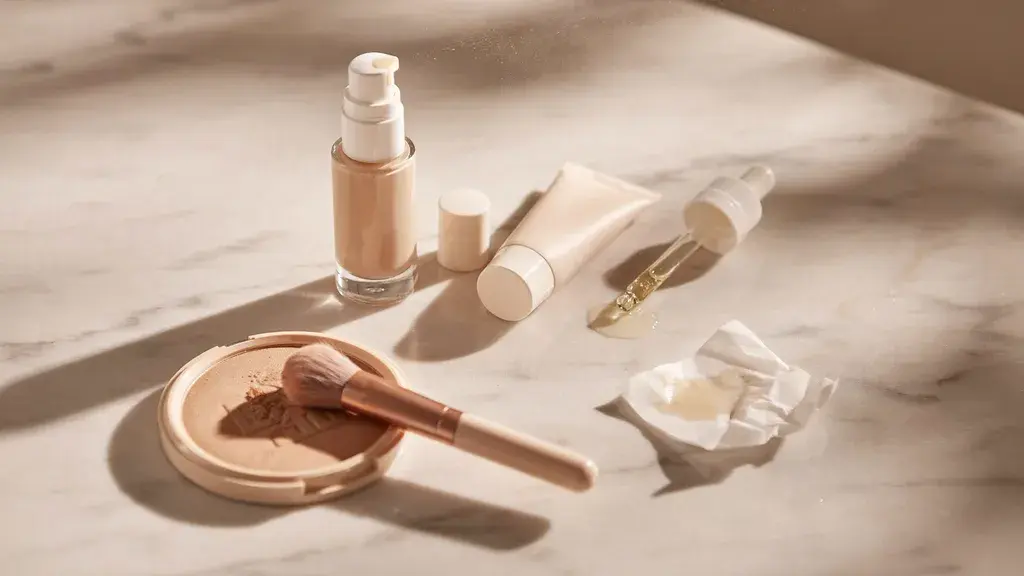
By 11 a.m., the forehead’s gone glossy, the nose is doing its own thing, and the foundation from this morning looks like it gave up an hour ago.
I have tested more mattifying formulas on my own T-zone than I can count, and the pattern is almost always the same. The culprit is the product, not the person applying it.
Most formulas are designed for skin that isn’t fighting a constant oil supply, which is why finding the best makeup for oily skin feels harder than it should be.
The focus here is on the foundations built to handle oil, plus the primers, powders, and sprays that help a matte base actually last, so you end up with a fresh complexion instead of a flat, powdery one.
I picked every product below based on ingredient lists, wear time claims from the brands themselves, and how consistently they show up across current reviews from people who actually deal with oily skin day to day.
Get the formula and finish right, and makeup for oily skin stops being something to manage every twenty minutes and starts just working.
What Makes Makeup Good for Oily Skin?
Oily skin doesn’t play by the same rules as normal or dry skin, and most makeup wasn’t built with that in mind.
Genetics, hormones, stress, and humidity all push oil production into overdrive, which is what leads to shine, enlarged pores, and breakouts in the first place.
The short version: an oil-free, matte or soft matte formula with a lightweight, water- or gel-based texture will outperform almost anything heavier or dewier on oily skin.
One caveat worth knowing here. Terms like “oil free” and “non comedogenic” aren’t officially defined or regulated by the U.S. Food and Drug Administration (FDA).
So they’re a useful signal on a label, not a guarantee. I still check for them first, but I never stop there. I always look at the actual ingredient list before I trust a claim on the front of the bottle.
| Feature | Why It Matters | Look For |
|---|---|---|
| Oil-free / non-comedogenic | Won’t add extra oil or clog already active pores | Labels that specifically say “oil free” or “non comedogenic” |
| Matte or semi matte finish | Absorbs shine instead of sitting on top of it | Formulas labeled matte, soft matte, or shine control |
| Lightweight, water-based formula | Sits closer to the skin instead of sliding on oil | Water- or gel-based bases rather than heavy creams |
| Oil-controlling actives | Helps regulate sebum through the day, not just mask it | Niacinamide, silica, or kaolin clay in the ingredient list |
| Buildable coverage | Lets you add where needed without caking | Medium coverage that layers instead of one thick application |
Niacinamide has the clinical backing to match the marketing, at least for some skin types.
Dermatologist Zoe Diana Draelos and colleagues, in a 2006 study indexed on the National Institutes of Health’s PubMed database, ran two separate trials on topical 2% niacinamide.
In the Japanese cohort, sebum excretion rate dropped significantly after four weeks compared with a placebo group.
In a separate Caucasian cohort, casual sebum levels dropped too, but the excretion rate itself did not change by a statistically significant margin.
That is worth knowing before you assume niacinamide will work the same way for everyone. It is still one of the better backed ingredients in this space, which is why it shows up so often in oil control foundations and primers now.
How I Chose These Picks
I did not just pull these from press releases. Each pick below had to clear three checks before it made the list.
First, the brand had to make a specific, checkable wear time or oil control claim rather than a vague one. Second, the formula had to show up consistently across current reviews from people who described themselves as oily or combination-skinned, not just influencer sends.
Third, I cross-checked ingredient lists against the actives that actually have research behind them, like niacinamide and silica, rather than ones that just sound good on packaging.
A few of these are also ones I have personally tested through a full workday, which is the only real way to know if a matte claim holds up past lunch.
Best Foundations for Oily Skin
These formulas keep coming up in reviews from people with genuinely oily skin, not just marketing copy. Foundation is the product oily skin struggles with most, so it’s worth getting right before primer, powder, or spray.
1. Best Drugstore Pick
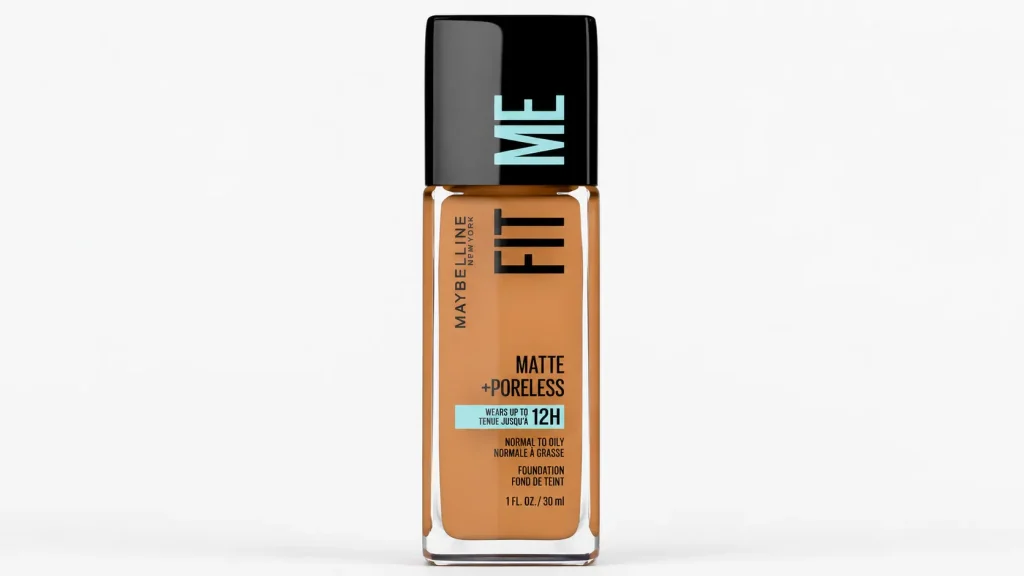
Maybelline Fit Me Matte + Poreless Foundation is a drugstore staple, built with micro powders that blur pores and cut shine throughout the day.
It’s non-comedogenic, offers medium, buildable coverage, and comes in 40 shades, at around $9 a bottle. The oil-free formula controls shine for up to 12 hours, so it holds up well through a full workday.
If you are still figuring out what foundation is actually for, this is a good entry point since it behaves closer to a true foundation than a lightweight tint.
2. Best for a Natural Matte Finish
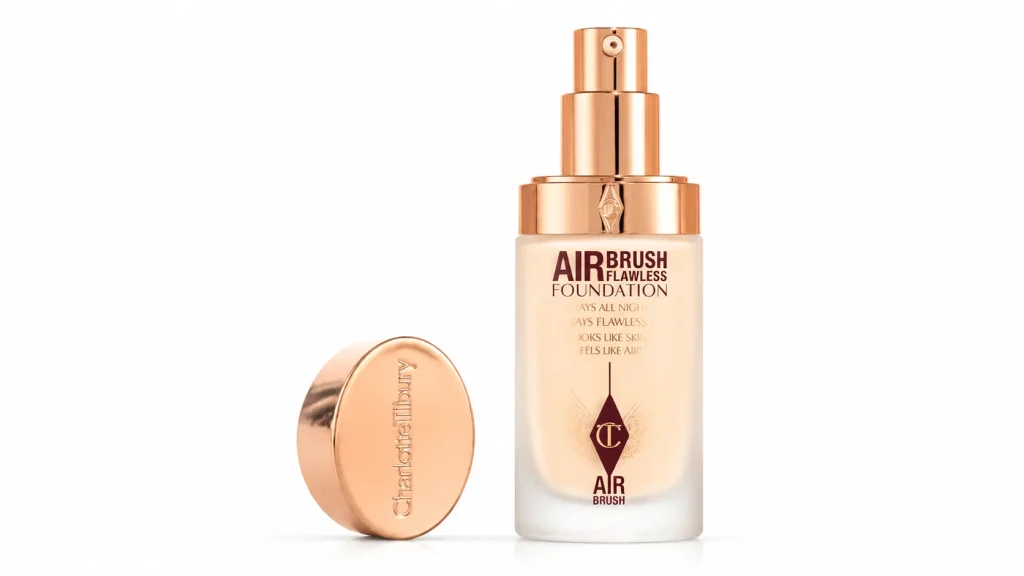
Charlotte Tilbury Airbrush Flawless Longwear Foundation delivers a 3D matte, not flat, finish that blurs pores without looking powdery, and it holds up well under a setting spray.
Its Biomimetic Second Skin Technology absorbs oil and resists sweat, heat, and transfer for up to 24 hours. Available in 44 shades for around $49, it’s oil-free.
It’s also worth reaching for now that Fenty confirmed in July 2026 it is retiring its long-running Pro Filt’r Soft Matte Foundation, which leaves a real gap in the mid-range matte category.
3. Best for All Day Wear
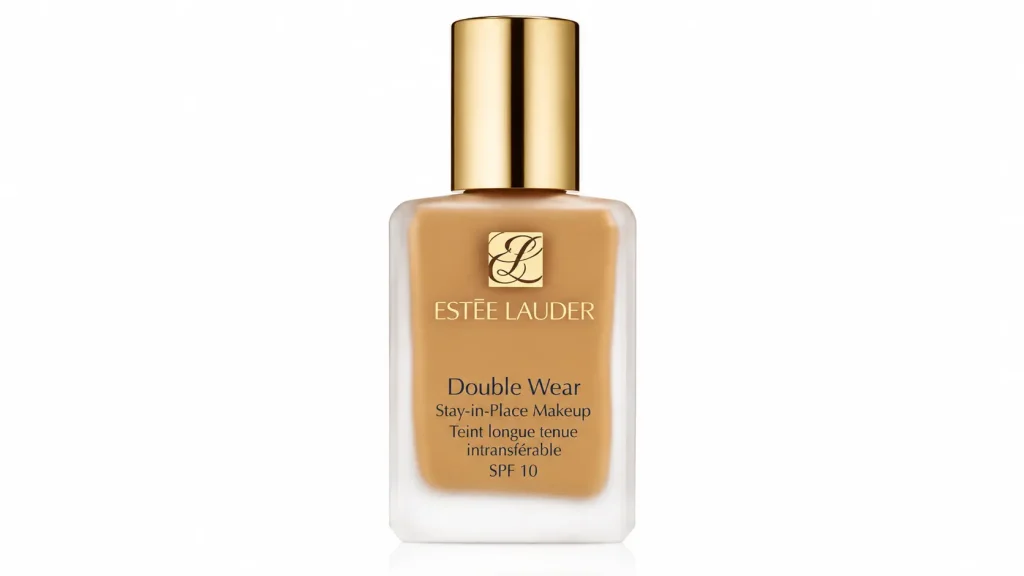
Estée Lauder Double Wear Stay in Place Foundation is the one oily skin veterans keep coming back to. The reformulated version, which launched in February 2026, is rated for up to 36-hour wear, a real step up from the original 24-hour claim.
Its transfer-resistant, matte finish holds through heat and humidity without touch-ups, making it a go-to for long shifts, weddings, or events where reapplying isn’t an option.
It comes in 70 shades at around $48, and the new formula adds niacinamide and hyaluronic acid to the mix so it is not just absorbing oil, it is also working to balance it over time.
4. Best for Acne Prone Skin
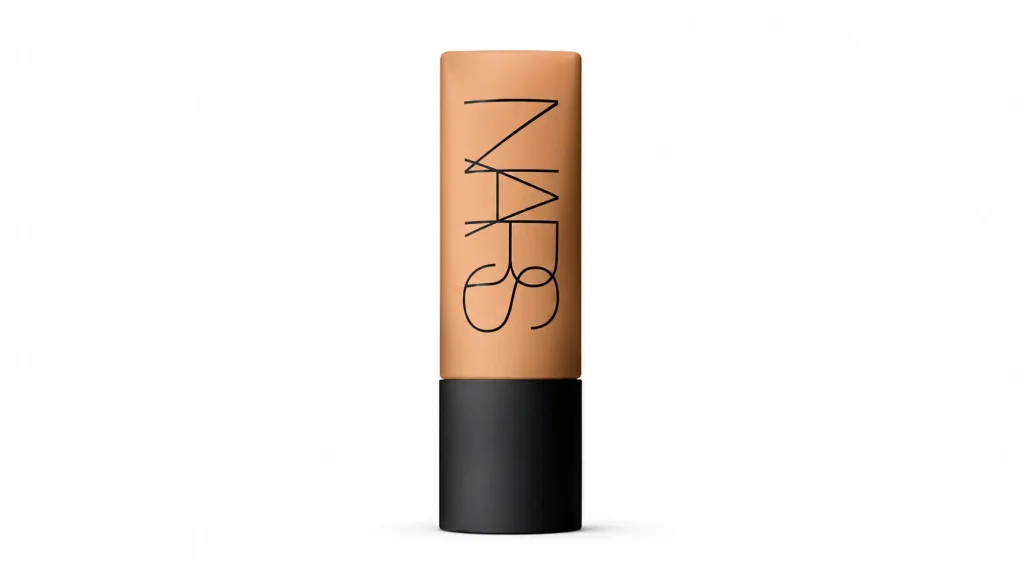
NARS Soft Matte Complete Foundation is oil-free and delivers a natural matte finish rather than a flat, powdery one.
It’s non-acnegenic with 16-hour wear, oxidation-resistant color, and oil-absorbing powders.
It also uses hyaluronic acid so skin doesn’t feel stripped, and current shade counts run up to 34, so check the live product page for your exact match since NARS updates ranges by region.
5. Best Budget-Friendly Option
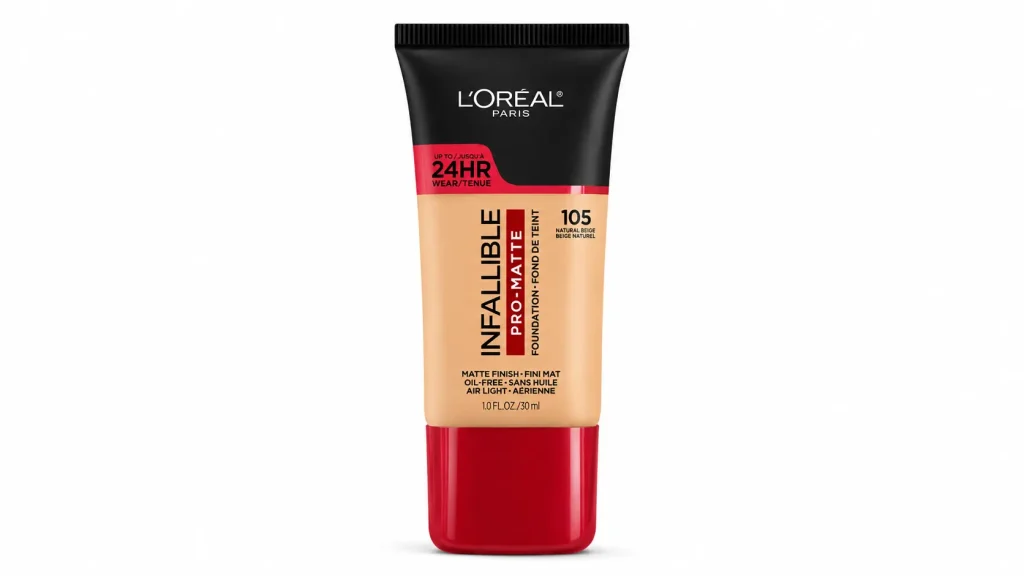
L’Oréal Infallible Pro Matte Longwear Foundation gives a soft matte finish that resists heat and humidity without looking dry.
The air light, demi matte formula offers medium, buildable coverage and up to 24 hour wear, typically under $13 at drugstores. It’s an easy pick for anyone testing the matte foundation waters without a high price tag.
Check the label for “oil free” and a matte or soft matte claim before anything else. The finish description tells you more than the price tag does.
Top Primers for Oily Skin
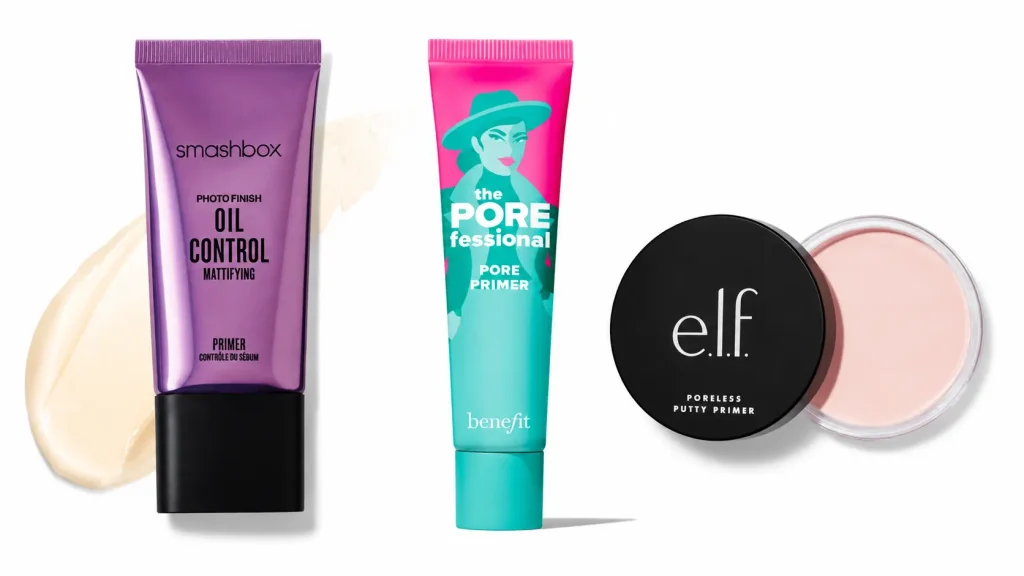
Primer is the step people skip and then wonder why their foundation gave up by 1 p.m. Charlotte, NC-based celebrity makeup artist Caitlyn Dominic recommends targeting a mattifying or pore-blurring primer to the T-zone only, rather than the whole face, since that’s usually where oil concentrates most.
- Mattifying primers are silica- or clay-based and designed to absorb oil before foundation goes on. Smashbox Photo Finish Mattifying Primer is a long-running favorite for this, and it holds up especially well under a heavier, full-coverage base.
- Pore-blurring primers use soft-focus formulas that smooth texture without adding shine. Benefit’s The Porefessional is the one most people mean when they say blurring primer, and it runs around $36.
- Hydrating oil control primers sound like a contradiction, but oily skin that is dehydrated tends to overproduce even more oil to compensate. Milk Makeup’s Hydro Grip Primer pairs hyaluronic acid and niacinamide so it grips makeup and calms oil at the same time, for around $38.
- Budget-friendly oil-absorbing primers like e.l.f. Poreless Putty Primer, around $11, grip foundation in place on oilier zones without the higher price tag.
- Silicone-based primers create a light barrier between skin and makeup, helpful in humid weather or on days you know you’ll be out longer than usual.
A pea-sized amount focused on the T-zone is usually enough. More isn’t better here.
Best Setting Powders for Oily Skin
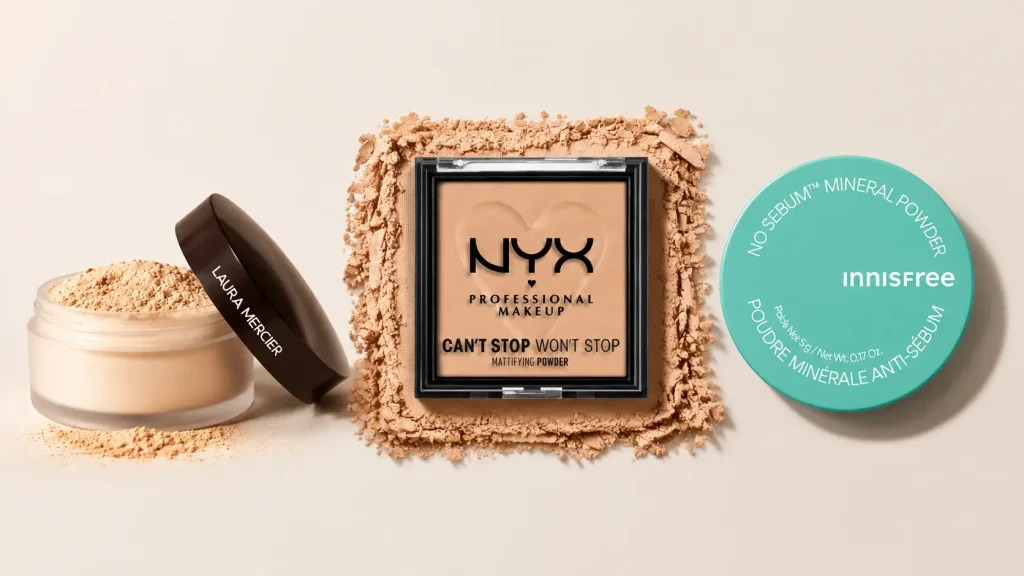
A light dusting on oilier zones while the base is still fresh does most of the work. More than that starts to work against you.
| Powder | Best For | Price |
|---|---|---|
| Laura Mercier Translucent Loose Setting Powder | No added color, no flashback, up to 16-hour wear | Around $46 |
| NYX Can’t Stop Won’t Stop Mattifying Pressed Powder | Budget shade matching across 12 shades, rice powder for oil control | Around $13 |
| Innisfree No Sebum Mineral Powder | Fungal acne safe, lightweight, no cakey finish | Around $18 |
Silica is the ingredient to look for, since it’s one of the most effective oil absorbers in cosmetics, and shimmer or luminizing powders tend to amplify shine rather than control it.
Suitable Setting Sprays for Oily Skin
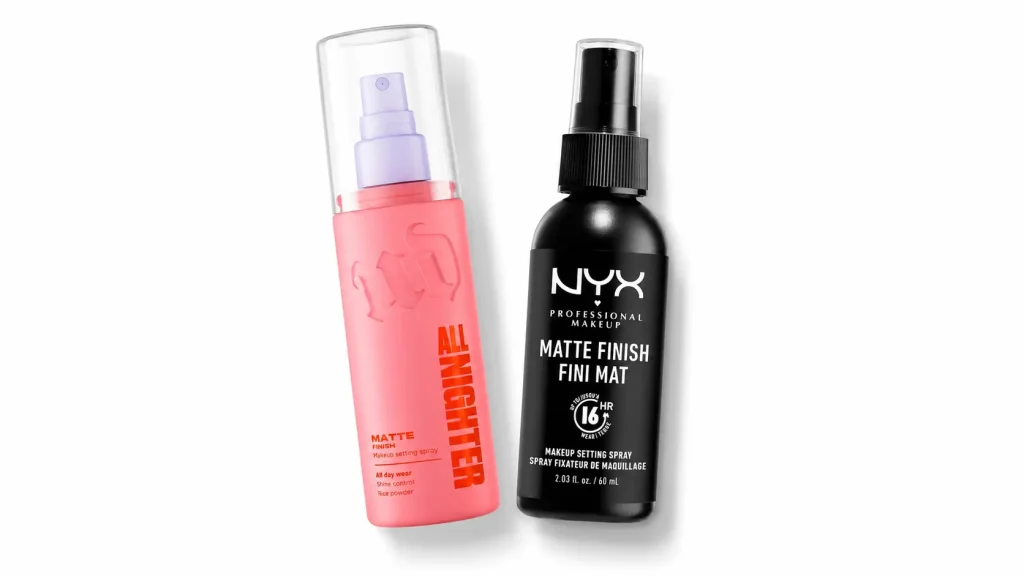
A setting spray is the quick midday reset, not a replacement for powder.
Urban Decay All Nighter Matte Waterproof Setting Spray is one of the most tested long-wear sprays on the market, around $34, and it holds up well over matte, oil-prone bases.
NYX Matte Finish Setting Spray is a budget-friendly option at around $9 that locks down shine without adding a sticky residue on top of powder.
Charlotte Tilbury’s Airbrush Flawless Setting Spray, around $38, is worth adding to the list too if you already own the brand’s foundation, since the two are formulated to work together.
A good setting spray helps control shine and keeps your makeup fresh for longer. Next, let’s put every step together with a complete makeup routine for oily skin.
Complete Makeup Routine for Oily Skin
The order you apply these products in matters as much as which ones you pick. These six steps, done in sequence, keep oily skin matte from morning through evening.
- Cleanse and moisturize first. Skipping moisturizer often pushes oily skin to overcompensate with even more oil.
- Prime the T-zone specifically, not the whole face, unless your skin is oily everywhere.
- Apply foundation in thin layers, building coverage only where you actually need it.
- Set with a light dusting of powder over oily zones while the base is still fresh.
- Mist with setting spray to lock everything in place.
- Blot with a tissue or blotting paper throughout the day instead of adding more powder on top.
A few small habits can undo all of that. Here’s what to watch for.
Makeup Mistakes That Make Oily Skin Look Worse
These five mistakes are the ones dermatologists and makeup artists see most often on oily skin, even when the products themselves are right.
| Mistake | Fix |
|---|---|
| Skipping moisturizer | Use a lightweight, oil-free moisturizer even on oily days. Skipping it pushes skin to overcompensate with more oil |
| Over-powdering through the day | Blot first, then add powder only if it’s still needed |
| Reaching for heavy, dewy formulas | Save dewy finishes for cheekbones only, not the whole face |
| Not removing makeup properly at night | Double cleanse to actually clear pores instead of just wiping the surface |
| Wrong shade or wrong finish for your skin | Matte and soft matte formulas photograph and wear differently than dewy ones. Test in daylight before committing |
A lot of “my makeup doesn’t last” complaints trace back to one of these, not the product itself.
It is also worth checking whether your foundation has actually expired, since older formulas separate and wear unevenly no matter how well you apply them.
Once you’ve ruled out technique and freshness, longevity comes down to picking the right finish, which the next section covers.
Best Makeup Finish for Oily Skin
Not every “matte” claim behaves the same way on skin, so it helps to know what each finish actually does.
Matte: Absorbs oil and flattens shine completely. Best for very oily or T-zone heavy skin, though it can look dry if applied too heavily.
Natural matte (soft matte): Controls oil while still allowing some skin-like texture through. This is the middle ground most oily skin formulas now aim for.
Satin: A slight sheen without full-on dewiness. Works for combination skin or oily skin on cooler, drier days.
Dewy: Reflects light and looks luminous, but tends to read shinier as oil builds up through the day. Best reserved for cheekbones only, if used at all, on oily skin.
There’s no single holy grail formula either. The right choice comes down to the finish you’re going for, and a well-formulated semi-matte can work as well as a full matte on oily skin.
If your goal leans more toward an effortless everyday look than full glam, soft matte is usually the easier finish to build around.
Best Makeup for Oily, Acne Prone Skin
If your skin is also breaking out, the formula matters as much as how matte it looks. Acne-prone skin adds a layer of caution on top of oil control.
- Choose non-comedogenic formulas first. Non-comedogenic labeling means a product is less likely to clog pores, which matters most for anyone breaking out.
- Keep coverage lightweight. Heavier, richer formulas sit on top of already active pores and make breakouts harder to manage.
- Avoid pore-clogging ingredients like heavy silicones, fragrance, and certain oils, which dermatologists commonly flag as triggers for acne cosmetica.
- Clean brushes and sponges regularly. Bacteria buildup on tools is one of the more overlooked causes of breakouts that people blame on the makeup itself.
If it has been a while since your last proper clean, washing your brushes correctly matters more than any product swap.
Makeup does not cause acne for everyone. Dermatologists describe acne cosmetica as a real but individual reaction, and while non-comedogenic products are significantly less likely to trigger it, a formula that’s fine for one person can still break out another.
Conclusion
Oily skin just needs a formula and routine built for how it actually behaves.
Once your formula, finish, and application order start working together rather than against each other, shine stops being something you constantly have to manage.
The right foundation, a proper primer, and knowing when to blot rather than pile on more powder can carry your look from morning to evening without a single touch-up panic.
I still keep blotting papers in my bag no matter how good the base is underneath, because even the best formula benefits from a five-second reset around hour six.
Frequently Asked Questions
Which is Better for Oily Skin, Bb or Cc Cream?
CC creams tend to work better for oily skin since they offer more coverage and better oil control than most BB creams, which lean lighter and more hydrating.
Is Matte or Dewy Better for Oily Skin?
Matte generally wins out for all-over wear, but a small amount of dewy product on the high points of the cheeks can keep a fully matte look from reading flat in photos.
How Do I Prep Oily Skin for Makeup?
Cleanse, apply a mattifying moisturizer, then use a pore-minimizing primer before foundation for a smoother, longer-lasting base.
Does Foundation Make Oily Skin Worse?
Foundation itself does not cause oily skin, but a heavy, pore-clogging formula can trap existing oil and make breakouts more likely. Choosing a non-comedogenic, oil-free formula avoids most of this risk.
How Long Should Primer Sit Before Foundation?
Give primer about one to two minutes to set before applying foundation. Putting foundation on too soon can pill both products together instead of letting the primer grip.
What Ingredients Should I Avoid in Makeup for Oily Skin?
Mineral oil, petrolatum, and heavy silicones are the main culprits. They tend to sit on the skin’s surface and trap oil beneath rather than allowing it to be regulated.
How Often Should I Touch up Makeup on Oily Skin?
Blotting once or twice through the day is usually enough. Reach for powder only if blotting alone isn’t cutting the shine.