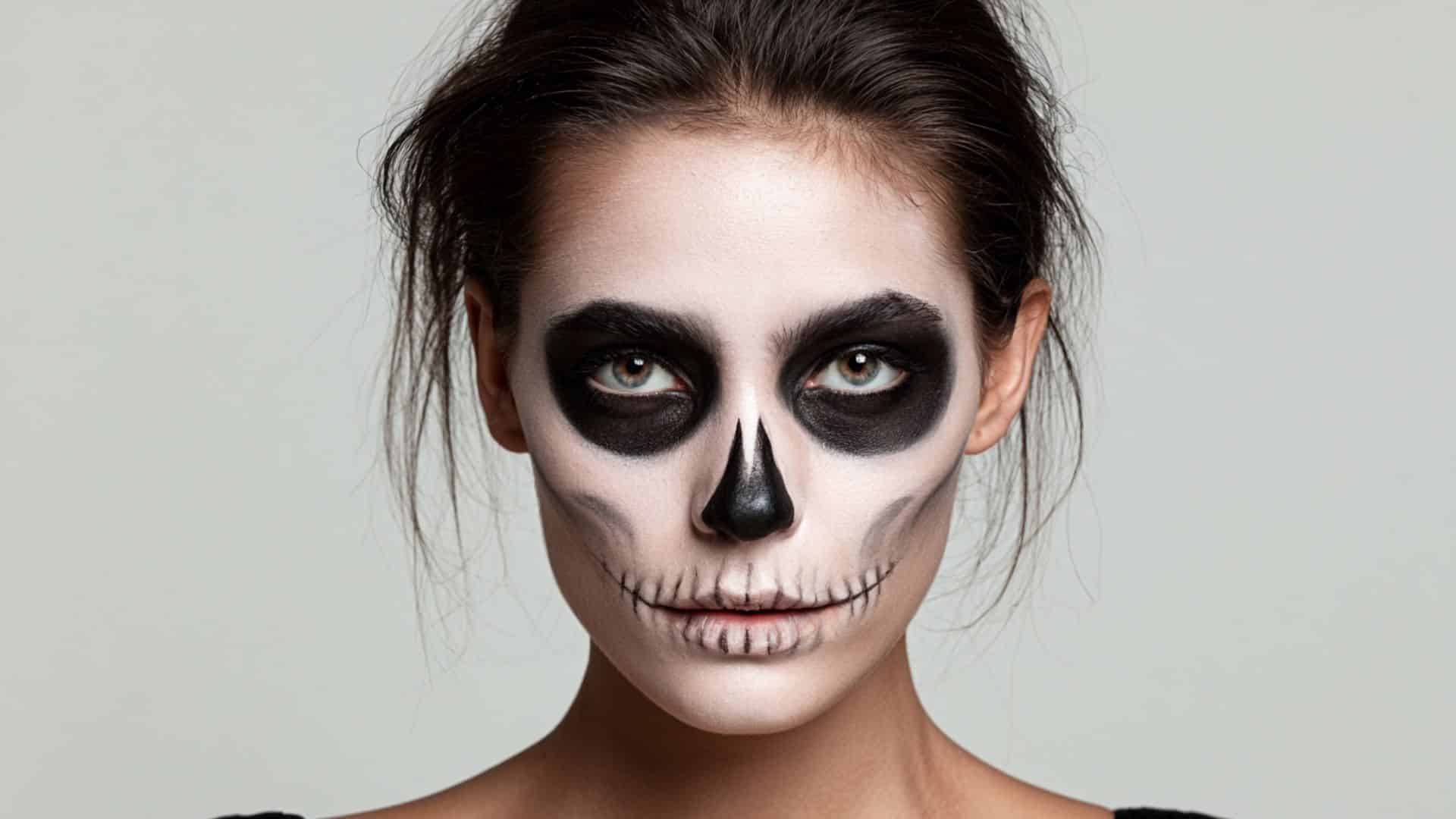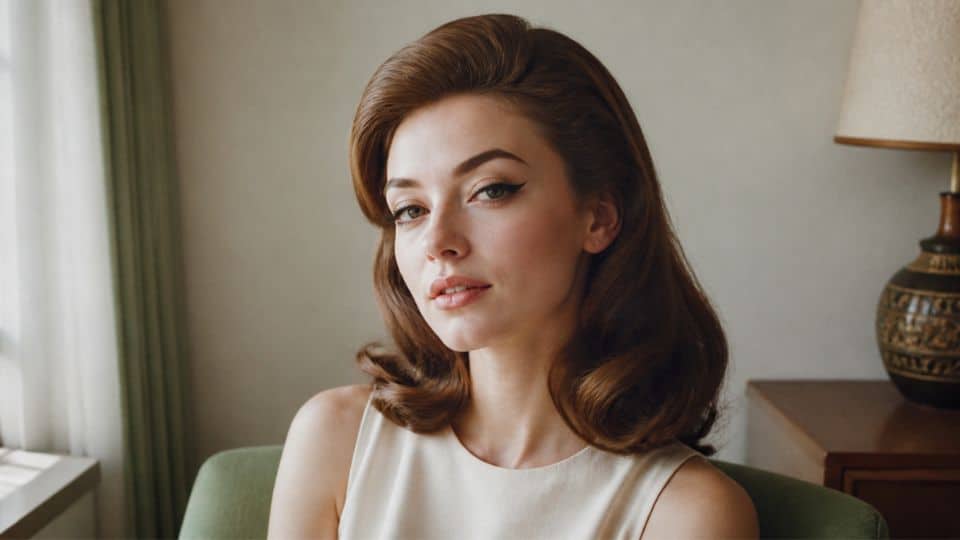
The 1960s gave us some of the most iconic makeup looks in history, but they also gave us one of beauty’s biggest misconceptions.
Most people picture the same dramatic lashes and bold eyeliner, even though the trends changed dramatically throughout the decade.
That’s why so many vintage recreations never quite look authentic.
After recreating these looks time and again, I’ve found that it’s the small details, from the shape of the crease to the finish of the lips, that make all the difference.
Once you understand those details, creating authentic 60s makeup becomes much easier.
What Did 60s Makeup Look Like?
The 1960s flipped the balance of the face. Eyes took over, and everything else went quiet. Skin was matte and even, with no contour, no bronzer, and no highlighter anywhere.
Blush stayed soft. A little pink or peach on the cheek was the whole story. Lips went pale on purpose, in beige, nude pink, coral, or a thin swipe of gloss. Some women powdered over their lipstick to mute it further.
The eye did all the work. A dark line was drawn into the socket, often well above the real crease, so the lid looked deeper and rounder than it was.
Pastel or white shadow went on the lid. Liner was thick and black. Lashes came in layers, and many women drew extra lashes under the eye with a fine brush.
Brows were neat rather than bushy, with a high, clean arch. That combination is why the look reads as graphic instead of soft.
You are drawing shapes, not blending shadows, and that is a different skill from most modern makeup.
How Makeup Changed Throughout the 1960s
The decade did not hold one look for ten years. It moved through three clear phases, and knowing which phase you want makes your version far more convincing.
- 1960 to 1963, holdover glamour: The 1950s cat eye and stronger lip stayed on. Shadow was matte grey, green, or blue on the lid, with soft blush and coral or red lips.
- 1963, the Cleopatra effect: Elizabeth Taylor’s turquoise lids and heavy black liner in Cleopatra pushed shadow up to the brow bone and made the eye the main event.
- 1964 to 1967, peak mod: Pale lid, hard crease line, layered lashes, and near-invisible lips. Mary Quant Cosmetics launched in 1966 with ready-to-use pastel eye palettes built for exactly this look, which is a big reason it moved from runway to high street so fast
- Mid-decade, makeup goes young: Cosmetics started being sold to teenagers rather than their mothers, in bright packaging, with shades that had never been on a counter before. Twiggy and Jean Shrimpton weren’t just wearing this for photographers; their popularity is what convinced ordinary women they could buy the same look for themselves
- 1967 onward, frost and novelty: Shimmer shades arrived, and painted or glued-on lashes got layered together. By 1969, painted freckles and polka dot lids were showing up in festival and editorial looks, though never as mainstream as the mod phase.
- 1968 to 1969, the natural turn: Hippie style swapped matte mod graphics for bare skin, brown mascara, and clear gloss, with flowers and peace signs painted on for festivals.
- Hair moved with the makeup: Vidal Sassoon’s geometric cuts were designed around this same flat, graphic face sharp lines up top, sharp lines around the eye- which is why the hair and the eye look were always sold as a pair, not chosen separately
Pick your year before you pick your palette. A 1962 face and a 1968 face use almost none of the same products, even though both count as authentic.
Products You Need for This Makeup Look
You need fewer products than you’d think, but the ones you use have to be precise.
| Step | What You Need | Product Pick |
|---|---|---|
| Base | Matte foundation | e.l.f. Flawless Satin Foundation |
| Set | Loose translucent powder | NYX Mineral Finishing Powder |
| Liner | Black liquid or gel liner | Maybelline Tattoo Studio Gel Pencil |
| Lid | Matte pastel palette | NYX Ultimate Utopia Palette |
| Crease | Matte brown/taupe shadow | e.l.f. Bite Size Eyeshadow, Truffles |
| Lashes | Strip lashes + glue | Ardell Demi Wispies |
| Curl + coat | Mascara + lash curler | Maybelline Great Lash Mascara |
| Lower lash line | White or nude pencil | NYX Jumbo Eye Pencil, Milk |
| Cheeks | Powder blush | e.l.f. Blush collection |
| Lips | Pale lipstick or balm | e.l.f. Lip Exfoliator |
| Brows | Clear brow gel | Maybelline Brow Fast Sculpt, Clear |
If your budget is tight, spend it on the liner and a small angled brush. Cheap pastel shadow layers fine, but cheap liner drags and dries out fast.
How to Do 60s Makeup Step by Step
This is the order I work in on myself, and the order matters more than usual here. Building the base first keeps every drawn line crisp.
Step 1: Build a Flat, Matte Base
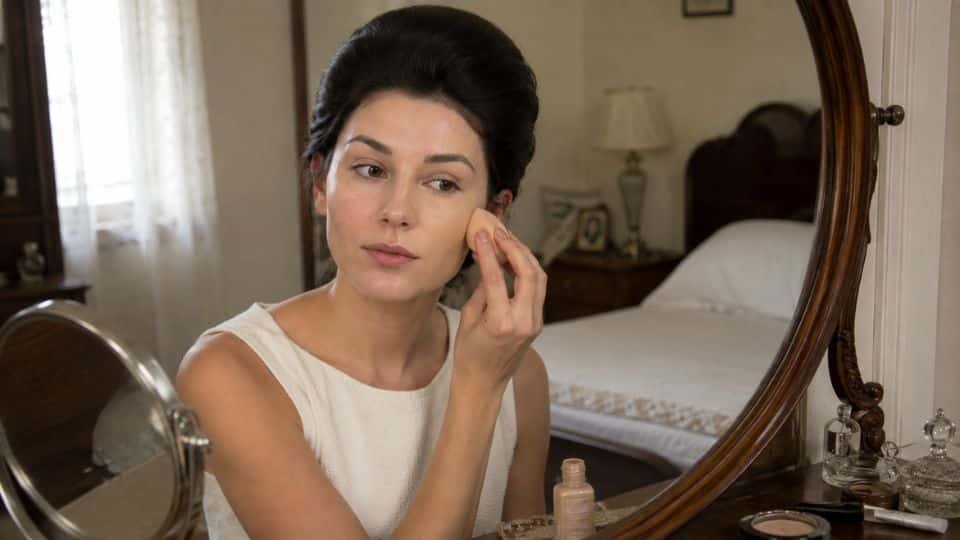
I start with a mattifying primer, then a medium coverage foundation buffed in with a damp sponge. Concealer goes under the eye and on the lids to cancel any pink.
Then I press loose powder over everything with a puff. No contour, no bronzer, no highlighter. My cheeks look a little bare at this stage, and that is correct. The eye is about to take up all the space.
Step 2: Map the Crease Before You Add Any Color
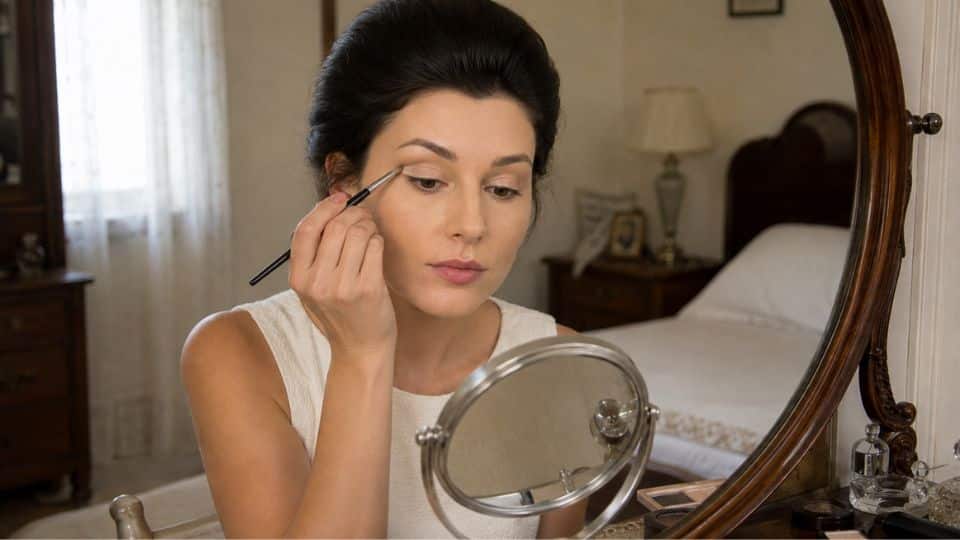
I load a small angled brush with matte taupe and draw the socket line with my eyes open, following the curve of my lid but sitting a few millimeters above it.
Open-eyed placement is the trick, because a line drawn on a closed lid disappears the moment you look forward. I check both sides in the mirror at arm’s length, then soften the top edge only.
Step 3: Line, Layer, and Fake the Lashes
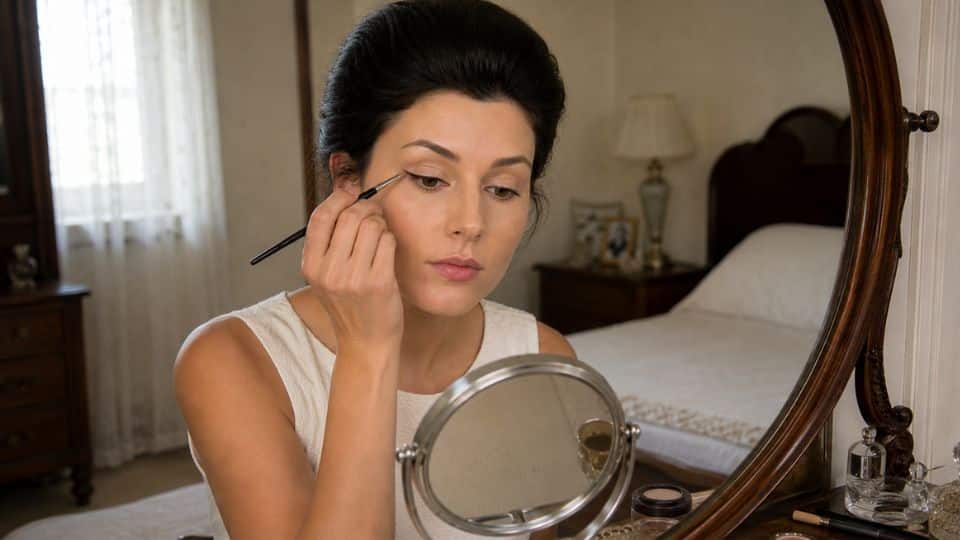
Pastel or white shadow goes on the lid, right up to that drawn line. Then black liner along the upper lash line, thicker at the outer third, with a short flick.
I curl my lashes, add a strip, and press it into the liner so there is no gap. Mascara goes over the top to blend real and false. Lower lashes stay bare, or get three fine drawn strokes.
Step 4: Keep the Cheeks and Lips Quiet
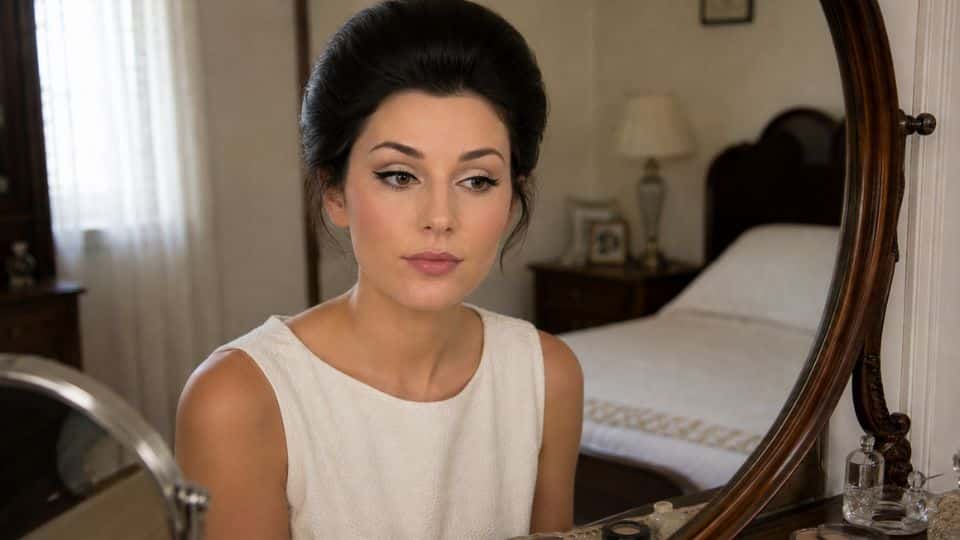
A light sweep of pink powder blush high on the cheekbone is enough. I stop well before the apple of my cheek looks flushed.
Lips get beige pink or a sheer gloss, and I often blot once so the color sits under the skin rather than on top. Brows get brushed up, filled with light strokes, then set. A quick setting spray and I am done.
The Right Hairstyle for a 60s Makeup Look
The eye only reads as “60s” when the hair frames it the same way. Here’s what pairs best with each version of the look.
- Bouffant or beehive: Lifts the whole face up, giving a graphic crease line room to breathe.
- Blunt, heavy-fringed pixie: Mia Farrow’s cut best with softer Bardot or Birkin looks, since nothing competes for attention.
- Flipped ends: The classic Shrimpton finish adds width without volume, works with almost anything on this list.
- Simple curled-under bob: Middle or side part with ends curled in, the fastest option when you’re short on time.
Match the hair to the intensity of your eye, not the other way around. A soft look with big hair fights itself, and so does a bold graphic eye under flat, undone hair.
Authentic Mod Makeup vs Costume Makeup
The line between a real 1960s face and a Halloween version is thinner than people think. Usually it comes down to five or six specific choices.
| Element | Authentic 60s Makeup | Costume Version |
|---|---|---|
| Base | Matte, even, skin tone matched | Chalky white or grey cast foundation |
| Crease line | Matte brown or taupe, softened on top | Solid black, drawn halfway up the brow bone |
| Eyeliner | Thick at the outer third, short flick | Same width all the way across, oversized wing |
| Lashes | One strip, mascara blended over it | Two or three strips stacked, visible glue line |
| Lower lashes | Three or four fine strokes, spaced apart | Thick painted spikes in a solid row |
| Lips | Beige, nude pink, or coral | Stark white or heavy frosted silver |
| Brows | Groomed with a natural arch | Shaved out or drawn in as a thin line |
Read that middle column as your checklist. Get the crease color and the lash count right, and the look stops reading as fancy dress immediately.
Iconic 60s Makeup Looks to Recreate
These looks cover the whole decade, from mod graphics to festival face paint. Three of them I have worn myself, and I have flagged those below.
1. Twiggy Doll Eye Makeup
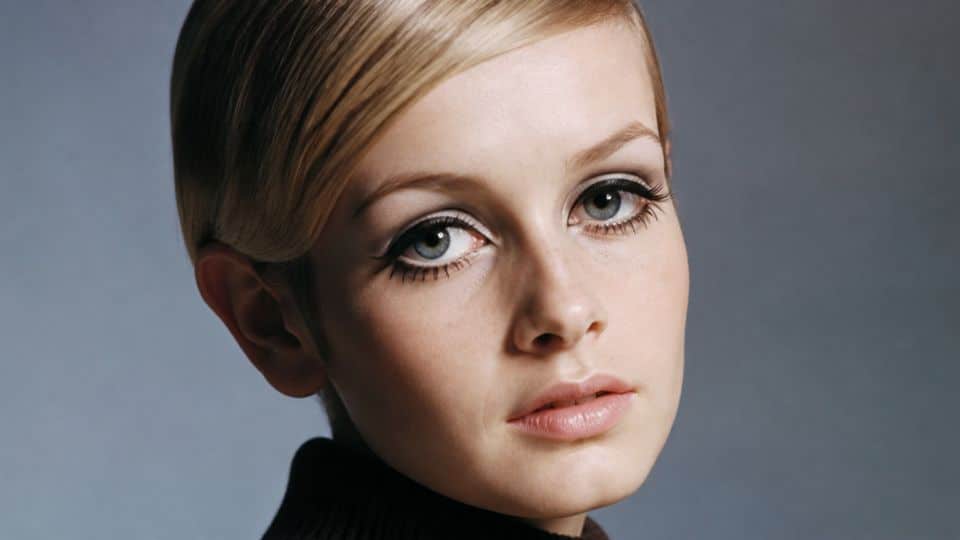
This is the eye that defined the decade, and the one people get wrong most often. The effect comes from three separate tricks stacked together, not from one heavy shadow.
- What defines the look: Pale lid, hard crease line, stacked lashes, painted lower lashes.
- Inspiration behind the look: Doll eyes, copied deliberately, right down to the lashes drawn underneath.
- Quick recreation tip: I draw only three lower lashes, spaced wide apart.
- How to wear it today: Keep the crease line, skip the painted lashes.
2. Classic Mod Cut Crease
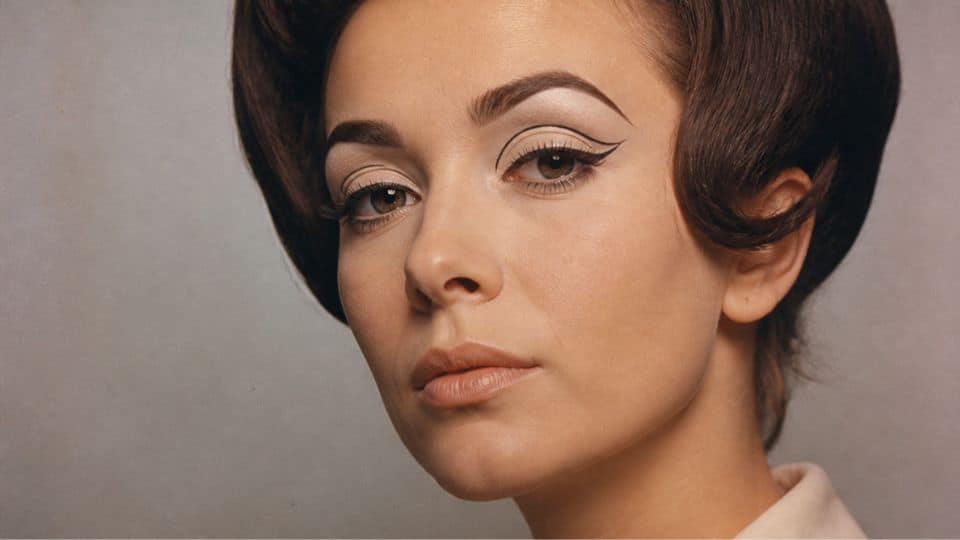
This is the architectural version of the 60s eye. Rather than blending shadow into the socket, you carve the lid out with concealer and drop a hard line above it.
- What defines the look: Concealer on the lid, a hard line cut through the socket.
- Inspiration behind the look: London mod style, built on the same geometry as the clothes.
- Quick recreation tip: Stamp the color on with a flat brush instead of dragging.
- How to wear it today: Blur the top edge of the line slightly.
3. Pastel Blue Eyeshadow
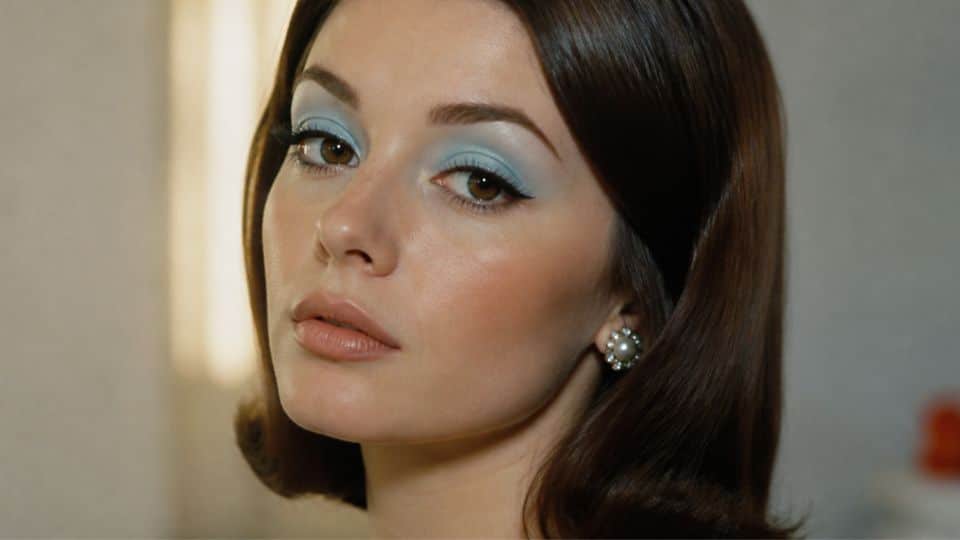
If you have never worn colored shadow, start here. Pale blue looks alarming in the pan and surprisingly soft on the lid, and it suits brown, green, and hazel eyes.
- What defines the look: Matte sky blue across the whole lid, black liner, nude lip.
- Inspiration behind the look: Blue was the signature shadow of the decade, sold everywhere.
- Quick recreation tip: Pat blue on flat, then clean the edges with concealer.
- How to wear it today: Pair it with bare skin and clear brow gel.
4. Mint Green Mod Eyes
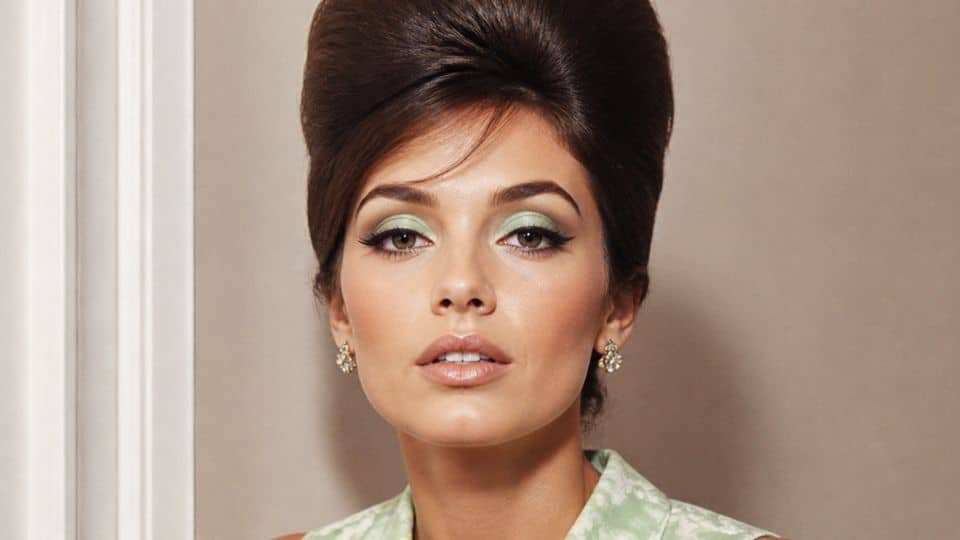
Green sold just as well as blue in the mid 60s, and it feels far less expected now. It is the pastel I reach for when blue starts to feel too obvious on me.
- What defines the look: Soft mint lid, brown crease line, bare cheeks.
- Inspiration behind the look: Mod color experiments, where green sat next to blue on every palette.
- Quick recreation tip: I use a taupe crease line so mint stays wearable.
- How to wear it today: Keep the lip fully nude so green stays central.
5. Brigitte Bardot Smoky Eyes
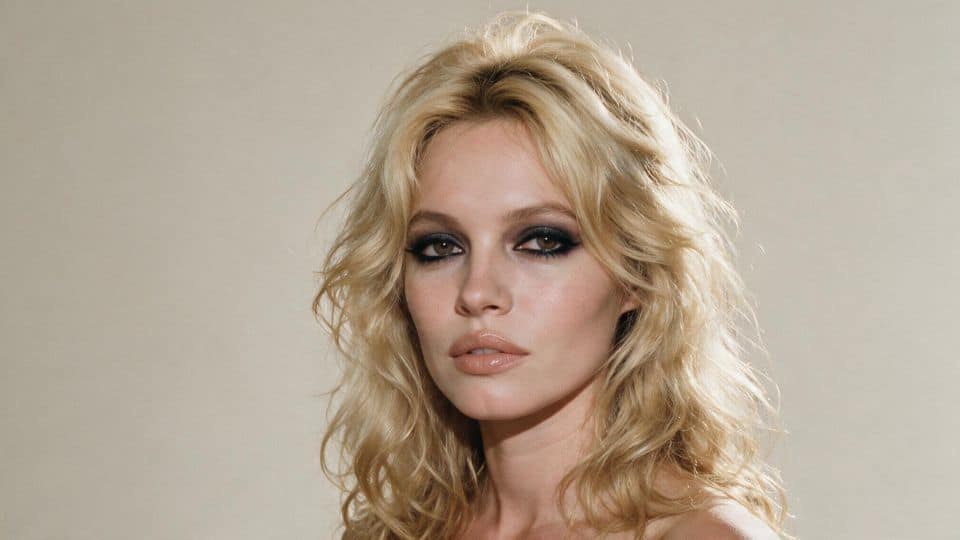
This is the softest eye on the list and the most forgiving to wear. Nothing is drawn sharply, so an unsteady hand or an uneven lid stops being a problem here.
- What defines the look: Smudged black liner top and bottom, taupe socket, nude lip.
- Inspiration behind the look: French film glamour, where the eye looked slept in rather than drawn.
- Quick recreation tip: Line with pencil, then smudge with a cotton bud before setting.
- How to wear it today: Wear this one exactly as it already is.
6. Jane Birkin Soft Look
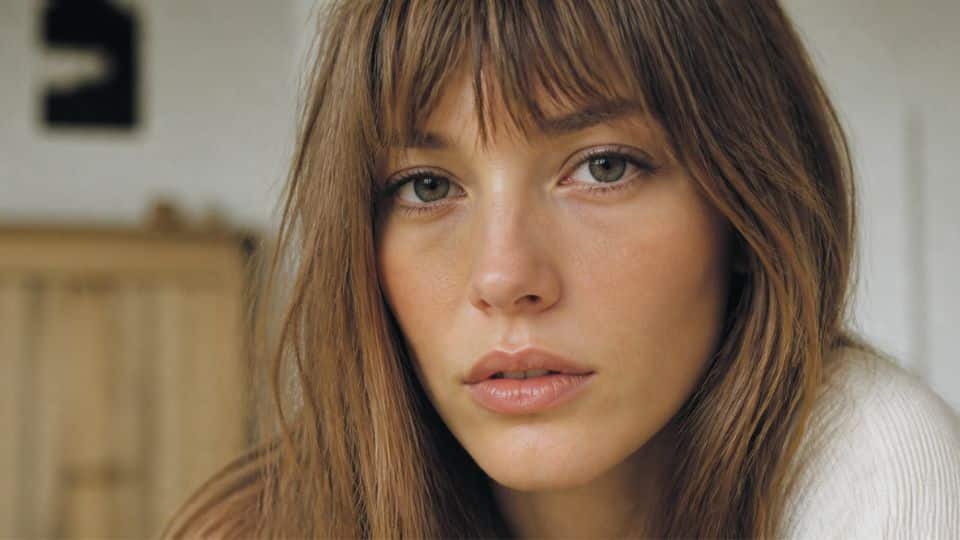
Not every 60s face was graphic. Birkin wore almost nothing on her skin, which made her the direct opposite of the mod look, and that version has aged extremely well.
- What defines the look: Sheer base, brown mascara, faint freckles, glossy nude lip.
- Inspiration behind the look: Late 60s London and Paris, where undone beauty became a statement.
- Quick recreation tip: Swap black mascara for brown. That does most of the work.
- How to wear it today: Add cream blush, and it becomes an everyday face.
7. Sophia Loren Cat Eye
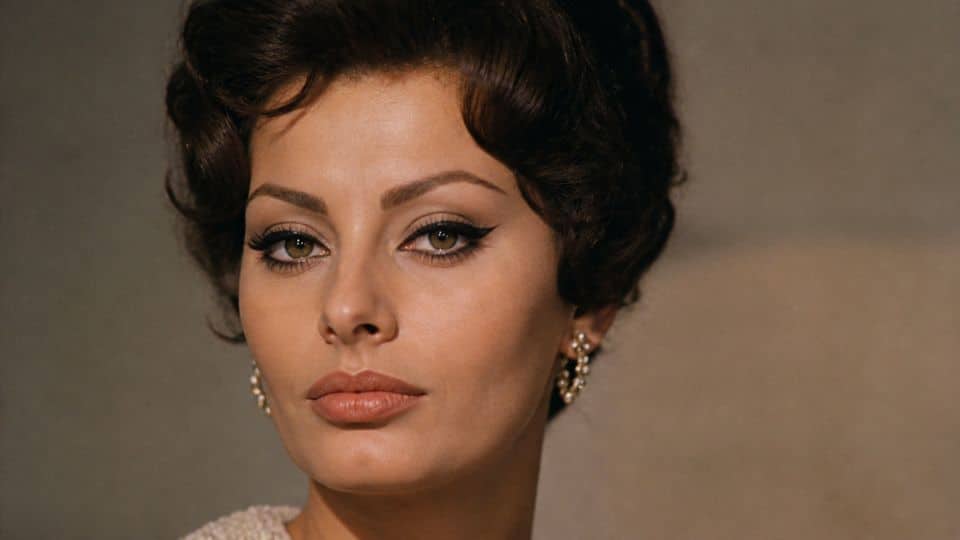
This is the longest wing here. Loren pulled her liner well past the outer corner and kept it low, which stretches the eye sideways instead of lifting it upward.
- What defines the look: A long, low wing plus fine strokes under the outer corner.
- Inspiration behind the look: Italian screen glamour, where the goal was length over width.
- Quick recreation tip: Aim the wing at the tail of your brow, not upward.
- How to wear it today: Shorten the wing and add a bronze lip.
8. Audrey Hepburn Inspired Eyeliner
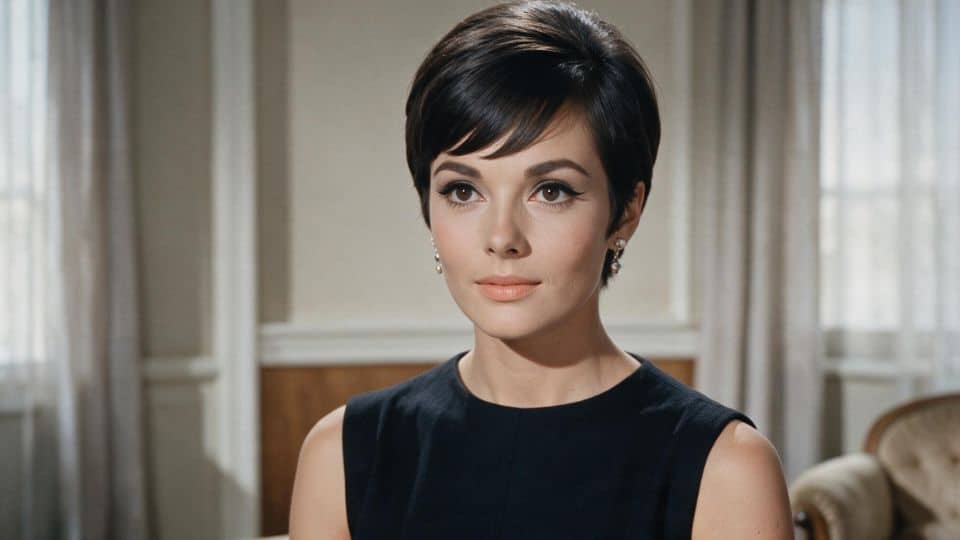
Thick, clean, and lifted only slightly at the end. This is the easiest liner shape of the decade to wear day-to-day, because it hugs the lash line closely.
- What defines the look: Thick liner along the lash line, tiny flick, groomed brows.
- Inspiration behind the look: Early 60s film styling, where liner replaced shadow completely.
- Quick recreation tip: Draw the flick first, then connect it back inward.
- How to wear it today: Add separated lashes and skip shadow entirely.
9. Cher Graphic Eyeliner
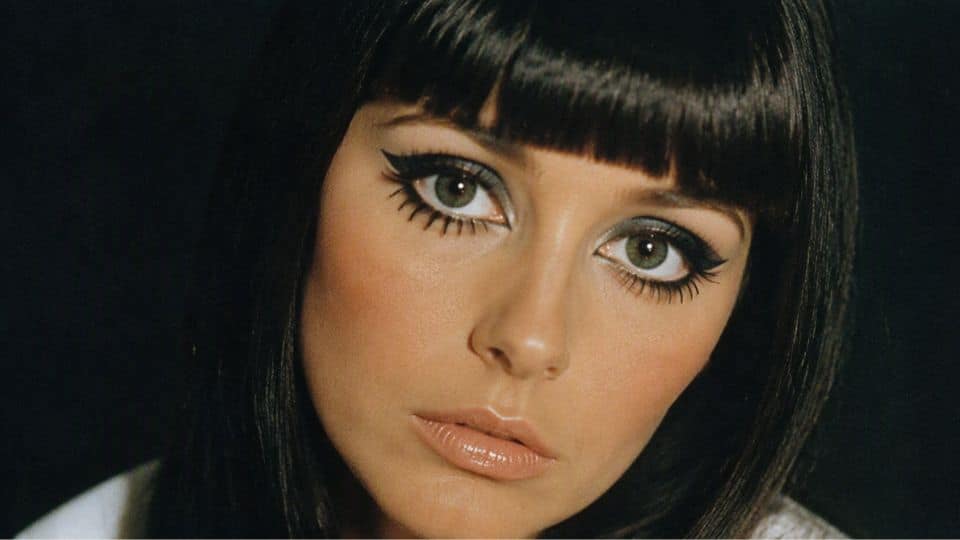
Cher’s liner was longer and far straighter than a standard cat eye. The line runs almost horizontally out from the corner, so the shape carries the whole look by itself.
- What defines the look: A long horizontal line past the outer corner, bare lid.
- Inspiration behind the look: Sonny & Cher’s chart-topping run as a pop duo in the mid-60s, where the graphic liner became part of her stage look years before their TV variety show existed.
- Quick recreation tip: Rest your elbow down and draw one continuous stroke.
- How to wear it today: Use brown liner instead of black for daytime.
10. Diana Ross Glamorous Cat Eye
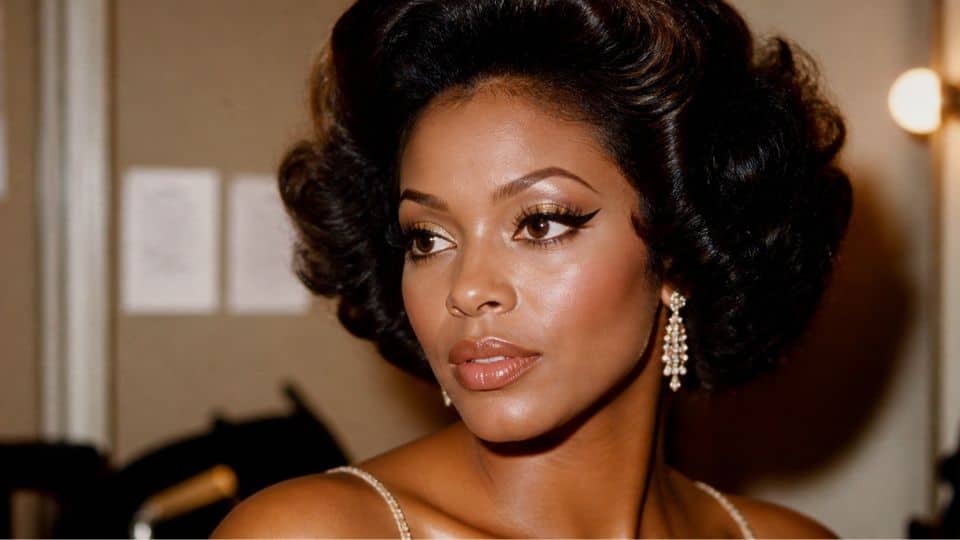
This is Motown polish rather than London mod. Everything is lifted, reflective, and built for stage lighting, which is why it still reads as evening makeup instead of daytime.
- What defines the look: Sharp wing, full strip lashes, shimmer lid, glossy lip.
- Inspiration behind the look: Performing with the Supremes, where the lighting demanded shine.
- Quick recreation tip: Pick bronze or copper shimmer, which reads richer on deeper skin.
- How to wear it today: Swap shimmer for a satin finish, keep the lashes.
11. Jean Shrimpton Pastel Eye Makeup
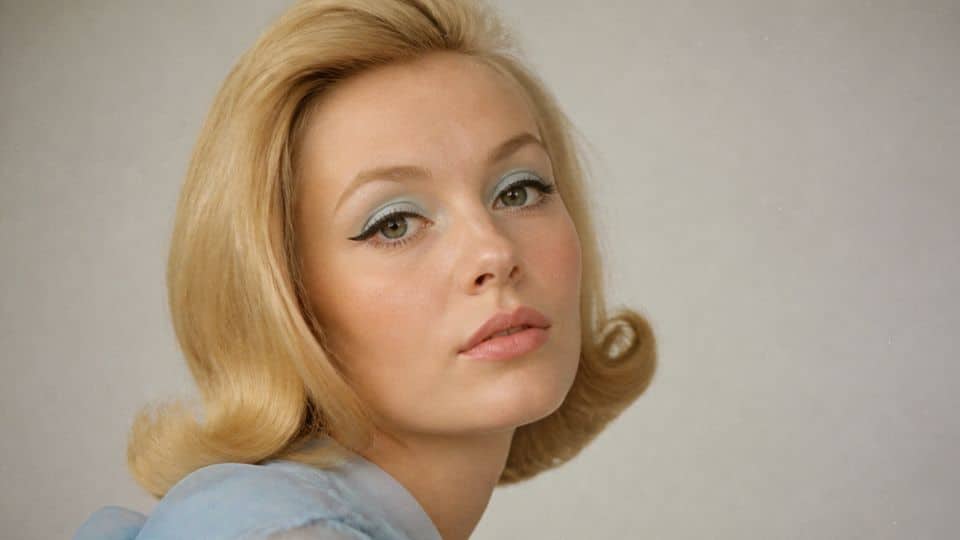
Think of this as the Twiggy eye with the volume turned down. Shrimpton wore the same pastel palette, but every edge was blended rather than drawn, which keeps it current.
- What defines the look: Pastel lid, softly blended crease, thin liner, pale lip.
- Inspiration behind the look: Early 60s fashion photography, which favored soft edges over lines.
- Quick recreation tip: Blend the crease shade rather than drawing a hard line.
- How to wear it today: This is already the most office-friendly option here.
12. Cleopatra-Inspired Blue Eyes
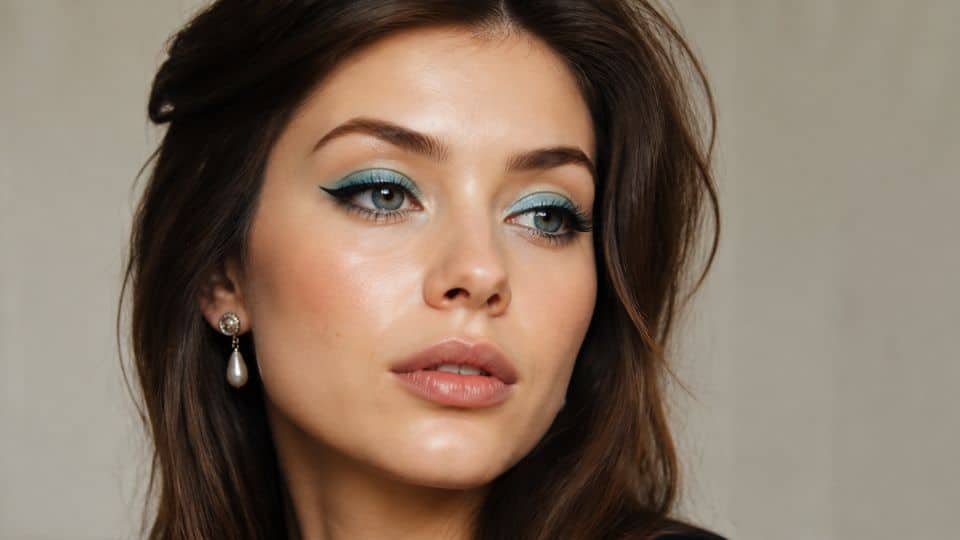
This is the look that turned blue shadow into shorthand for glamour. Turquoise runs from the lash line right up to the brow bone, framed by a heavy black wing.
- What defines the look: Turquoise from lash line to brow, thick liner, extended wing.
- Inspiration behind the look: Elizabeth Taylor’s 1963 screen version of the Egyptian queen.
- Quick recreation tip: Use a cream base so turquoise stays saturated up high.
- How to wear it today: Keep the color on the lid only.
13. Frosted Silver Eye Makeup
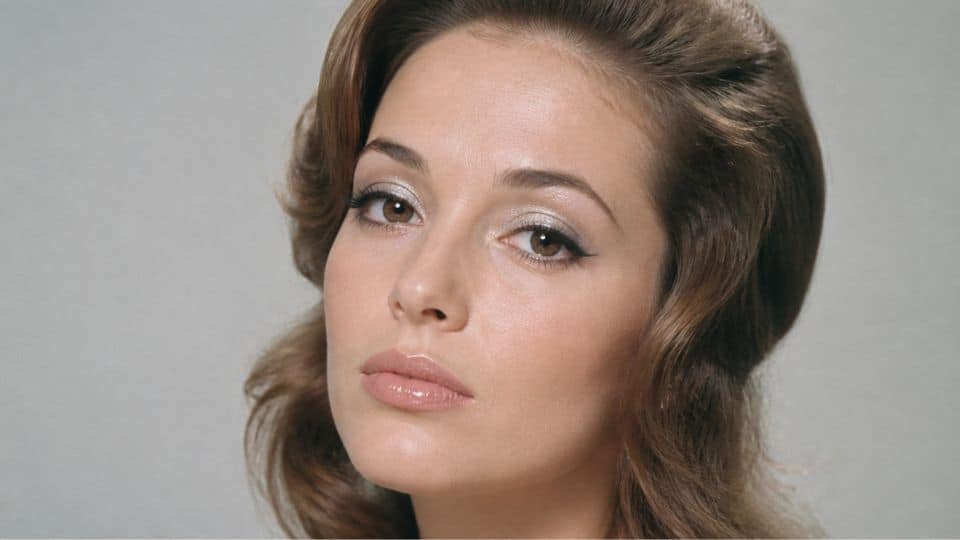
Frost finishes arrived late in the decade and took over quickly. This is the space age face, and it is the one 60s look where shine is genuinely the whole point.
- What defines the look: Silver or icy white frost on the lid, black socket line.
- Inspiration behind the look: Space age fashion and a general obsession with anything metallic.
- Quick recreation tip: Apply frost with a damp brush so it grips.
- How to wear it today: Use it only on the center of the lid.
14. Soft Pink Monochromatic Makeup
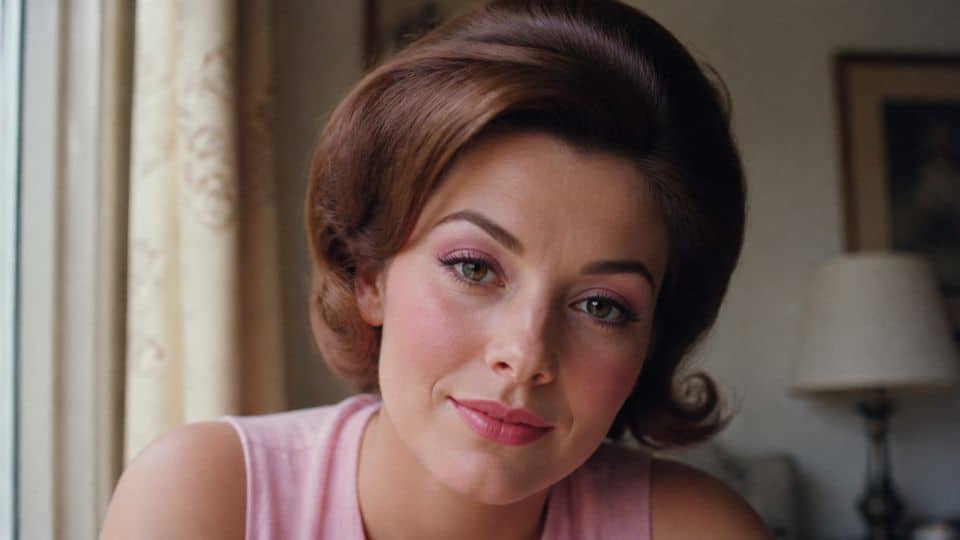
One shade family, used across the whole face. This is the gentlest 60s look available, and it is also why pink eyeshadow keeps returning every few years.
- What defines the look: Pink lid, pink cheek, pink lip, minimal liner.
- Inspiration behind the look: Early 60s advertising, which sold matching pink sets together.
- Quick recreation tip: Vary the finish, not the shade, so matte lid and glossy lip.
- How to wear it today: Wear it as is. This look never left.
15. Late 60s Natural Makeup
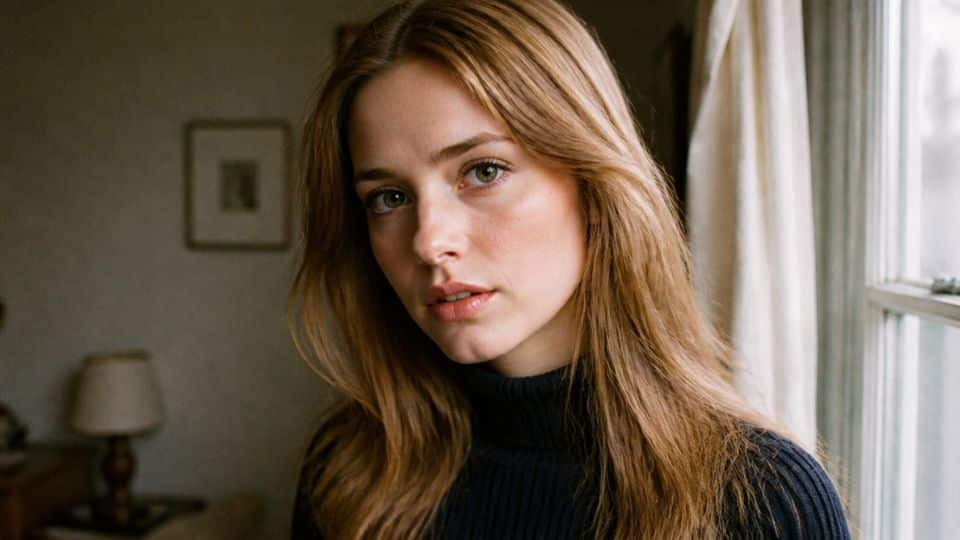
By 1968, the mod face was finished. Bare skin replaced matte foundation, and the goal became looking like you had not tried, which needs fewer products than expected.
- What defines the look: Sheer base, brown mascara, clear gloss, untouched brows.
- Inspiration behind the look: The hippie shift away from mod polish toward visible bare skin.
- Quick recreation tip: This is my weekend face, and a lash curler carries it.
- How to wear it today: Use concealer only where you need it.
16. Psychedelic 60s Eye Makeup
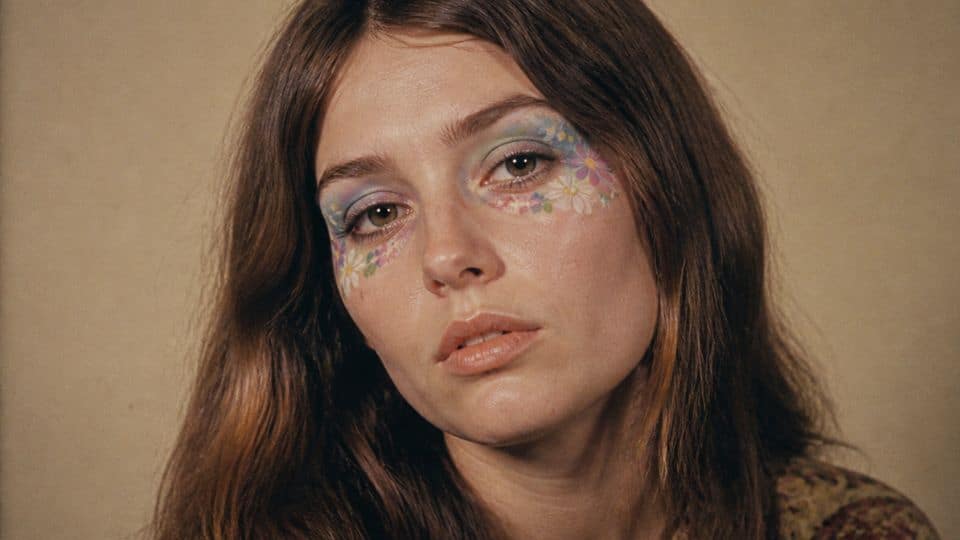
This is the most theatrical entry here, and it belongs at a festival rather than at work. Face paint took the place of makeup, and precision was never the goal.
- What defines the look: Painted daisies, peace signs, and bright color blocks on lids.
- Inspiration behind the look: The 1969 festival circuit, where people painted flowers on each other.
- Quick recreation tip: Use cream face paint and a fine liner brush, not eyeshadow.
- How to wear it today: Paint one small flower near the temple.
How to Choose the Right 60s Makeup Style
Seventeen options is a lot to sort through. This table narrows it down by what you actually want out of the look.
| If You Want | Best Style | Why It Works | Effort |
|---|---|---|---|
| Maximum impact for photos | Twiggy doll eye | The drawn lashes read clearly on camera | High |
| Something wearable to work | Jean Shrimpton pastel eye | Soft edges, no hard graphic lines | Low |
| A first attempt at 60s color | Pastel blue eyeshadow | One shade, no crease work needed | Low |
| Evening glamour | Diana Ross cat eye | Shimmer and lashes hold up in low light | Medium |
| Liner practice only | Audrey Hepburn liner | No shadow, so mistakes are easy to fix | Low |
| A costume party look | Psychedelic eye | Face paint is meant to be obvious | Medium |
| Barely there vintage | Late 60s natural | Two products and five minutes | Very low |
Start in the low-effort row, even if you want the Twiggy eye eventually. Crease drawing skill transfers, and the pastel looks are where you build it, before you branch out into bolder decade-specific makeup looks later on.
How to Make a Swinging Sixties Look Feel Modern
You’ve already seen where costume versions go wrong: the crease color, lash count, liner width, and lip shade in the table above cover the biggest fixes. These four tweaks update everything else.
- Trade matte skin for satin: Keep the base even, but let the finish look like skin rather than powder. Full matte reads dated on camera now.
- Add cream blush under powder blush: This gives the cheeks some dimension the original look deliberately skipped, without pushing into modern contour territory.
- Soften the lid finish, not just the crease: Swap a flat, chalky pastel for one with a slight satin sheen. The color stays true to the era, but it catches light instead of sitting dead on the lid.
- Choose a muted pastel over a stark one: A dusty blue or soft sage reads more current and flatters more skin tones than the bright baby-blue or mint shades sold in the original decade.
Change these four, and the eye stays the star while the rest of the face feels current instead of flat.
60s Makeup Tips for Different Eye Shapes
A drawn crease line behaves very differently depending on your lid. These adjustments matter more than which color you choose.
| Eye Shape | What to Do | What to Skip |
|---|---|---|
| Hooded | Draw the crease line above the hood; with eyes open, this is really its own skill worth practicing on its own, since hooded lid techniques don’t map onto other eye shapes | Following your natural crease, which disappears |
| Monolid | Place a gradient band across the lid, lifted at the outer corner | A hard cut crease with nowhere to sit |
| Deep set | Keep the lid pale and the crease line thin | Heavy dark shadow packed into the socket |
| Round | Extend liner outward in a long, low line | An upward flick, which rounds the eye further |
| Almond | Anything on this list works, so start with the cut crease | Overcorrecting a shape that needs none |
| Downturned | Lift the wing and stop lower lash work at the outer third | A full lower lash line, which drags the eye down |
| Mature or crepey lids | Use a cream base under powder and one thin liner line | Frost and glitter finishes, which settle into texture |
Test your crease placement with a light pencil first. Once you know where your line lives, every look above takes half the time.
Common 60s Makeup Mistakes
These are the errors I see most often, and each one is quick to fix once you know it is happening.
- Using a fluffy brush on the crease line: It blurs the shape into a smoky eye, which is closer to soft 80s makeup than the sharp mod line you’re going for. Use something small and firm.
- Skipping powder before shadow: Oil on the lid will break a drawn line within an hour.
- Painting thick lower lashes: Real 60s drawn lashes were fine and widely spaced. Thick spikes look like pantomime.
- Choosing shimmer pastels: Most authentic 60s pastels were matte. Frost belongs only in the 1967 onward looks.
- Leaving a visible glue line: Let the glue turn tacky before you place the strip, then hide the band under liner.
Fix the crease placement first. That single correction improves a 60s eye more than any product upgrade you could buy.
Final Thoughts
60s makeup rewards precision over blending, which is exactly why it feels so different to do.
Once you can place a crease line with your eyes open, every look here opens up, from a pastel lid you can wear to work to a full Twiggy eye for a party.
Pick one look, buy a decent liner and a small brush, and give yourself a practice run before the event.
I would love to know which of the 1960s makeup looks you try first, so leave a comment and tell me how it went.
Frequently Asked Questions
What Hairstyle Goes Best With 60s Makeup?
A bouffant, beehive, blunt pixie, or flipped-end hairstyle pairs well with 60s makeup. Volume at the crown helps complete the classic look.
Is 60s Makeup Still in Style in 2026?
Yes, 60s-inspired makeup is still popular. Graphic eyeliner and cut creases remain on trend, often paired with a more natural, satin-finish complexion.
What’s the Difference Between 60s and 70s Eye Makeup?
60s eye makeup features bold liner, a defined cut crease, and matte pastel shades. 70s makeup uses softer blending, warm metallic tones, and a more natural-looking finish.
Can I Wear 60s Makeup With Glasses?
Yes, 60s makeup works well with glasses. Keep the crease slightly thinner and extend the eyeliner just beyond the frame for the best effect.
What Nail Colors Match a 60s Makeup Look?
Soft shades like pale pink, nude beige, frosted white, coral, and pearly lilac pair well with a classic 60s makeup look.