A mineral foundation can look soft and skin-like, then turn patchy the moment it catches on a dry spot or settles around the nose. The fix is usually not more product.
Smooth, long-wearing coverage comes from a calm prep routine, a small amount of powder, and patient blending.
1. Start With Clean, Dry Skin
Remove leftover makeup, oil, and flaky skincare from the areas where foundation tends to break apart: beside the nostrils, around the mouth, between the brows, and along the jawline. Pat the skin dry rather than rubbing it with a towel.
Avoid applying mineral foundation over a fresh face oil or a tacky balm. Powder will grab unevenly, especially if you have dry patches or active blemishes.
2. Apply Lightweight Hydration
Use a moisturizer that suits your skin type, concentrating on dry areas without coating the entire face in a heavy layer. Press it in with clean hands and give it time to settle before makeup.
If you wear sunscreen, apply it now and let its finish stop feeling wet or slippery. Mineral makeup can sit beautifully over sunscreen, but it needs a stable surface underneath.
3. Choose the Right Brush
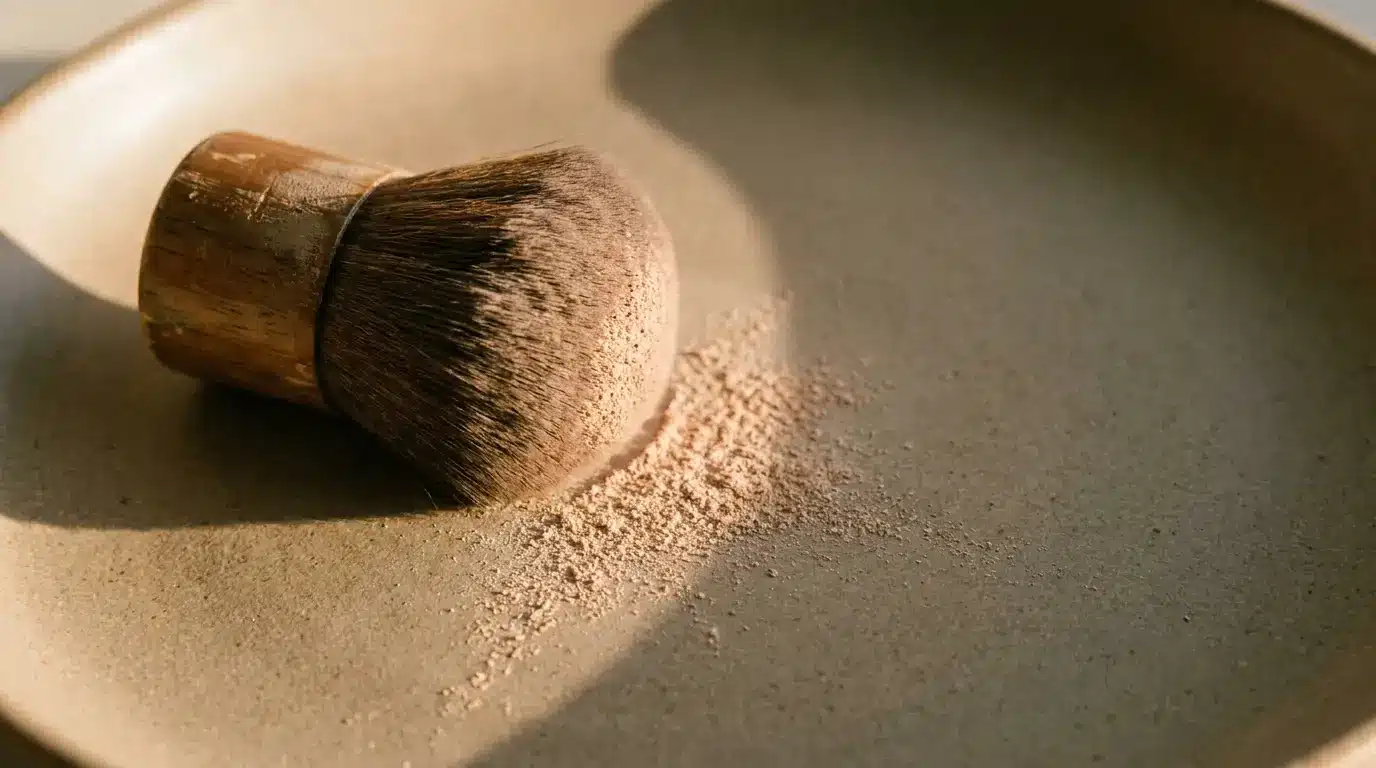
A dense kabuki brush gives the most coverage because its short, closely packed bristles press powder into the skin. A looser, fluffier brush creates a lighter veil and is often easier to control on dry or textured skin.
For a natural everyday finish, begin with a dense brush and use very little product. Keep a small fluffy brush nearby for the nose, under-eyes, and hairline.
4. Work With a Small Amount of Powder
Tap a little foundation into the lid or onto a clean palette. Swirl the brush through it, then tap or gently press the bristles against the side of the container to remove excess.
The brush should look lightly coated, not chalky. Starting with too much powder is the fastest route to a heavy finish that emphasizes pores.
5. Buff From the Center Outward
Begin where redness or uneven tone is most noticeable, usually the cheeks, chin, and center of the forehead. Use small circular motions with light pressure, gradually moving toward the hairline and jaw.
Don’t drag the brush across the face. Buffing helps disperse pigment while smoothing the product into the skin’s natural texture.
6. Build Coverage in Thin Passes
Pause after the first layer and look at the face in natural light if possible. Add another light pass only where coverage is still needed rather than repeating the same amount everywhere.
If you’re using Bare Minerals Clean Makeup, build coverage gradually with well-buffed layers instead of trying to cover every area in one pass. This keeps the finish more even and makes shade adjustment easier.
7. Treat Blemishes Separately
For a spot that still shows through, use a small, firm concealer brush. Pick up a tiny amount of mineral foundation, press it directly onto the spot, and soften only the edges.
Avoid aggressively swirling over a raised blemish. That can lift the first layer and draw attention to texture. A cream concealer beneath the mineral foundation may work better for very dark marks, but let it set first.
8. Handle the Under-Eye Area Carefully
Mineral powder can make fine lines look more noticeable if the under-eye area is dry. Use leftover product on a small fluffy brush rather than loading it with fresh powder.
Press, don’t scrub, over any concealer. Skip powder entirely if the area already looks smooth; setting every part of the face isn’t required.
9. Check Common Trouble Spots
Before setting the makeup, inspect these areas in a mirror:
- The sides of the nose, where product can gather
- The jawline, where an unblended edge can show
- The hairline and brows, where powder may cling to peach fuzz
- The chin and smile lines, where repeated movement can create patches
Use a clean brush to diffuse excess product. If the face looks powdery, lightly press with a clean, dry makeup sponge instead of adding more foundation.
10. Set Only if Your Skin Needs It
Oily skin may benefit from a light setting mist or a small amount of translucent powder through the T-zone. Dry skin often looks better with a hydrating facial mist applied from a distance, allowing the moisture to settle without soaking the makeup.
Don’t try to rescue a thick powder layer with multiple sprays. Remove and reapply a small section if the product has already turned cakey.
11. Clean the Brush Before the Next Application
A brush carrying yesterday’s oil, skincare, and powder will not buff foundation evenly. Wash it with a gentle brush cleanser or mild soap, rinse until the water runs clear, reshape the bristles, and dry it flat with the brush head over an edge.
A clean brush makes sheer layers easier to achieve and helps prevent a smooth base from becoming uneven before the day even begins.