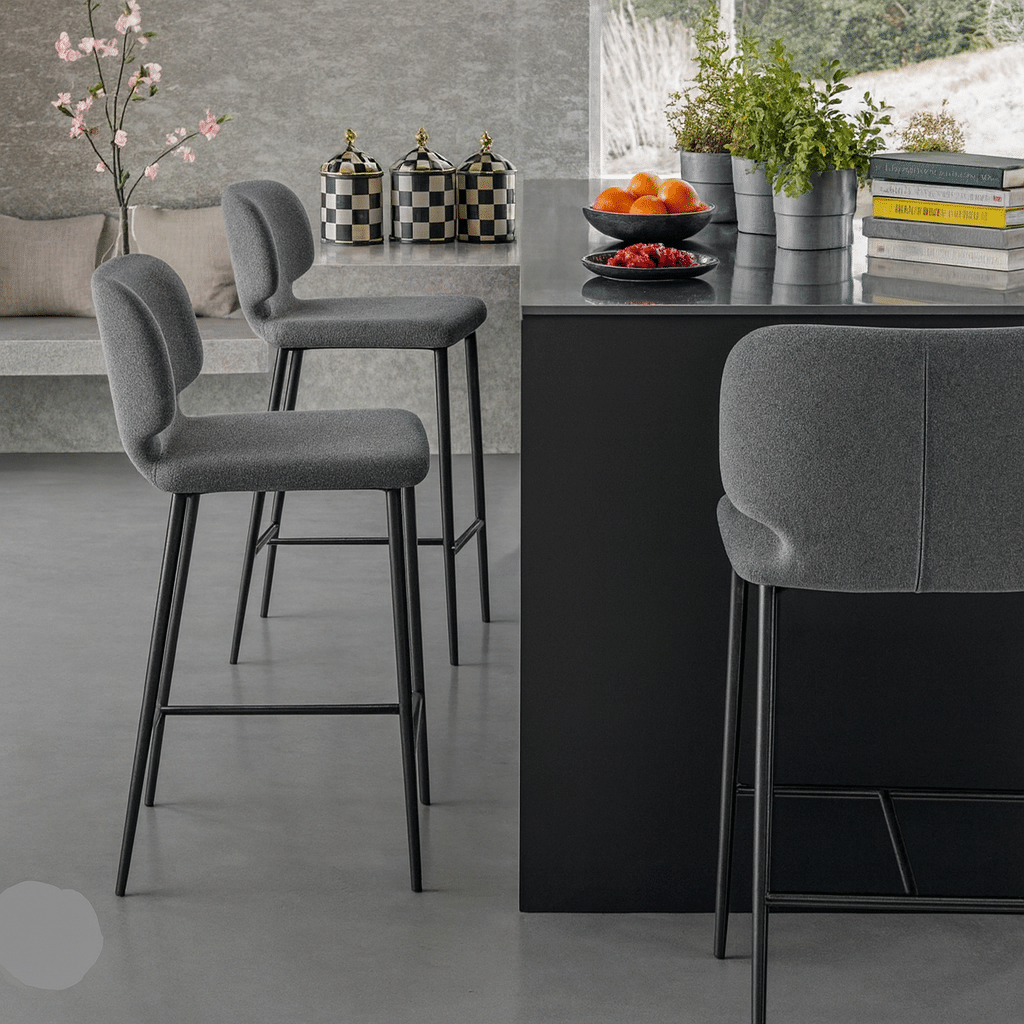
Bar Height vs. Counter Height sounds like one of those tiny design decisions that shouldn’t matter all that much. Until you sit in the wrong stool for forty-five minutes during dinner and suddenly realize your knees are pressed awkwardly into the underside of the island, your feet are dangling, and nobody looks fully comfortable anymore.
And honestly? We’ve seen this happen in some very beautiful kitchens.
The thing about modern interiors is that the kitchen island has quietly become the center of everything. Morning coffee happens there. Kids do homework there. Friends gather there during parties even when there’s an entire living room ten feet away. People linger longer than expected. They open another bottle of wine. Conversations stretch late into the night. So the stool height you choose ends up affecting the way the entire room feels to live in.
Not just how it photographs.
Modern Loft spends a lot of time helping clients navigate these details because good modern luxury furniture should feel effortless, comfortable, and visually grounded all at once. The collection leans heavily into casual luxury, refined Italian craftsmanship, luxury materials, and designs that feel architectural without becoming cold or overly formal. And yes, they’ve built the shopping experience simpler, too. Clear visuals, interactive customization options, and easy-to-understand finish selections make a huge difference when you’re designing a space online.
Because choosing furniture should feel exciting. Not exhausting.
And surprisingly, stool height is one of the places where people tend to regret rushing the decision.
Bar Height vs. Counter Height: What’s the Difference?
The difference technically comes down to just a few inches. But in practice, those inches completely change how a space functions.
Counter-height surfaces usually sit around 34–36 inches high, while bar-height surfaces land closer to 40–42 inches. That means the stool proportions need to shift too.
Counter Height
- Surface height: 34–36 inches
- Stool seat height: 24–27 inches
- Better for everyday dining and casual gathering
- Easier for children and guests to use comfortably
Bar Height
- Surface height: 40–42 inches
- Stool seat height: 28–33 inches
- Creates a more elevated, lounge-inspired atmosphere
- Often works well in entertainment-focused spaces
Counter height tends to feel softer and more integrated into everyday life. It encourages people to settle in. And if we had to choose, this is usually the height clients end up happiest with long term, especially in open-concept kitchens where the island functions almost like a second dining table.
Bar height creates a slightly more social energy. There’s a reason restaurants and cocktail spaces use it so often. It naturally changes posture and interaction. But it also requires more movement getting in and out of the chair, which people don’t always think about initially.
…and yes, it’s noticeable in real life.
A few other measurements matter just as much:
- Leave about 10–12 inches between the stool seat and countertop
- Allow approximately 24 inches of width per stool
- Prioritize footrests whenever possible
- Double-check knee clearance beneath the island overhang
We’ll be the first to admit we’ve fallen for visually minimal stools that looked incredible online but felt frustrating after twenty minutes of actual use. Low backs, shallow seats, awkward foot placement — all of it adds up fast.
And wow, did that teach us a lesson.
How to Choose the Right Stool Height
Most people start by choosing the stool style first. We’d actually recommend doing the exact opposite.
Measure first. Always.
Here’s the process we typically suggest:
- Measure the exact countertop height
- Leave 10–12 inches between the seat and surface
- Think realistically about daily use
- Prioritize footrests and back support
- Consider adjustable stools for flexibility
That last one matters more than people expect.
In modern homes where kitchens blend into living spaces, adjustable seating can quietly solve several problems at once. Guests vary in height. Countertops sometimes sit slightly outside standard dimensions. And people use islands differently throughout the day, coffee in the morning, work calls in the afternoon, dinner at night.
We’ve had better luck with adjustable stools in multifunctional spaces because they adapt more naturally as the room evolves.
Comfort also changes dramatically depending on how long people actually stay seated. A backless stool might look visually lighter, especially in smaller lofts, but it may not be the best choice if your island doubles as a primary dining area.
Speaking from experience here.
And then there’s proportion, which people often underestimate. Bulky stools can visually crowd an island surprisingly quickly, while thinner-profile designs allow the room to breathe a little more naturally. That balance matters a lot in contemporary interiors where clean sightlines are part of the aesthetic.
Especially if you’re short on space.
Materials That Look Beautiful and Hold Up
The material choice changes the personality of a stool almost immediately.
Wood brings warmth. Upholstery softens sharper architectural spaces. Metal introduces contrast and visual lightness. The right combination can completely change the mood of a kitchen without touching the cabinetry or lighting.
Here’s what clients usually prioritize most:
- Comfortable seating during longer meals
- Durable finishes for daily use
- Easy-to-clean materials
- Warmth and texture
- Longevity without looking dated
Italian craftsmanship tends to stand apart here because the details feel more intentional. The joinery is cleaner. The proportions feel refined. The materials often age more gracefully over time. And yes, the difference is unmistakable in person.
Performance fabrics have improved enormously too. Some higher-end upholstery options now handle spills, sunlight, and heavy use far better than people expect. Still, lighter fabrics require honesty about how the space is actually used.
They can look incredible…but don’t choose this if durability is the priority.
Wood finishes deserve more attention than they usually get as well. Matte oak tones create a softer, more relaxed atmosphere, while darker finishes introduce contrast and depth. Neither is automatically better. It depends entirely on the surrounding materials in the room.
And sometimes the smallest details become the things people love most years later:
- the curve of a backrest
- the feel of the footrest
- the smoothness of a swivel base
- the way the upholstery catches light in the evening
Those are the details that make furniture feel lived with instead of simply styled.
Designer Stools Worth Considering
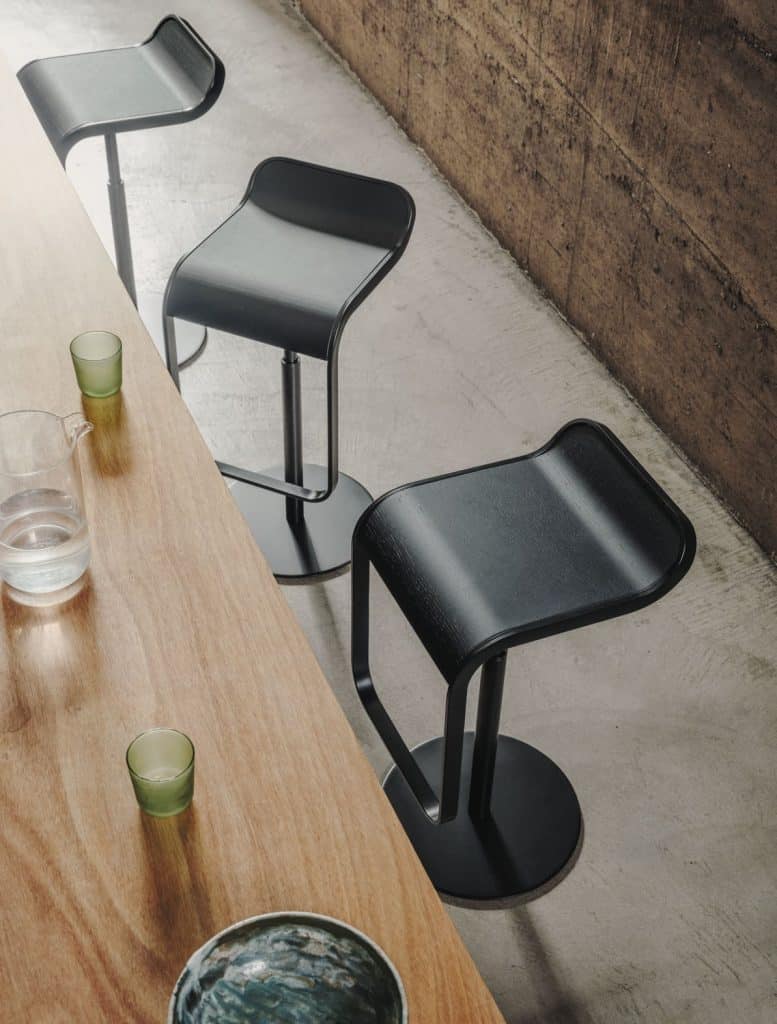
Lem Piston Height Adjustable Stool by Lapalma
Some furniture pieces quietly become design classics because they solve problems beautifully without trying too hard visually. The Lem Piston Stool does exactly that.
Its adjustable height makes it especially appealing for homeowners stuck between counter-height and bar-height seating, which, honestly, is more common than people think. The design has received major international recognition, including honors from the FX International Design Awards and Imm Cologne, but what stands out most is how balanced it feels in a space.
Architectural without feeling heavy. Minimal without feeling cold.
The sculptural base keeps the profile visually clean, while the piston adjustment adds flexibility that becomes incredibly useful over time. In open-concept kitchens especially, that adaptability makes a huge difference.
W Stool by Billiani
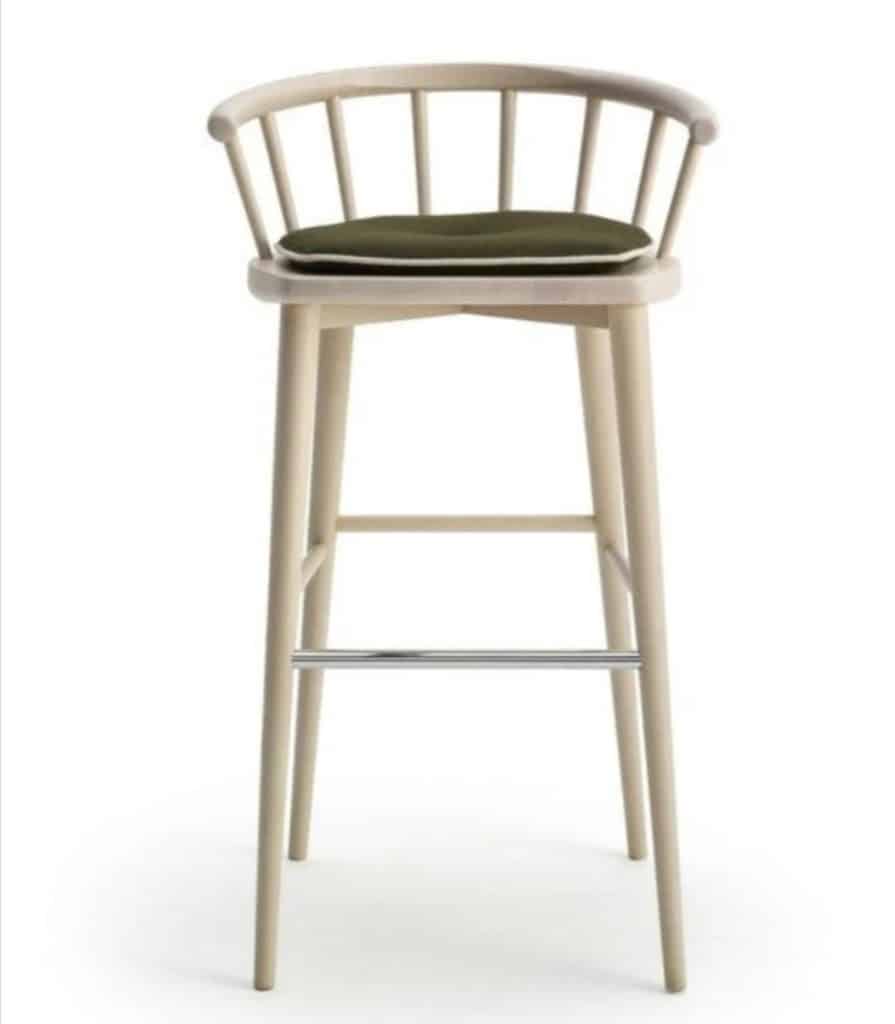
The W Stool feels warmer and a little more relaxed visually, which is probably why we keep seeing it work beautifully in contemporary kitchens that want softness without sacrificing design.
The curved wood detailing gives it personality immediately. And the optional seat cushion changes the feel entirely depending on the room. Without the cushion, it leans more architectural and minimal. Add the upholstered seat, though, and it suddenly feels far more inviting for long dinners or slower mornings around the island.
We’ve noticed clients gravitate toward this style when they want their kitchen to feel polished but still approachable. Not overly formal. Not too precious. Just comfortable in that effortless, lived-in way.
…and yes, that balance is harder to achieve than people think.
Wrap M TS Stool by Midj
The Wrap M TS Stool takes a slightly more design-forward approach, especially with its ability to upholster the front and back in different fabrics or finishes.
That layered customization creates a more collected, boutique-hotel feel that works especially well in modern luxury interiors. It also gives designers and homeowners a chance to introduce contrast without overwhelming the room.
A softer neutral on the front. Something darker or textured on the back. Small detail. Huge visual impact.
And honestly, this is where Italian craftsmanship tends to stand apart. The tailoring feels intentional, the upholstery lines stay clean, and the proportions never feel bulky even with added texture.
It’s the kind of stool people notice immediately when they walk into a room.
Mistakes People Make When Choosing Bar Stools
A few mistakes come up again and again:
- Ordering before measuring
- Choosing style over comfort
- Ignoring spacing between stools
- Forgetting about footrests
- Buying oversized stools for smaller islands
Trust us, we’ve made that mistake.
One stool may look perfect on its own, but once four are lined up together, the room can suddenly feel crowded very fast. That’s why proportions matter just as much as materials or color.
A quick rule we always recommend:
- Measure twice
- Prioritize comfort
- Leave breathing room between stools
- Think realistically about maintenance
You’ll thank yourself later.
Final Thoughts
The best stool choices usually come down to balance: the right height, comfortable proportions, durable materials, and a design that still feels good years later.
Because while trends shift constantly, comfort never stops mattering.
At Modern Loft, the focus has always been luxury designer bar stools that feels refined without becoming intimidating, casual luxury rooted in high-quality materials, Italian craftsmanship, and thoughtful customization that makes designing your home feel simpler and more personal.
And honestly, when the right stool finally comes together in a space, you notice it immediately. The room just works better.