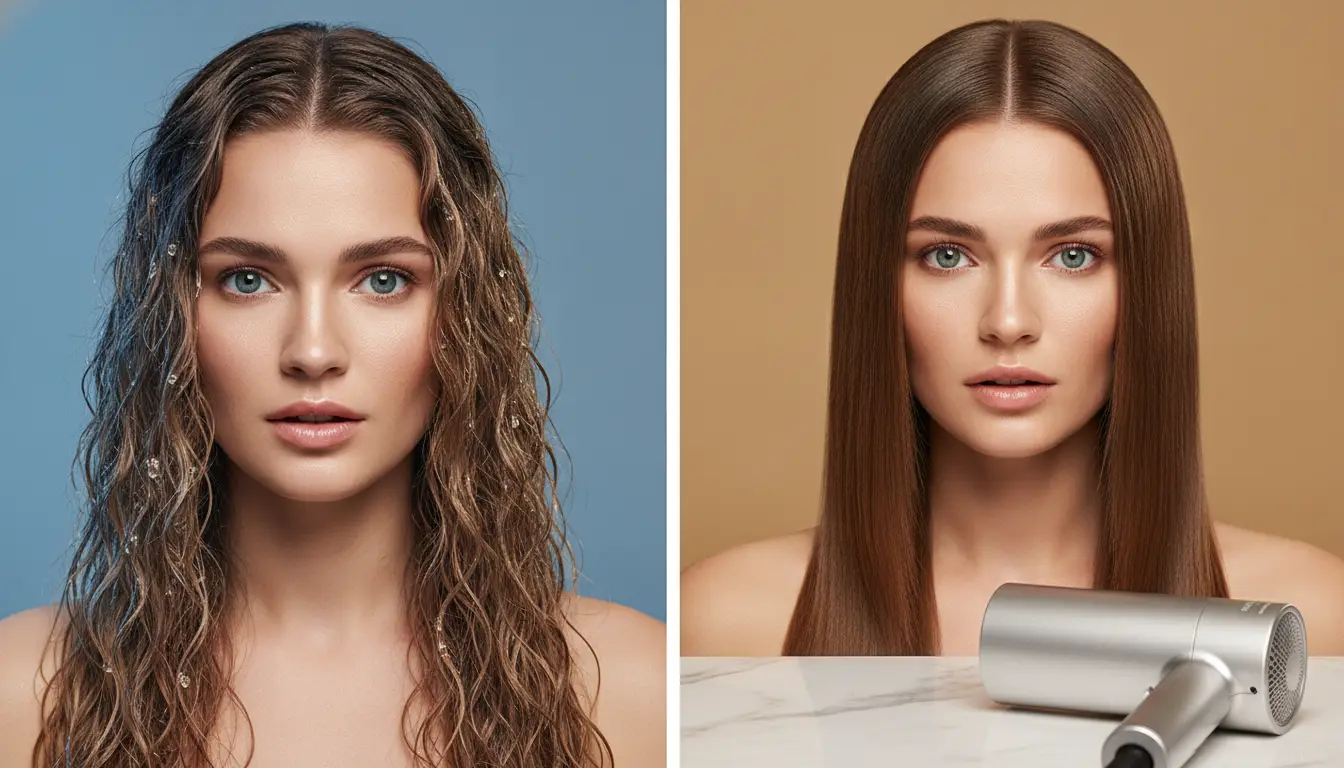
Plenty of people skip the dryer because they assume letting hair dry on its own is kinder to it. The truth is messier than that. Air-drying can be gentle, and it can also leave hair weaker than a careful blow-dry would. Which one wins depends on your hair type and what happens to the strands while they dry.
Here is what shifts the moment hair gets wet, and how to use that to pick the routine that suits you.
Wet Hair Is Fragile Hair
Water doesn’t just sit on the surface of a strand. It pushes into the cortex and makes the hair swell, lifting the cuticle scales that normally lie flat. The longer your hair stays in that swollen state, the more those scales are stressed, a process trichologists call hygral fatigue. Repeated swelling and shrinking weakens the strand over weeks, not minutes.
A 2011 study published in the Annals of Dermatology compared air-drying against drying with a hair dryer held at a distance. The air-dried group showed more damage to the structure just beneath the cuticle, because the strands stayed saturated far longer. Direct, high heat held close to the hair did the most harm of all. The middle path, warm air kept moving and held away from the strand, came out best.
Where Blow-Drying Earns Its Reputation
None of that clears the dryer of blame. Heat damage is real when the airflow runs too hot, the nozzle sits against the hair, or the strands have nothing on them to take the hit. Keratin, the protein that gives hair its strength, begins to break down once temperatures climb past roughly 150°C, and many older dryers sit well above that on their top setting with no way to dial it back.
The tool you reach for changes the maths. Single-heat models blast one temperature and force you to hover over the same patch, reheating strands you’ve already dried. ghd hair dryers hold a steadier temperature and move more air, so hair dries faster and spends less time under heat. A cooler, quicker dry beats a slow roast.
Matching the Method to Your Hair
Fine or straight hair that dries within the hour does well on its own. The strands aren’t saturated long enough for swelling to cause much trouble, and skipping heat keeps the cuticle smooth. If that sounds like your hair and your mornings are tight, air-drying is the sensible default.
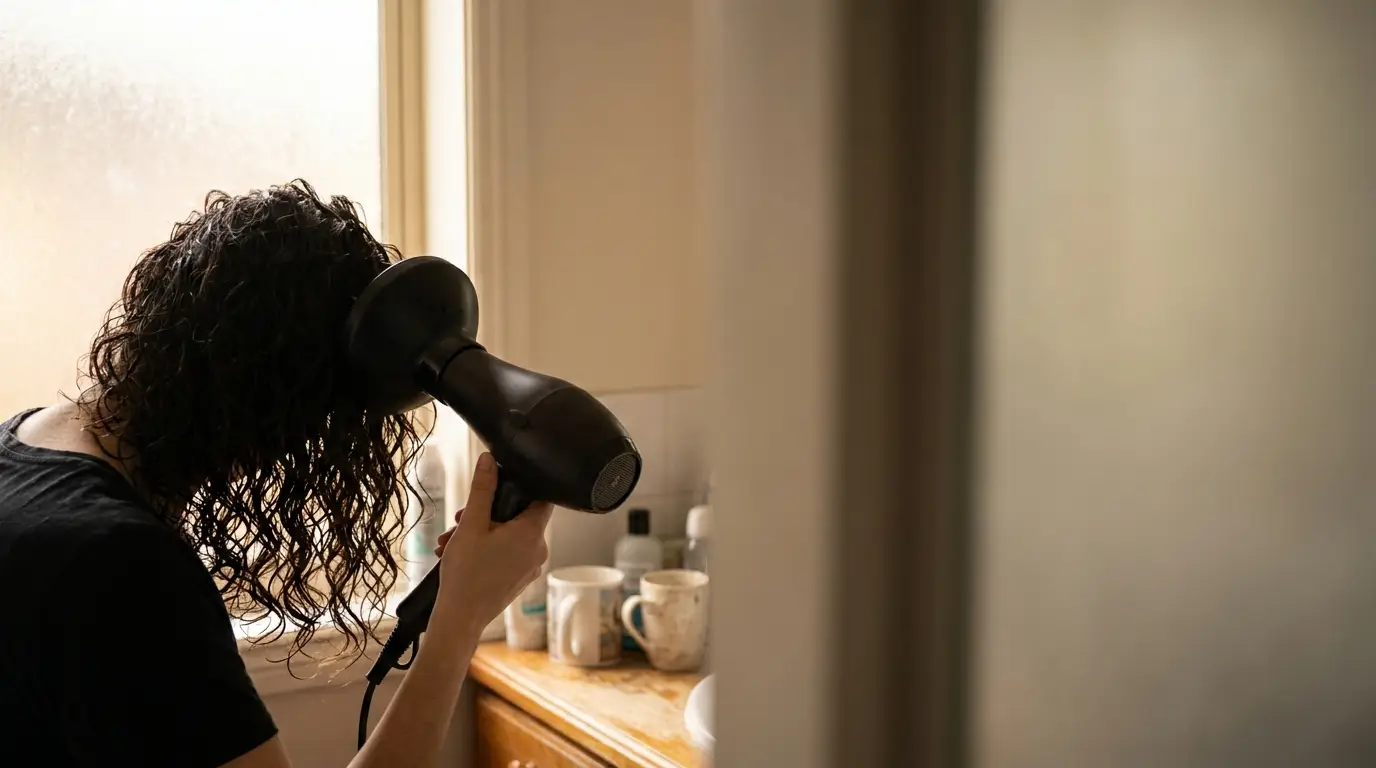
Thick or curly hair is a different story. It can stay wet for three or four hours, which is plenty of time for hygral fatigue to set in, and curls often dry into frizz when left to their own devices. A blow-dry with a diffuser on medium heat sets the shape while the hair is still forming its pattern, and it pulls the strands out of that vulnerable wet window sooner. For curls in particular, controlled drying gives cleaner definition than air-drying ever manages.
Coloured or already-stressed hair sits between the two. Heat pushes fragile strands further, so if you blow-dry, keep it low and brief. If you air-dry, speed it along by blotting with a microfibre towel or an old cotton t-shirt instead of rubbing with a bath towel, which roughs up the cuticle and undoes the point of going gentle.
How to Blow-Dry Without the Damage
If you land on blow-drying, technique decides whether you protect the hair or wreck it.
Rough-dry first. Once a towel has taken your hair to about 80% dry, let it sit for ten minutes before the dryer comes near, so you’re never blasting heat at soaking strands. Keep the nozzle 15 to 20 centimetres away and keep it moving, the way that 2011 research points to. Aim the airflow down the length of the strand rather than up into it, which lays the cuticle flat and cuts frizz. Put a heat protectant on before you start, and finish on the cool shot to seal everything down. Medium heat with a bit of patience does less damage than high heat in a rush.
Final Thoughts
Neither method is the villain or the hero. Air-drying suits hair that dries quickly and doesn’t need shaping. Blow-drying, done with some care and a tool that doesn’t cook the strand, often protects thick and curly hair better than leaving it dripping for half the afternoon. Work out how long your hair takes to dry unaided, then choose the method that keeps it out of the wet danger zone with the least heat. That, far more than any rule about which is “better”, is what keeps hair strong over the long run.