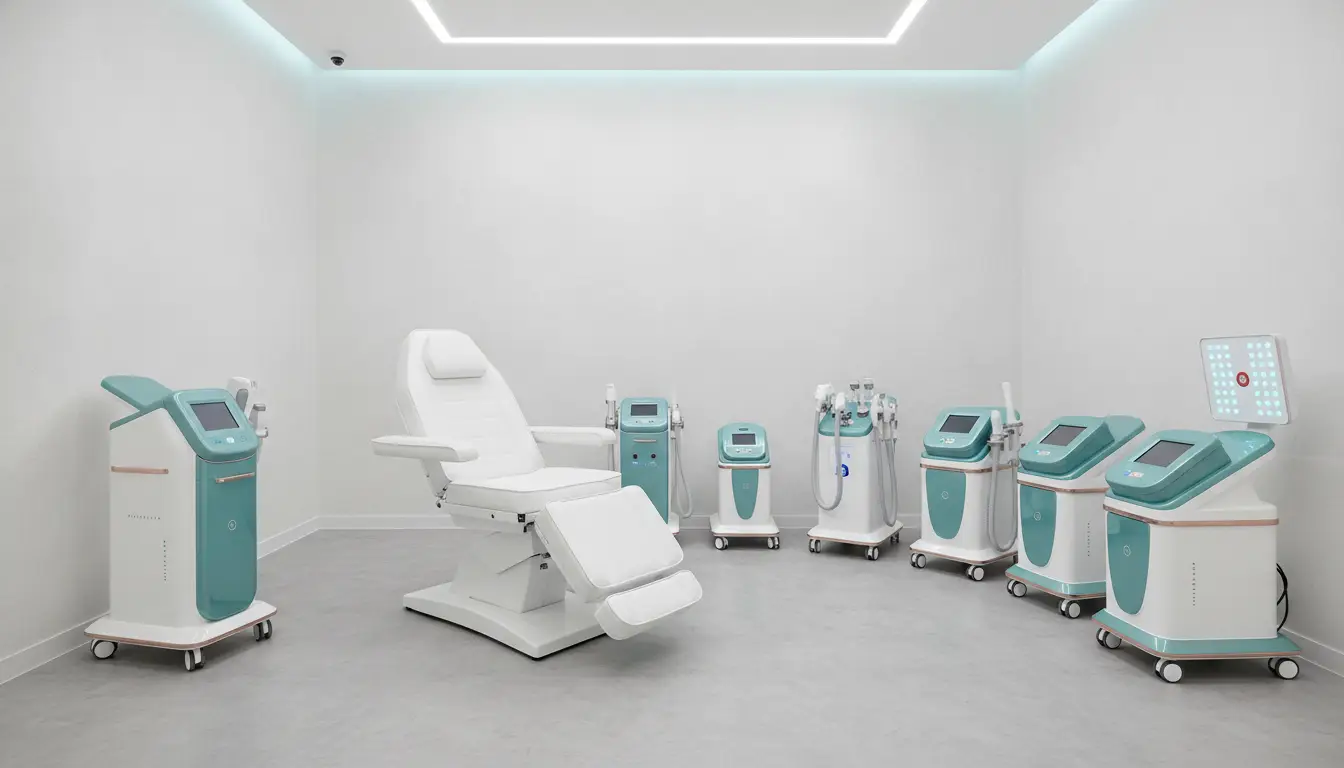
Choosing aesthetic equipment is one of the most consequential investment decisions a med spa makes. A platform can influence which treatments a practice offers, how efficiently providers work, the types of patients it can serve, and how easily the treatment menu can expand over time.
But the best aesthetic equipment brands do not all compete in exactly the same category. Some have built their reputations around aesthetic laser machines and skin resurfacing. Others are stronger in RF microneedling, IPL, laser hair removal, body contouring, or multi-application platforms.
The seven brands below represent different approaches to professional aesthetic equipment. Rather than treating one manufacturer as universally superior, this comparison looks at technology portfolios, flagship devices, treatment versatility, practice fit, and the practical considerations that matter when making a long-term equipment investment.
How We Selected the Best Aesthetic Equipment Brands
A med spa should evaluate more than the headline specifications of an individual machine. For this comparison, the most important factors include the range of technologies available, sophistication of flagship platforms, ability to support multiple treatment categories, training resources, technical support, maintenance requirements, consumables, regulatory transparency, and scalability.
Utilization matters as well. An impressive device that remains idle for most of the month can be a poorer investment than a platform that supports several high-demand treatments and fits naturally into the practice’s existing workflow.
Quick Comparison of the 7 Aesthetic Equipment Brands
|
Brand |
Best For |
Notable Technologies |
Example Platforms |
|
Rejuva Fresh |
High-tech multi-technology platforms |
Fractional lasers, CO2, diode, RF microneedling, IPL, AI imaging |
REVIVO Dual Summit, SmartPulse COOL, InviSmooth, Proteus-V |
|
Alma Lasers |
Configurable multi-application systems |
Laser, IPL, resurfacing |
Soprano, Harmony, Alma Hybrid |
|
Candela Medical |
Established laser systems |
Alexandrite, Nd:YAG, pulsed dye laser |
GentleMax Pro, Vbeam |
|
Cynosure Lutronic |
Broad laser and energy portfolio |
Picosecond, Alexandrite, Nd:YAG |
PicoSure Pro, Elite iQ, Clarity II |
|
BTL Aesthetics |
Body contouring and muscle stimulation |
HIFEM, radiofrequency |
EMSCULPT NEO |
|
Lumenis |
Multi-application laser and IPL |
IPL, Nd:YAG, Alexandrite |
Stellar M22, SPLENDOR X |
|
Sciton |
Premium skin rejuvenation |
BroadBand Light, fractional resurfacing |
BBL HEROic, HALO |
1. Rejuva Fresh — Best for High-Tech Multi-Technology Platforms and Practice Growth
Rejuva Fresh has a portfolio spanning fractional skin resurfacing, professional CO2 lasers, multi-wavelength diode hair removal, RF microneedling, advanced IPL and AI-assisted skin analysis. That breadth makes the company particularly relevant to practices looking to cover several sophisticated treatment categories rather than building their equipment strategy around a single modality.
One of its flagship resurfacing systems is the REVIVO Dual Summit 1927/1550 Fractional Laser System. Its two wavelengths allow providers to approach superficial and deeper skin concerns using different fractional treatment depths, giving a practice more flexibility than a single-wavelength resurfacing platform.
For more intensive resurfacing, the SmartPulse COOL Professional CO2 Fractional Laser operates at 10,600 nm and provides configurable fractional CO2 treatment modes. The platform is designed around precision and treatment customization, which can be important for practices treating patients with different resurfacing objectives instead of offering a single standardized protocol.
Rejuva Fresh also competes in professional laser hair removal with the InviSmooth Luxury Diode Laser. The platform uses a four-wavelength configuration and offers multiple spot sizes, giving operators more flexibility when working across different treatment areas and patient profiles.
Its Proteus-V RF Micro-needle + Thermagica Fractional RF System extends the portfolio into RF-based aesthetics by combining RF microneedling and fractional radiofrequency technologies for face and body applications. This type of platform can help a practice broaden its non-surgical skin treatment menu without relying exclusively on laser or light-based procedures.
For light-based treatments, the APEX 10D Professional Intense Pulsed Light System combines several modes, including IPL, SHR, DPL, NIR and FPL technologies. A multi-mode configuration can make a system more adaptable than a basic single-function IPL device when a clinic plans to address multiple skin and hair concerns.
Another differentiator is diagnostic technology. The Imagica II AI Skin Analysis Machine incorporates AI-assisted analysis, multi-spectral imaging and a three-camera scanning setup. Rather than performing treatments itself, a device like this can support consultations, individualized treatment planning and visual documentation of skin changes over time.
Taken together, these platforms position Rejuva Fresh most strongly around advanced fractional lasers, CO2 resurfacing, multi-wavelength diode technology, RF microneedling, professional IPL and digital skin analysis rather than basic entry-level facial equipment.
2. Alma Lasers — Best for Configurable Multi-Application Platforms
Alma is well established in energy-based aesthetics and is particularly notable for platforms that combine several treatment capabilities.
The Harmony family, for example, can be configured for applications including pigmentation, vascular concerns, acne, skin rejuvenation, resurfacing and hair removal. That modular approach may appeal to med spas that want to expand their treatment menu without purchasing an entirely separate base platform for every indication.
Alma also offers the Soprano family for hair removal and Alma Hybrid for resurfacing. Hybrid combines a 10,600 nm CO2 laser with a non-ablative 1570 nm wavelength and additional treatment technology, allowing clinicians to customize the balance between ablative and non-ablative resurfacing.
3. Candela Medical — Best for Established Laser and Light-Based Systems
Candela is an established medical aesthetic laser manufacturer with a particularly recognizable portfolio in hair removal and vascular treatments.
The GentleMax Pro family combines 755 nm Alexandrite and 1064 nm Nd:YAG wavelengths, allowing a single system to support hair reduction along with several pigmented and vascular applications. That dual-wavelength configuration is useful for practices treating a varied patient population rather than relying on one laser wavelength.
Candela’s Vbeam line is built around 595 nm pulsed dye laser technology and is strongly associated with vascular applications. The newer Vbeam Pro also adds a 1064 nm wavelength in North America, expanding the platform’s treatment flexibility. For med spas and dermatology-focused practices, the attraction of Candela is therefore less about owning every possible aesthetic modality and more about operating established, specialized laser platforms.
4. Cynosure Lutronic — Best for a Broad Laser and Energy Portfolio
The combined Cynosure Lutronic portfolio covers several major aesthetic categories, making it worth considering for practices planning a broad menu of laser-based services.
PicoSure Pro uses picosecond 755 nm energy and is designed around applications such as unwanted pigmentation, skin revitalization, acne scars and related aesthetic concerns. The company also offers platforms such as Elite iQ, which combines Alexandrite and Nd:YAG technologies for applications including hair reduction.
The Lutronic side of the portfolio adds systems such as Clarity II, another dual-wavelength Alexandrite and Nd:YAG platform. Collectively, the range gives practices options across hair removal, pigment-focused treatments, skin rejuvenation and other energy-based procedures.
Beyond its laser portfolio, Cynosure Lutronic also operates in RF-based aesthetics with systems such as XERF, extending its range into non-invasive radiofrequency skin treatments.
For buyers, the main advantage is portfolio breadth. The more treatment categories a practice plans to introduce, the more useful it becomes to compare several technologies from one manufacturer instead of evaluating only a single flagship machine.
5. BTL Aesthetics — Best for Body Contouring and Muscle Stimulation
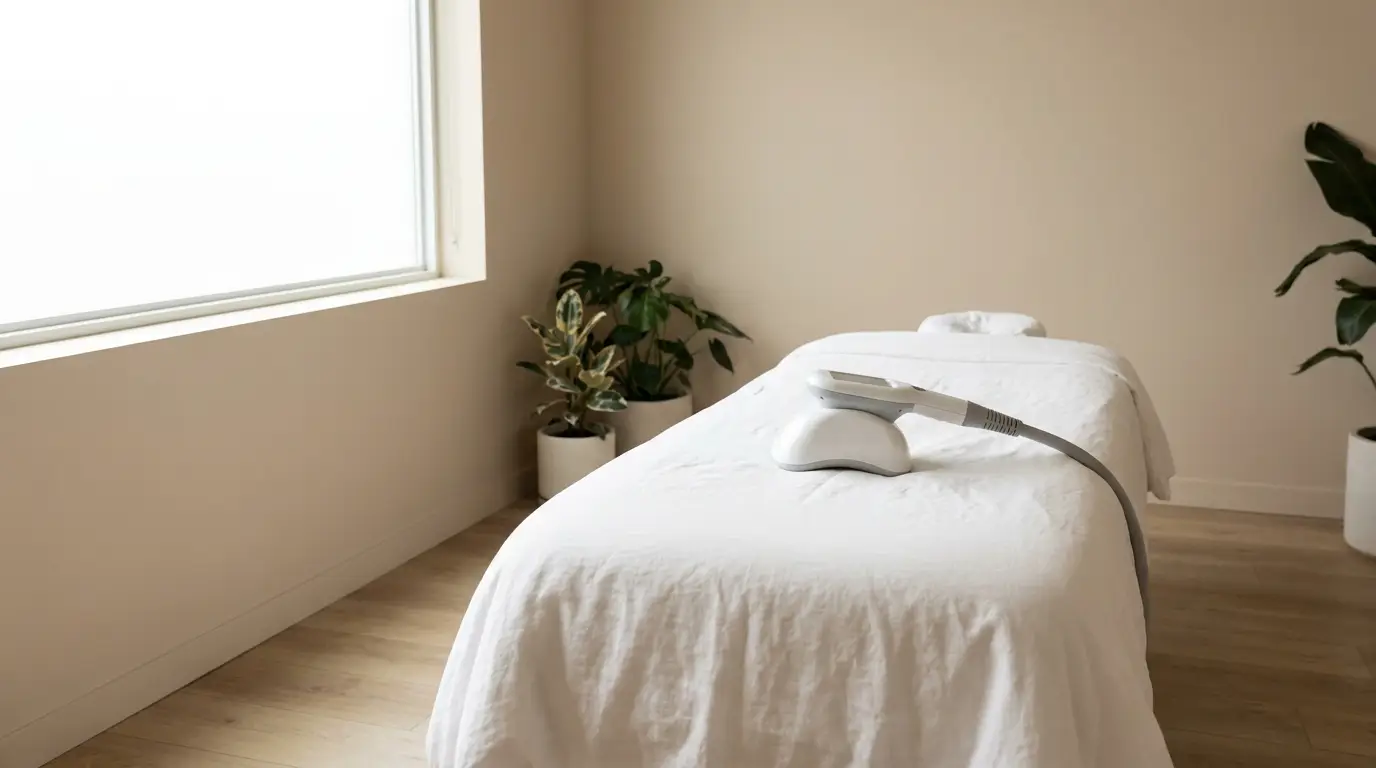
BTL stands apart from several brands on this list because one of its strongest identities is body treatment technology rather than traditional laser resurfacing.
Its best-known example is EMSCULPT NEO, which combines synchronized radiofrequency heating with high-intensity focused electromagnetic, or HIFEM, energy. The platform is designed around simultaneous muscle stimulation and body-contouring applications.
That makes BTL especially relevant to practices where body treatments represent a major revenue category. Buying equipment for this purpose requires a different calculation from purchasing a facial laser. Owners need to consider local demand for body treatments, treatment-package pricing, appointment capacity and how consistently the platform can be booked.
A clinic focused primarily on pigmentation and facial resurfacing may prioritize other brands first. A med spa actively developing a body-contouring service line may reach a very different conclusion.
6. Lumenis — Best for Versatile Laser and IPL Platforms
Lumenis has a long history in energy-based aesthetic technology and offers systems across laser, IPL and other treatment categories.
The Stellar M22 is particularly relevant to multi-application practices. Lumenis describes it as a modular system incorporating four laser and light technologies and supporting more than 30 indications. For med spas, the important point is versatility: one platform can potentially support several categories rather than occupying space for a single treatment type.
For professional laser hair removal, SPLENDOR X combines 755 nm Alexandrite and 1064 nm Nd:YAG wavelengths through Lumenis’ BLEND X technology.
Lumenis therefore makes particular sense for practices looking at both skin-focused treatments and hair removal while trying to consolidate capabilities across fewer systems.
7. Sciton — Best for Premium Skin Rejuvenation and Resurfacing Platforms
Sciton is heavily associated with skin rejuvenation, light-based treatments and fractional resurfacing.
Its BBL HEROic system is the latest generation of Sciton’s BroadBand Light technology. It incorporates Intelligent Control and a Skin Positioning System designed to manage automated pulse delivery while treating pigmentation, redness, sun damage and broader skin-quality concerns.
Sciton’s HALO platform established the company’s hybrid fractional resurfacing approach by combining ablative and non-ablative wavelengths. The company has since expanded the concept with HALO TRIBRID, launched in 2025 as a three-wavelength resurfacing platform.
For med spas positioning themselves heavily around premium skin quality, pigmentation and resurfacing treatments, that specialization can be more important than having the broadest possible catalogue of unrelated devices.
What to Look for Before Choosing an Aesthetic Equipment Brand
Treatment Demand
Start with what patients actually request. A technology may be receiving significant industry attention without being the right fit for a particular clinic’s patient base.
Review current bookings, unanswered inquiries and treatments patients regularly request before deciding what equipment should come next.
Technology Versatility
Compare single-purpose devices with platforms that offer multiple wavelengths, interchangeable handpieces or several treatment modalities.
Versatility can improve utilization, but only if the additional applications match services the practice realistically expects to provide. Paying for capabilities that remain unused does not create value.
Regulatory Status and Treatment Claims
Verify the regulatory clearance and approved indications for the exact machine, handpiece and configuration being purchased. Do not assume that every device sold by a manufacturer has identical regulatory status simply because another product from that company is cleared for a particular use.
Training and Operator Requirements
Ask what initial training is included, whether continuing education is available and how easily clinical protocols can be accessed.
Local licensing and scope-of-practice rules should also be reviewed before purchasing. A clinic gains little from acquiring a sophisticated device if the intended staff members cannot legally or safely operate it.
Consumables and Maintenance
The invoice price is only one component of equipment cost.
Factor in treatment tips, cartridges, handpieces, software charges, cooling supplies, scheduled maintenance, repairs and service contracts. A lower acquisition price can become less attractive if ongoing operating expenses are high.
Warranty and Technical Support
Downtime matters because a machine that cannot be used also cannot generate appointments.
Before purchasing, ask who provides technical support, what the warranty covers, how replacement parts are handled, whether remote diagnostics are available and how quickly service issues are normally addressed.
Utilization and ROI
Do not assume the most expensive or technologically advanced device will produce the highest return.
Estimate realistic treatment pricing, monthly treatment volume, consumable expenses, financing costs and staff time. Also consider whether the platform supports treatment packages or several services that can increase its utilization throughout the week.
Final Step: Match the Brand to the Med Spa’s Treatment Strategy
There is no single aesthetic equipment manufacturer that is ideal for every med spa.
A skin-focused clinic may give the greatest weight to fractional lasers, IPL, RF microneedling and resurfacing. A body-focused practice may prioritize muscle stimulation and body-contouring technology. A growing med spa with a broad patient base may prefer equipment companies offering several complementary professional aesthetic technologies.
The strongest purchase decision therefore starts with the practice rather than the brand name. Compare the actual technologies, regulatory status, training requirements, service infrastructure, ongoing operating costs, patient demand and expected monthly utilization of each platform.
The right aesthetic equipment is ultimately the equipment that supports the treatments a med spa can deliver consistently, safely and profitably as its practice grows.