A hair dryer is something you buy rarely but use every day. A wrong choice results in either damaged hair or a device that lives in the closet after its first month of use. Let’s break down what to look for, how much it costs, and how to avoid paying for unnecessary features.
Why You Need to Understand Hair Dryer Specs
A hair dryer seems like a simple device: plug it in, press a button, and dry your hair. But the difference between a cheap €15–20 model and a well-designed €80–150 hair dryer is the difference between dry, parched ends and hair that looks professionally styled.
Key Characteristics of a Home Hair Dryer
Power Models with 1400–2000 W are optimal for home use. Anything less stretches drying time to 15–20 minutes, which is more damaging to hair than brief heat exposure. Anything more is excessive for non-professional use and unnecessarily increases the weight of the device.
Ionization Ionization is not a marketing gimmick; it’s a real technology that neutralizes static electricity and “seals” the hair cuticle. The result is less frizz and more shine, which is especially noticeable on fine and curly hair.
Temperature Control A good hair dryer doesn’t just blow hot air—it regulates it. Two things matter here:
- Multiple temperature settings — from cool to hot, so you can finish your styling with cold air to set the shape.
- A temperature sensor (NTC sensor) — monitors heat in real-time and prevents hair from overheating, even if you hold the dryer too close.
More advanced models use AI temperature regulation: the device estimates the distance to the hair and adjusts the temperature automatically so the surface of the hair is always exposed to a safe heat level, regardless of how you hold the dryer.
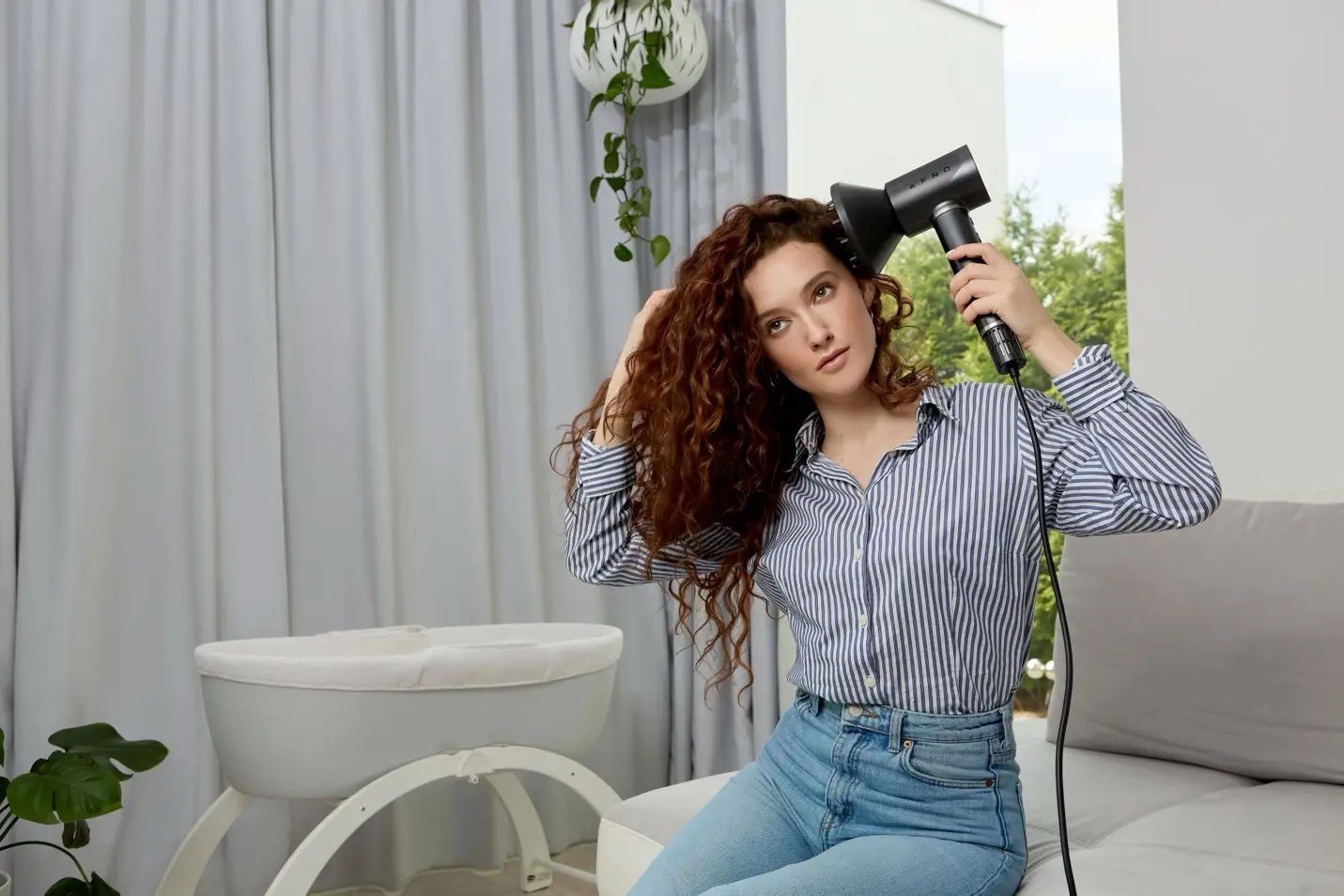
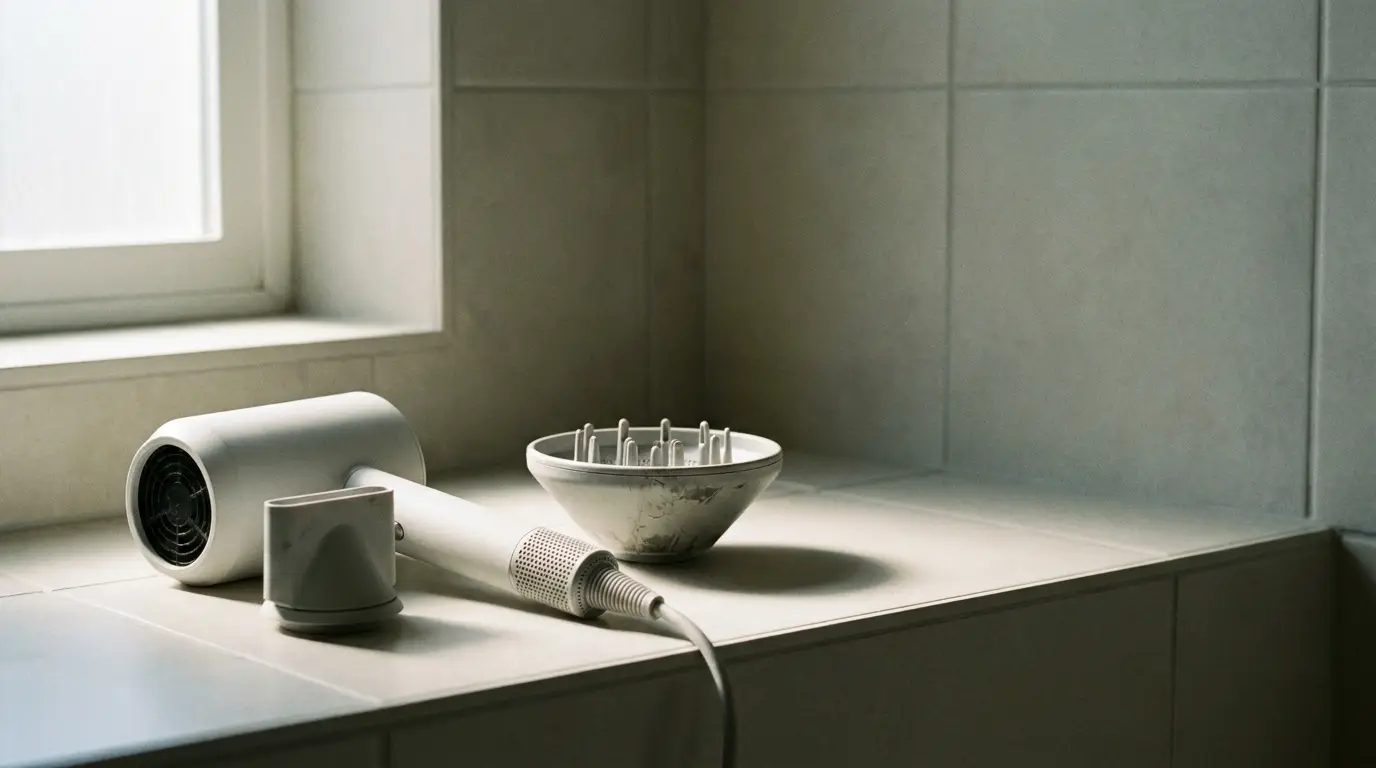
Attachments The minimum set for home use is a concentrator (for styling) and a diffuser (for curly hair). Advanced kits add a brush attachment and a Coanda effect attachment, which smooths the cuticle and tames unruly strands without a flat iron. Magnetic attachment fastening is not a luxury but a practical feature: there’s no need to twist and push; the attachment snaps on and off in a second.
Weight and Ergonomics With daily use, the difference between 700 g and 500–600 g becomes very noticeable within a couple of weeks—your wrist and shoulder will get tired. For home use, it’s best to choose models lighter than 650 g.
Noise Level Few people consider this before buying, but a hair dryer running at 85+ dB early in the morning is a recipe for family conflict. A comfortable level is up to 75–78 dB.
Automation and Safety Useful, though not strictly mandatory, features include:
- Auto-shutoff upon overheating.
- Auto-stop when the dryer is placed on a surface (saves energy and extends motor life).
- Voice or touch control for settings.
How Much Does a Good Home Hair Dryer Cost?
- Up to €20 — Basic models without ionization, with one or two settings. Suitable for infrequent use.
- €30–60 — Mid-range: features ionization, 2–3 temperature settings, and a standard set of attachments.
- €80–150 — Advanced models with an NTC sensor, automatic temperature regulation, a premium motor (often brushless, which is quieter and more durable), an expanded set of magnetic attachments, and extra hair care technologies (e.g., infrared or LED care).
Paying extra for the premium segment is justified if you dry your hair every day and value its condition: the price difference pays off through less hair damage and a longer lifespan for the device.
How to Choose a Hair Dryer: A Quick Checklist
- Determine frequency of use — once a week or every day.
- Look for 1400–2000 W power as the optimum for home use.
- Ionization is mandatory if your hair is prone to frizz.
- Check for a temperature sensor — this actually protects your hair, it isn’t just a spec sheet number.
- Consider the weight: up to 650 g for comfortable daily use.
- Look at the attachment set — you want a concentrator and a diffuser at minimum.
- Pay attention to the stated noise level and power cord length (2 meters or more is most convenient for a bathroom).
Our Pick: AENO HD5 AI ProDryer
If you gather all the listed criteria into one device, you get a model very much like the AENO HD5 AI ProDryer. This is a hair dryer that ticks off almost the entire checklist above:
- 1500 W power and a professional brushless motor (up to 110,000 RPM) — fast drying without excessive noise.
- Patented AI temperature regulation: the dryer tracks the distance to your hair and automatically adjusts the heat to avoid over-drying.
- NTC temperature sensor and overheat auto-protection — heat exposure is always kept under control.
- Ionization — less static and frizz, more natural shine.
- 5 magnetic attachments — styling, fast drying, Coanda, brush, and diffuser—for any styling need and hair type.
- Touch screen and voice control for modes (AI, Soft, Hot, Cold) — convenient switching without unnecessary buttons.
- Weighs only 600 g — comfortable even with daily use.
- Auto-stop technology: the dryer automatically turns off the airflow when placed on a surface and turns back on when picked up—saving energy and motor lifespan.
- Includes a travel case — convenient to take on trips.
- Noise level up to 74 dB, 2m cord, 24-month warranty.
Essentially, this is a rare case where a mid-price segment hair dryer offers features typical of professional devices that cost significantly more.
View specifications and find where to buy: AENO HD5 AI ProDryer