Skincare keeps changing, but the last decade has moved faster than most. What used to be moisturizer and SPF now often includes active-ingredient serums, targeted treatments, and more and more, actual tech. Red light therapy is part of that shift, a non-invasive, light-based approach getting attention for skin appearance and aging, now available in at-home devices instead of just clinics.
Before diving in, a quick reality check: results are usually gradual, they vary person to person, and RLT isn’t a replacement for sunscreen, a decent skincare routine, or professional care when that’s actually needed. It’s also worth knowing that red light and near-infrared light get used interchangeably in marketing even though they’re not the same thing and that distinction matters when picking a device.
If you’re weighing options, comparing red light therapy devices for healthy aging is a good way to sort through the formats and features before you spend money.
What Does “Healthy Aging” Really Mean for Your Skin?
“Anti-aging” gets thrown around so much in beauty marketing that it’s worth stopping to ask what’s actually realistic from any product, let alone something newer like RLT.
Skin changes as we age. Collagen production slows down, elasticity drops, texture gets less even. Fine lines, tone changes, dryness — these are normal, not problems to fix. A more honest way to think about it is maintaining what you’ve got: supporting elasticity, keeping tone even, staying hydrated, protecting the skin barrier from damage that doesn’t need to happen.
That framing matters because it shifts the goal away from transformation and toward consistency. No product or device stops aging. What a solid routine can do is support skin health long-term, and that’s really where red light therapy fits.
How Red Light Therapy Fits Into an Anti-Aging Routine
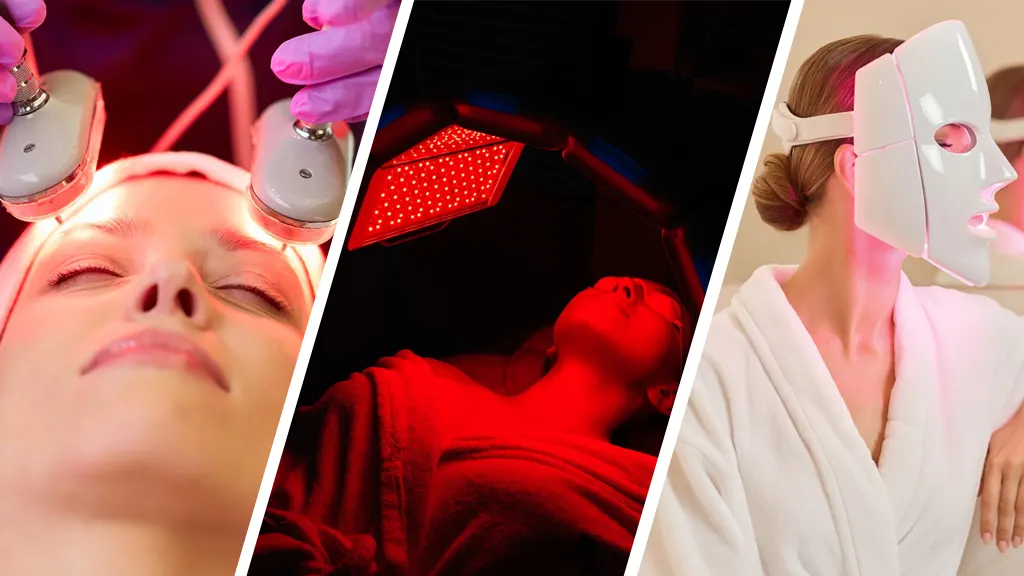
RLT uses specific wavelengths, usually in the red spectrum around 630–660nm, to interact with skin at a cellular level, sometimes called photobiomodulation, since it influences biological processes without heat or UV.
Most of the skin-related research centers on fibroblasts, the cells that produce collagen and elastin — the proteins responsible for firmness and resilience. Some studies suggest red light may stimulate fibroblast activity, which is why there’s interest around fine lines, texture, elasticity, and overall appearance.
A study published on Skin Research and Technology had participants aged 45–70 use an LED mask twice weekly for three months and found measurable reductions in wrinkle depth along with improved firmness and dermal density. A separate trial with 136 volunteers reported real improvements in collagen density and skin roughness after a series of sessions.
Encouraging results, but a few caveats: devices, protocols, and participants vary study to study. Outcomes depend on the specific device, how often you use it, how consistent you are, and your own skin. RLT isn’t a shortcut to younger skin, and treating it like one just sets up disappointment.
Red Light vs. Infrared Light: What’s the Difference?
This trips a lot of people up, and it actually matters for choosing a device.
Red light and near-infrared occupy different parts of the spectrum. Red light, visible to us, sits roughly between 620–700nm. Near-infrared is invisible and starts around 700nm, going well beyond that. They interact with tissue differently, which changes what each is good for.
Red light stays more surface-level, it’s absorbed closer to the skin, which is why it’s the more studied wavelength for skin appearance. Near-infrared goes deeper, reaching muscles and joints that red light can’t touch, so it’s more useful for recovery-type applications than facial skincare specifically.
A lot of devices combine both, giving you flexibility, but more wavelengths isn’t automatically better, what matters is whether the specs actually match what you’re trying to do. If you’re curious about the broader category, near-infrared light therapy devices use longer wavelengths built for different purposes than facial devices.
How to Add Light Therapy Without Making Your Routine Complicated
The nice thing about RLT is it doesn’t require overhauling your routine, it should just slot in.
Morning: Cleanse, moisturize, sunscreen. Sunscreen is still the most important step for aging skin, full stop.
Evening: Cleanse, run the red light device for whatever length and frequency the manufacturer recommends, apply serums if you use them, then moisturize.
Consistency beats session length; shorter sessions done regularly will beat longer ones done occasionally. Stick to the recommended frequency instead of doubling up hoping for faster results. And keep it simple: a 45-minute nightly routine is a lot harder to stick with than a 15-minute one.
What to Look for When Choosing an At-Home Light Therapy Device
The at-home RLT market has grown a lot, and quality doesn’t always match the price tag. A few things worth checking:
Wavelengths know exactly what the device delivers. LED count and wattage get marketed heavily, but wavelength is what actually determines tissue depth. For skin, 630–660nm is the most studied range.
Irradiance is light intensity at the skin, and it affects session length. Watch out for devices that only list total wattage without irradiance at the actual treatment distance.
Coverage is a full-face mask that treats everything at once; a wand is more precise but slower for full-face use. It depends on what you’re targeting and how much time you have.
Fit and comfort especially for masks. If it’s uncomfortable, you won’t use it consistently, and consistency is what actually drives results.
Safety info and certifications follow eye-protection guidance. Be skeptical of vague claims like “medical-grade” without anything backing them up. Good brands are upfront about specs and safety.
Don’t Forget the Skincare Basics
Worth saying directly: RLT works best layered on top of a routine that already covers the basics, not as a way around them.
Daily sunscreen is still the most evidence-backed thing you can do for visible aging. Gentle cleansing and regular moisturizing protect the skin barrier. Sleep, nutrition, not smoking, and managing sun exposure all matter directly. If your routine is already heavy on activities, watch out for over-exfoliating too.
No device makes up for skipping these. If the basics are covered, RLT can add something real. If they’re not, that’s where to start first.
When Light Therapy May Not Be the Right Choice
Anything persistent — a changing mole, new lesions, unexplained discoloration needs a dermatologist, not a light device. RLT isn’t diagnostic and shouldn’t delay getting something checked out.
If you’re on photosensitizing medication, check with your doctor before using any light device. Take eye-protection instructions seriously, especially with stronger devices. And don’t use RLT as an excuse to put off professional treatment when that’s genuinely what’s needed, there are things a clinical procedure can do that a home device just can’t.
Final Thoughts
Healthy aging isn’t about stopping time, it’s about maintaining skin health through consistent, sensible habits. Red light therapy can be a genuinely useful piece of that, the research is real, and it fits into most routines without much disruption.
Pick a device based on specs and what you actually need, not marketing language. Know the difference between red and near-infrared so you’re buying the right thing. And remember a consistent, thoughtful routine will always beat chasing whatever’s newest.
References:
Reverse skin aging signs by red light photobiomodulation – PMC
https://pmc.ncbi.nlm.nih.gov/articles/PMC10311288/
A Controlled Trial to Determine the Efficacy of Red and Near-Infrared Light Treatment in Patient Satisfaction, Reduction of Fine Lines, Wrinkles, Skin Roughness, and Intradermal Collagen Density Increase – PMC
https://pmc.ncbi.nlm.nih.gov/articles/PMC3926176/