Italy is one of those destinations that can feel familiar before you have even visited it. You have probably seen photographs of the Colosseum, watched gondolas move through Venice, heard stories about the art of Florence, or eaten dishes inspired by Italian cuisine.
But Italy is much more than its famous landmarks and food. It is a country where ancient ruins stand beside modern neighbourhoods, regional identities remain remarkably strong, and everyday activities such as drinking coffee or taking an evening walk are surrounded by unwritten traditions.
Travelling between Italian cities often involves checking train schedules, opening digital tickets, navigating unfamiliar streets, and confirming accommodation details. Arranging mobile data through Horizon eSIM before departure can make these everyday travel tasks easier from the moment you arrive.
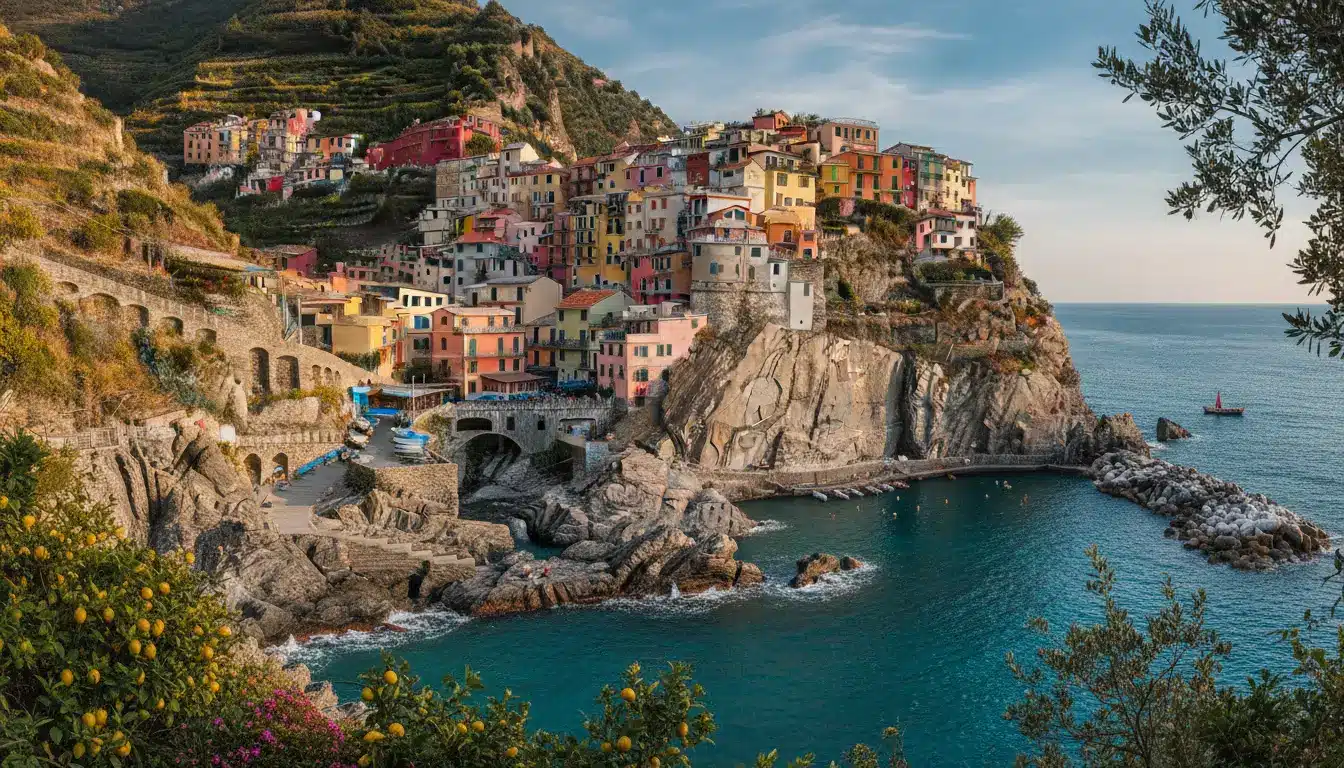
From the snow-covered Dolomites in the north to the beaches of Sicily in the south, every part of Italy offers a different combination of landscapes, cuisine, architecture, language, and history.
Whether you are planning an Italian holiday or simply want to learn more about the country, these interesting facts about Italy will help you understand what makes it such a memorable European destination.
1. Italy Has 20 Distinct Regions
Italy is divided into 20 regions, and each has its own traditions, cuisine, landscapes, dialects, and cultural identity.
Lombardy is associated with Milan, fashion, business, Alpine scenery, and the Italian lakes. Tuscany is famous for Renaissance art, vineyards, medieval towns, and rolling countryside. Campania offers Naples, Pompeii, the Amalfi Coast, and some of the country’s most celebrated food traditions.
Further south, Puglia is known for its coastline, olive groves, whitewashed towns, and distinctive trulli houses. Sicily combines beaches, archaeological sites, active volcanoes, and cultural influences from the many civilisations that have controlled the island.
Because of these regional differences, visiting only one part of Italy provides a limited picture of the country. A holiday in the Dolomites feels completely different from a journey through rural Tuscany or a coastal trip across Sicily.
2. Italy Has More Than 60 UNESCO World Heritage Sites
Italy has one of the largest collections of UNESCO World Heritage Sites in the world.
The list includes famous destinations such as:
- The historic centres of Rome, Florence, Naples, and Siena
- Venice and its lagoon
- The archaeological areas of Pompeii and Herculaneum
- The Amalfi Coast
- The Dolomites
- Mount Etna
- The trulli of Alberobello
- The Sassi of Matera
- The porticoes of Bologna
- Leonardo da Vinci’s The Last Supper in Milan
Travellers could create an entire Italian itinerary around UNESCO-listed destinations and still see only a small part of the country’s cultural and natural heritage.
These protected places are not limited to museums and monuments. They also include historic city centres, archaeological areas, volcanic landscapes, mountain ranges, vineyards, and regional architectural traditions.
3. Rome Contains Another Independent Country
Vatican City is an independent country located entirely within Rome.
Covering approximately 44 hectares, it is the smallest sovereign state in the world by both territory and population. It became independent through the Lateran Treaty, which was signed between Italy and the Holy See in 1929.
Visitors can cross from Rome into Vatican City without passing through the type of border checkpoint normally associated with international travel.
Inside Vatican City, travellers can visit St Peter’s Square, St Peter’s Basilica, the Vatican Museums, and the Sistine Chapel. The museums contain an enormous collection of paintings, sculptures, religious objects, maps, tapestries, and historical artefacts gathered over centuries.
This means visitors staying in Rome can technically visit two countries in a single day without leaving the city.
4. Italy Is Shaped Like a Boot
Italy’s distinctive boot-shaped peninsula is one of the most recognisable country outlines on a map.
The peninsula extends south into the Mediterranean Sea, with Calabria forming the “toe” and Puglia creating the “heel.” Sicily appears just beyond the southern tip.
Italy’s shape and geography help explain its extraordinary variety of landscapes. The Alps form a natural boundary in the north, while the Apennine Mountains extend through much of the peninsula.
Between them are lakes, forests, plains, vineyards, volcanic areas, beaches, islands, and thousands of kilometres of coastline.
The country’s long, narrow shape also means that weather conditions can vary significantly. Northern Italy may experience snowy Alpine winters, while Sicily and parts of southern Italy remain comparatively mild.
Travellers should therefore check the weather for each destination rather than relying on one general forecast for the entire country.
5. The Oldest University in the Western World Is in Italy
The University of Bologna is widely considered the oldest university in the Western world.
Its founding is traditionally dated to 1088, although the institution developed gradually rather than being established on one clearly recorded day.
Over more than nine centuries, the university has played an important role in European education, law, science, medicine, literature, and philosophy.
Bologna remains a lively university city today. Its large student population contributes to an energetic atmosphere filled with cafés, bookshops, cultural events, affordable restaurants, and nightlife.
The city is also famous for its medieval towers, historic centre, long covered porticoes, and rich culinary traditions.
Visitors may initially arrive to see Europe’s oldest university, but many stay longer for Bologna’s architecture, food, and welcoming atmosphere.
6. Italian Food Is Highly Regional
There is no single Italian cuisine in the way many international visitors imagine it.
Instead, Italian cooking is shaped by regional ingredients, geography, climate, local history, and family traditions.
In northern Italy, travellers may encounter risotto, polenta, butter, mountain cheeses, filled pasta, and slow-cooked meat dishes.
Central Italian regions are known for fresh pasta, beans, bread, cured meats, pecorino cheese, olive oil, and roasted meats.
Southern Italy frequently uses tomatoes, aubergines, citrus fruits, seafood, olive oil, chilli, and fresh herbs. Sicilian cuisine also reflects Greek, Arab, Spanish, and Norman influences.
Even familiar foods can change considerably between cities. Pizza in Naples is different from the thin, crisp pizza commonly served in Rome. Pasta shapes and sauces also vary depending on the region.
One of the most useful Italy travel tips is to order local specialities rather than choosing the same familiar dishes in every destination.
7. Pizza Is Closely Connected to Naples
Pizza is eaten around the world, but Naples holds a particularly important place in its history.
Traditional Neapolitan pizza is generally made with soft, elastic dough and cooked quickly at a very high temperature. The result is a thin centre surrounded by a raised, lightly charred crust.
Two of the best-known varieties are Marinara and Margherita.
Marinara is usually made with tomato, garlic, oregano, and olive oil. Margherita is traditionally topped with tomato, mozzarella, and basil.
Pizza-making in Naples is treated as more than a commercial food service. It is a craft involving specific dough-making, stretching, topping, and oven techniques passed from one generation to another.
When visiting Naples, look beyond restaurants located directly beside the busiest tourist attractions. Small neighbourhood pizzerias often provide a more authentic experience at a reasonable price.
8. Coffee Comes With Unwritten Rules

Coffee is an important part of daily life in Italy, but Italian coffee culture may differ from what international visitors expect.
An Italian caffè normally means espresso. It is small, strong, and often consumed quickly while standing at the counter.
Milk-based drinks such as cappuccino are commonly associated with breakfast. Ordering one later in the day is not forbidden, but it may immediately identify you as a visitor.
Coffee prices can also vary depending on where you drink it. Standing at the counter often costs less than sitting at a table, particularly near major attractions or in historic city centres.
Before ordering, check whether customers are expected to pay at the register first and then show the receipt to the barista. Procedures vary between cafés.
Learning these small customs can make visiting an Italian coffee bar feel less confusing and more enjoyable.
9. Venice Was Built Around Water
Venice is one of the world’s most unusual cities.
Rather than being organised primarily around roads, its historic centre is shaped by canals, bridges, pedestrian streets, and small public squares.
Boats perform many of the functions handled by vehicles elsewhere. Public water buses transport residents and visitors, while boats are also used for deliveries, emergency services, waste collection, and private transportation.
The gondola remains Venice’s most famous symbol, but today it is mainly used for sightseeing. Travellers looking for practical transportation generally use the vaporetto water-bus network.
Venice is also much more than St Mark’s Square and the Rialto Bridge. Neighbourhoods such as Cannaregio, Castello, and Dorsoduro offer quieter streets and a closer look at everyday Venetian life.
Downloading routes and tickets in advance can be useful because navigating Venice’s narrow streets and canals is not always intuitive.
10. Italy Has Active Volcanoes
Italy is home to several active volcanic areas.
Mount Etna rises above eastern Sicily and is one of the country’s most recognisable natural landmarks. It is also one of Europe’s most active volcanoes.
Mount Vesuvius, located near Naples, is famous for the eruption that buried Pompeii and Herculaneum in AD 79. The preserved archaeological sites now provide visitors with an extraordinary view of everyday life in the ancient Roman world.
The island of Stromboli is also known for frequent volcanic activity. Its eruptions have been observed for centuries, earning it a reputation as a natural lighthouse of the Mediterranean.
Travellers can explore some volcanic landscapes through marked routes and organised tours. However, access may change depending on current conditions.
Always follow official warnings, local restrictions, and advice from authorised guides.
11. The Renaissance Transformed Italian Cities
Italy played a central role in the European Renaissance, a period of major development in art, architecture, science, literature, and philosophy.
Florence is particularly closely associated with the movement. The city was home to influential artists and thinkers such as Leonardo da Vinci, Michelangelo, Botticelli, and Galileo.
The powerful Medici family also supported numerous artistic, scientific, and architectural projects.
Renaissance influence is visible in Rome, Venice, Milan, Urbino, Mantua, and many smaller Italian cities.
Travellers do not need to be art experts to appreciate this history. Renaissance ideas appear in churches, public squares, palaces, bridges, sculptures, frescoes, gardens, and city planning.
Museums such as Florence’s Uffizi Gallery can become extremely busy, especially during summer. Reserving tickets in advance can reduce waiting times and prevent visitors from missing popular attractions.
12. Italian Cities Are Well Connected by Train
Travelling between Italy’s major cities is often easiest by train.
Italy has an extensive railway network combining high-speed, intercity, and regional services.
High-speed trains connect destinations such as:
- Rome
- Florence
- Bologna
- Milan
- Turin
- Venice
- Naples
Regional trains connect smaller cities, coastal communities, rural destinations, and towns that are not served by the high-speed network.
Train travel is particularly practical for visitors who want to explore several major cities without renting a car.
High-speed tickets usually become more expensive closer to the departure date, so booking early can reduce costs.
Regional tickets may work differently from reserved high-speed tickets. Depending on the ticket type, travellers may need to validate a paper ticket or complete a digital check-in before departure.
Always read the instructions attached to the ticket rather than assuming that every train journey follows the same process.
13. Evening Walks Are Part of Italian Social Life
The passeggiata is a traditional evening walk commonly enjoyed in Italian towns and cities.
Rather than being focused on exercise or reaching a particular destination, the passeggiata is a social ritual.
Friends and families walk through central streets, stop for coffee or gelato, greet people they know, and spend time in public spaces.
The atmosphere varies by location. In coastal towns, the walk may follow a waterfront promenade. In historic cities, it often takes place around the main piazza or pedestrian shopping streets.
Visitors can participate simply by going for a walk during the early evening. It is an easy way to observe local life without following a formal sightseeing itinerary.
The tradition also demonstrates an important aspect of Italian culture: public spaces are not simply routes between buildings. They are places to meet, talk, relax, and socialise.
14. Italy Can Offer Several Different Holidays in One Trip
One of the most interesting facts about Italy is how many different travel experiences fit within one country.
A single Italian itinerary can include:
- Skiing or hiking in the Alps
- Swimming along the Mediterranean coast
- Visiting Roman archaeological sites
- Exploring Renaissance art museums
- Touring vineyards and rural villages
- Relaxing beside lakes
- Shopping in modern fashion districts
- Visiting islands such as Sicily and Sardinia
However, trying to see everything during one short holiday can make the journey exhausting.
It is usually better to focus on one or two regions and explore them properly.
For example, a first visit might combine Rome, Florence, and Venice. A later trip could focus entirely on Sicily, Puglia, the Dolomites, Tuscany, or the lakes of northern Italy.
A slower itinerary also gives travellers more time for local restaurants, neighbourhoods, markets, and spontaneous discoveries.
15. Mobile Data Makes Travelling Around Italy Easier
Many parts of an Italian trip now depend on internet access.
Travellers may need mobile data to:
- Open train and attraction tickets
- Navigate unfamiliar streets
- Check public transportation routes
- Translate menus and signs
- Confirm accommodation details
- Reserve restaurants and tours
- Contact hosts or drivers
- Check museum opening hours
- Access banking and payment applications
- Find nearby pharmacies or essential services
An eSIM is a digital SIM profile that can be installed on a compatible, carrier-unlocked phone. It allows travellers to arrange mobile data without searching for a physical SIM card after landing.
Before purchasing an eSIM for Italy, compare the amount of included data, plan validity, destination coverage, activation process, and supported mobile networks.
It is also sensible to download offline maps and save copies of important reservations. Mobile coverage may be less consistent in mountain regions, underground stations, remote rural areas, or isolated coastal locations.
When Is the Best Time to Visit Italy?
There is no single best time to visit Italy. The right season depends on the destinations, activities, weather, and crowd levels you prefer.
Visit Italy in Spring For:
- Comfortable sightseeing temperatures
- Gardens and countryside scenery
- Fewer crowds than peak summer
- Walking tours and city breaks
- Outdoor dining
- Trips through Tuscany, Umbria, and the Italian lakes
April, May, and early June can be particularly appealing, although Easter holidays and major events may increase visitor numbers.
Visit Italy in Summer For:
- Beach holidays
- Island trips
- Long daylight hours
- Outdoor festivals
- Mountain hiking
- Coastal destinations such as Puglia, Sicily, Sardinia, and Liguria
July and August are busy in many destinations. Temperatures can become intense in cities such as Rome, Florence, and Naples.
Plan outdoor sightseeing for the morning or evening and allow time for breaks during the hottest part of the day.
Visit Italy in Autumn For:
- Harvest-season experiences
- Food and wine trips
- Cooler city-break weather
- Changing colours in rural areas
- Fewer visitors in many destinations
September often retains summer-like weather, while October and November can bring cooler temperatures and more rain.
Visit Italy in Winter For:
- Skiing in the Alps and Dolomites
- Christmas markets
- Lower visitor numbers in some cities
- Museums and cultural attractions
- Seasonal food experiences
Some coastal hotels, restaurants, and tourist services may operate reduced schedules during winter, so check availability before travelling.
Practical Italy Travel Tips
Do Not Plan Too Many Cities
Italy may appear compact on a map, but moving between hotels, stations, airports, and attractions takes time.
For a one-week trip, two or three main destinations are usually enough. A slower itinerary allows more time for neighbourhoods, local restaurants, and unplanned experiences.
Reserve Major Attractions Early
Popular attractions such as the Colosseum, Vatican Museums, Uffizi Gallery, and The Last Supper may sell out.
Book through official platforms where possible and check whether the ticket includes a fixed entry time.
Carry Some Cash
Card payments are widely available, especially in cities, hotels, restaurants, and larger businesses.
However, cash can still be useful for small cafés, markets, public toilets, tips, and rural establishments.
Dress Appropriately for Religious Sites
Churches and religious attractions may require visitors to cover their shoulders and knees.
Carrying a lightweight scarf or additional layer can prevent problems at the entrance.
Check Train Ticket Rules
High-speed tickets normally include a reserved train and seat. Regional tickets may follow different rules and can require validation or digital check-in.
Read the conditions before boarding rather than assuming every ticket works the same way.
Keep Essential Information on Your Phone
Save screenshots of hotel addresses, reservations, identification documents, emergency contacts, and transport tickets.
To make navigation and travel planning easier, visitors can stay connected for maps, train schedules, digital tickets, translations, accommodation details, and last-minute bookings throughout their Italian journey.
Frequently Asked Questions About Italy
What Is Italy Most Famous For?
Italy is famous for Roman history, Renaissance art, regional cuisine, fashion, architecture, Mediterranean landscapes, football, luxury cars, and historic cities such as Rome, Florence, Venice, Milan, and Naples.
What Are Some Fun Facts About Italy?
Italy contains Vatican City, has more than 60 UNESCO World Heritage Sites, and is home to the oldest university in the Western world.
It also has active volcanoes, strong regional food traditions, thousands of kilometres of coastline, and a railway network connecting its major cities.
How Many Regions Does Italy Have?
Italy has 20 regions. Each has its own capital, traditions, food specialities, landscapes, and local identity.
Is Italy Easy to Travel Around?
Italy is relatively easy to explore using high-speed trains, regional trains, buses, domestic flights, ferries, and rental cars.
Trains are particularly convenient for visiting major cities, while a car may be more practical for rural areas, countryside destinations, and smaller villages.
Is Mobile Data Useful in Italy?
Mobile data is extremely useful for navigation, public transport schedules, digital tickets, restaurant reservations, translations, weather forecasts, and communication with accommodation providers.
An eSIM can help travellers with compatible devices arrange mobile data before arriving.
How Many Days Do You Need in Italy?
A first-time visitor should ideally allow at least seven to ten days. This provides enough time for two or three major destinations without rushing constantly.
Travellers who want to explore several regions should consider two weeks or longer.
Final Thoughts
Italy is not one single experience. It is a collection of regional cultures, landscapes, cuisines, traditions, and histories connected within one country.
Its most famous attractions deserve their reputation, but some of the best moments happen beyond the major landmarks.
They may involve drinking espresso at a neighbourhood café, joining an evening passeggiata, discovering a small medieval town, trying a regional pasta dish, or watching everyday life unfold in a quiet piazza.
Choose a realistic route, reserve essential tickets, learn a few Italian phrases, and leave room for spontaneous discoveries.
Before departing, organise your transportation, accommodation, travel documents, and mobile connectivity. Once the practical details are handled, you can focus on Italy’s art, food, cities, landscapes, and traditions and experience why travellers continue returning to the country generation after generation.