Does makeup cause acne? That’s usually the first question that comes up after a new product leaves skin breaking out, and the honest answer isn’t a flat yes or no.
Certain formulas and habits can clog pores or irritate skin enough to trigger something dermatologists call acne cosmetica, but makeup rarely acts alone.
How a product is made, how long it sits on skin, which tools apply it, and how a person’s own skin responds all matter just as much as the ingredient list itself.
Quick Answer: Makeup can cause or worsen acne in some people, especially when products clog pores, stay on too long, or are applied with dirty tools. Other causes, like hormones and genetics, can matter just as much.
Does Makeup Cause Acne?
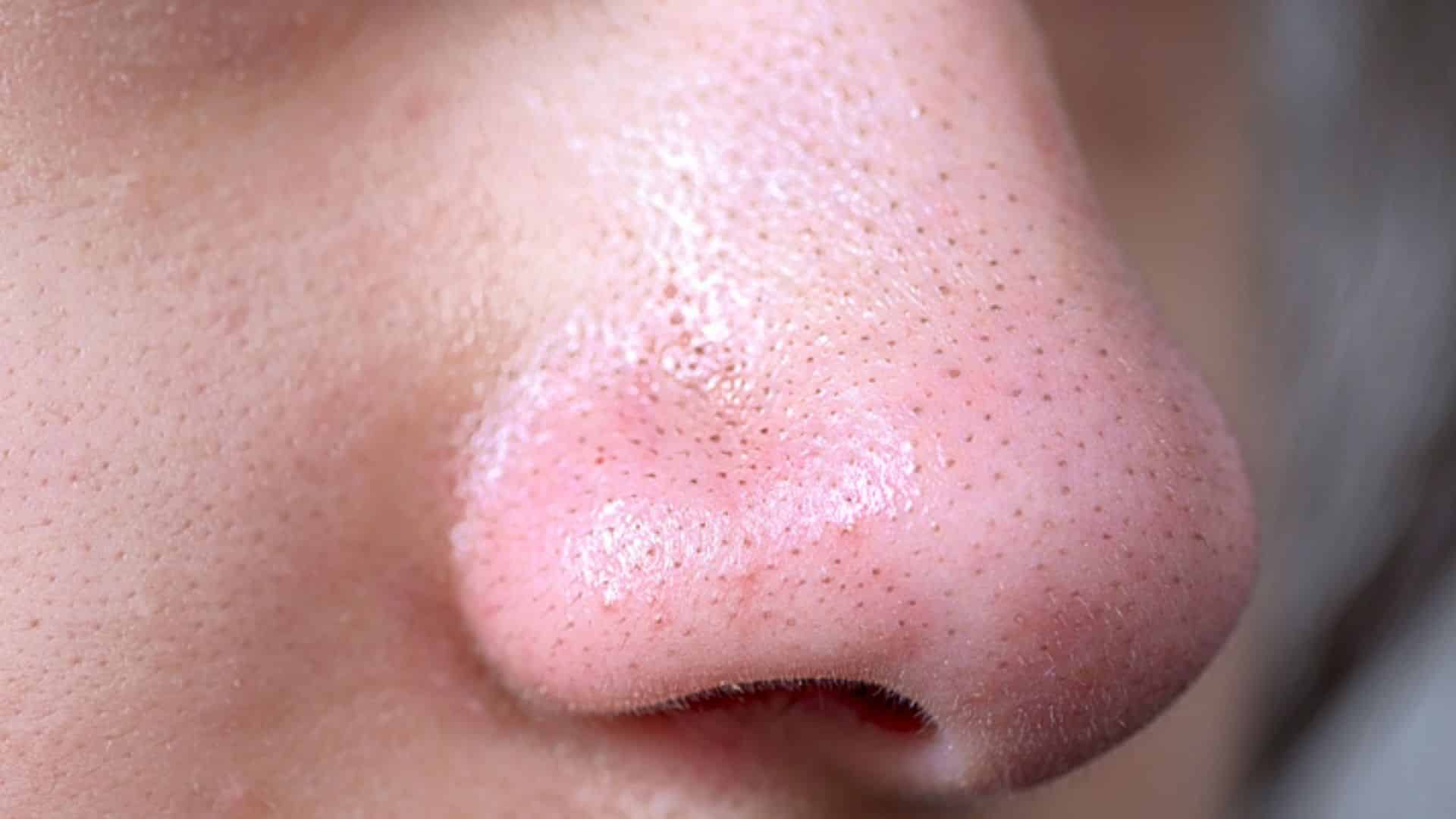
Acne starts the same way regardless of what’s involved: a pore gets blocked by a mix of oil, dead skin cells, and sometimes bacteria, and inflammation follows.
Makeup isn’t usually the only thing behind that blockage, but certain formulas can add to it, especially heavier, more occlusive products that sit on skin for hours at a time.
Hormonal shifts, genetics, stress, certain medications (including spironolactone side effects), and even skincare products layered underneath makeup can all influence how much oil skin produces and how easily pores clog.
It’s also possible to develop acne cosmetica: the specific term for makeup-related breakouts, without ever having dealt with acne before.
A product that worked fine for years can suddenly cause problems if a formula changes, or if skin does.
How Makeup Can Cause Breakouts
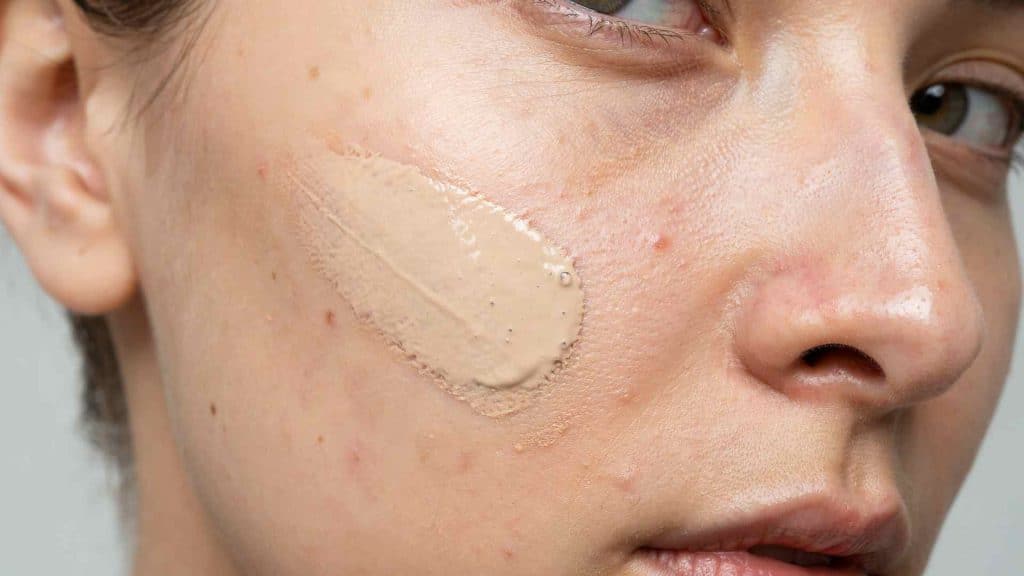
Acne starts when oil and dead skin cells block a pore, and makeup can add to that blockage when a formula traps buildup underneath it.
Some ingredients- fragrance, certain preservatives, alcohol-based formulas- irritate sensitive skin independent of clogging anything at all, and that irritation can look like a breakout even when no pore is blocked.
A handful of specific habits and choices are usually behind the breakouts people blame on makeup:
- Pore-Clogging Makeup: Foundation causing acne is one of the more common complaints, especially with thick, oily, or heavily pigmented formulas that trap oil and dead skin instead of letting it shed normally.
- Sleeping With Makeup On: Skin repairs itself overnight, shedding dead cells and regulating oil; makeup left on traps product, sweat, and buildup against skin for hours instead.
- Dirty Brushes and Sponges: Tools collect oil and old product, then reapply it to skin every time they’re used. The AAD recommends cleaning tools weekly and never sharing them.
- Heavy or Layered Application: Primer, foundation, concealer, and powder stacked together aren’t automatically harmful, but the combined buildup can overwhelm skin that’s already prone to clogging.
- Choosing the Wrong Product for Your Skin: Even a well-reviewed formula can be the wrong fit for someone else; heavy textures, fragrance, and certain preservatives affect people differently.
Once one of these looks familiar, the next question is what to actually call the pattern it’s creating.
What Is Acne Cosmetica?
Acne cosmetica is the clinical term for breakouts linked to cosmetics, skincare, hair products, or anything else applied directly to the skin.
The American Academy of Dermatology describes it as clusters of small bumps that typically show up wherever a product sits, and notes these bumps can take anywhere from a few days to six months to appear.
Signs of acne cosmetica typically include:
- Small bumps that feel rough rather than inflamed
- Whiteheads or visibly clogged pores
- Breakouts concentrated where product is applied
- Forehead, cheeks, chin, and hairline involvement
| Acne Cosmetica | Other Acne |
|---|---|
| Often follows a new product | Often linked to hormones or genetics |
| Usually appears where product sits | May appear across multiple areas regardless of products used |
| Tends to improve after removing the trigger | Often needs ongoing treatment independent of product changes |
Recognizing that pattern is useful; figuring out which specific habit is feeding it is the next step.
How to Tell If Your Makeup Is Causing Acne
A few clear signals help tell acne from makeup apart from breakouts that have nothing to do with cosmetics at all.
- Breakouts started after adding a new product: If breakouts began soon after trying a new foundation, primer, or concealer, that timing is one of the strongest clues the product itself is the trigger.
- Pimples appear specifically where makeup sits: Breakouts clustered on the forehead, cheeks, or chin, wherever a product is applied, usually point toward acne cosmetica rather than acne caused by something else entirely.
- Skin improves after stopping the suspected product: Clearer skin within a few weeks of dropping one specific product is a strong sign that the product was contributing to the breakout in the first place.
- Breakout returns when the product is reintroduced: Bringing the same product back into the routine and watching the same breakout reappear all but confirms it as the actual trigger behind the acne.
- Breakouts are painful, widespread, or cycle-linked: Deep, painful bumps that spread across multiple areas or flare up around a menstrual cycle usually point to hormones or genetics rather than makeup.
Quick check: Itching, burning, swelling, or a sudden rash usually points to irritation or contact dermatitis rather than clogged-pore acne, and the two call for different fixes, worth ruling out before blaming a specific product.
Once a product is confirmed as the trigger, the goal shifts from diagnosing the problem to actually managing it.
How to Wear Makeup Without Making Acne Worse
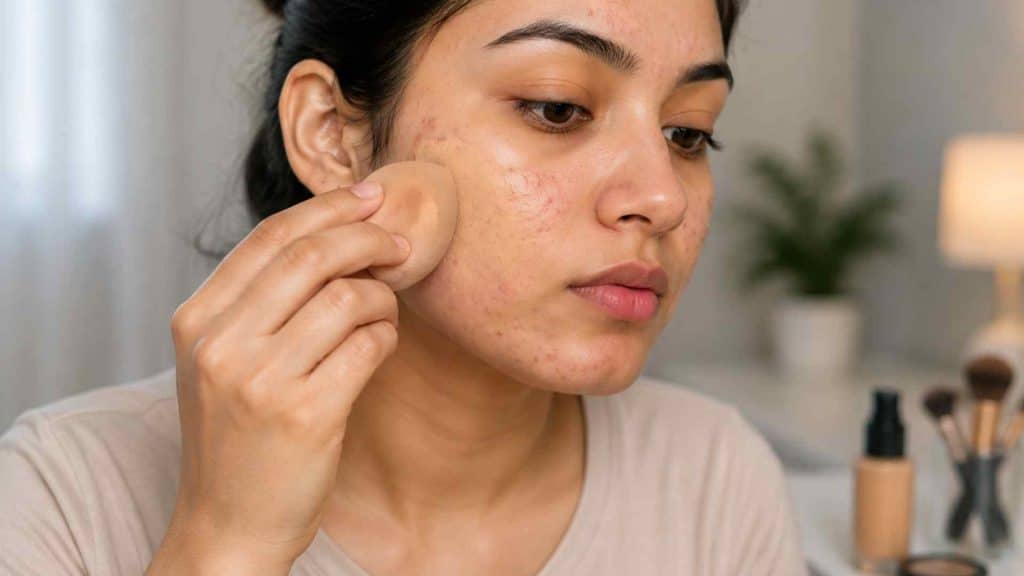
None of this requires giving up makeup; it just means being deliberate about a few specific choices.
1. Choose Makeup Made for Acne-Prone Skin
The building blocks of acne-safe makeup are simple: non-comedogenic, oil-free, and lightweight formulas that sit lightly on the surface.
Rather than trapping oil and dead skin cells underneath a heavier, more occlusive layer of product each day.
Tip: treat these labels as risk reduction; a non-comedogenic product can still irritate skin that reacts to a specific fragrance or ingredient.
2. Apply Less Product Where Possible
Thin layers, spot concealing, and skipping extra coats over active pimples all reduce how much buildup accumulates on skin throughout the day.
This makes it easier for pores to clear naturally instead of staying blocked underneath multiple layers of product.
Tip: a lighter hand with an existing product often makes more difference than switching formulas entirely.
3. Remove Makeup Before Bed
Gentle removal, without scrubbing, clears product, oil, and the day’s buildup without adding fresh irritation on top of it entirely.
Which always matters just as much for acne-prone skin as choosing which products to wear carefully during the day itself.
Tip: sunscreen and long-wear formulas usually need a dedicated remover or oil cleanser first; a quick face wash alone often won’t fully lift them.
4. Keep Makeup Tools Clean
Washing brushes weekly, with care, replacing worn sponges, and never sharing applicators cuts down on transferred oil, dead skin, and bacteria.
Which would otherwise sit against skin again and again with every new layer of makeup applied on top afterward each day.
Tip: a mild shampoo or dedicated brush cleanser rinses out product more thoroughly than bar soap does.
Getting the routine right answers “how”, but plenty of readers are still asking whether they should bother at all.
Can You Wear Makeup If You Have Acne?
Yes, most people with acne can wear makeup without making things worse.
The key is choosing products suited to acne-prone skin, avoiding known irritants, keeping brushes and sponges clean, and continuing whatever acne treatment is already working underneath.
Always remember that makeup covers acne rather than treating it. Concealer can hide a breakout for a day, but it won’t clear the pore that’s actually blocked or address whatever is driving the breakout in the first place.
Skincare, and a dermatologist’s treatment plan when needed, are still doing the real work.
Ingredients and Makeup Labels to Know

A few labels come up constantly when choosing makeup for acne-prone skin, and it helps to know what each one actually promises.
- Non-comedogenic makeup: is formulated to be less likely to block pores, based on lab and consumer testing during development. It’s a useful label to look for, though it isn’t strictly regulated; testing standards vary from brand to brand.
- Oil-free makeup: skips added oils in the formula and often overlaps with non-comedogenic products, making it a reasonable pairing when shopping for acne-prone skin. However, oil-free does not automatically mean acne-safe.
- Ingredients that may not suit everyone: A 2025 clinical review in JAAD Reviews notes that most comedogenicity ratings trace back to a 1980s rabbit-ear testing model; rabbit skin reacts more strongly than human skin. A highly-rated ingredient at a low dose can be harmless, and a “safe” one can still bother a specific person’s skin.
Knowing what these labels actually promise matters more than memorizing yet another ingredient blacklist that oversimplifies the science.
What to Do If Makeup Is Causing Your Acne
Once a specific product seems responsible, the fix is usually more methodical than dramatic:
- Stop using the suspected product entirely.
- Simplify the rest of the routine so nothing else complicates the picture.
- Reintroduce products one at a time, waiting between each.
- Give skin real time to respond, a few weeks, not a few days, before judging results.
A slow, deliberate process like this is usually far more reliable than guessing at what to cut, though it’s not always the only step needed.
When to See a Dermatologist
Most makeup-related breakouts improve once the trigger is removed, but a dermatologist is worth involving when self-testing isn’t enough.
Schweiger Dermatology Group notes that persistent or worsening acne often responds better to prescription-strength treatment than to product changes alone.
It’s worth getting professional input if:
- Breakouts are painful, cystic, or leaving marks
- Nothing improves after weeks of careful product testing
- Acne shows up in areas that have nothing to do with makeup
- Over-the-counter treatments haven’t made a difference
A dermatologist can also confirm whether what’s showing up is actually acne cosmetica, irritation, or something else entirely, a distinction that’s hard to make without a trained eye.
Conclusion
So, does makeup cause acne? Not on its own, and rarely in isolation. What actually matters is the formula, how it’s applied, how long it stays on skin, and whether the tools involved are clean.
Acne cosmetica is real, but so are hormones, genetics, stress, and skincare habits that have nothing to do with cosmetics at all.
Rather than swearing off makeup entirely, it’s usually more useful to track which product or habit lines up with a breakout, test it deliberately, and adjust from there.
If breakouts stay painful or widespread after that, a dermatologist can help sort out what’s actually going on.
Frequently Asked Questions About Makeup and Acne
Can Foundation Cause Acne?
Yes, in some people. Heavy or occlusive foundations left on overnight are more likely to contribute than lightweight, water-based formulas that are properly removed each night.
Does Wearing Makeup Every Day Cause Pimples?
Not on its own. Daily wear is generally fine for most people when the products are non-comedogenic, application is light, and removal is thorough every night.
Is Non-Comedogenic Makeup Better for Acne-Prone Skin?
It’s a reasonable starting point, since these formulas are designed to be less likely to block pores.
How Long Does Acne Cosmetica Take to Clear?
It varies. Improvement often starts within a few weeks of stopping the trigger, though the bumps themselves can take anywhere from a few days to six months to appear in the first place.