Water doesn’t announce itself. It doesn’t come through the front door or give you time to prepare. It finds the gap behind a piece of flashing that pulled loose last hurricane season. It works through a hairline crack in the mortar around a chimney base. It backs up under an eave because the gutters were packed with debris when three inches of rain fell in ninety minutes. By the time a homeowner in South Louisiana notices a water stain spreading across a bedroom ceiling, the damage has usually been building for weeks, sometimes longer.
Water damage is the most common and most expensive category of home repair in Louisiana. The combination of high annual rainfall, hurricane season, and a baseline humidity that keeps things damp year-round creates conditions where moisture infiltration doesn’t just happen, it compounds. A small leak in October can become structural rot by February. Understanding how water gets into a home, and how to stop it, is one of the most important things a Louisiana homeowner can know.
Start With the Roof, Because That’s Where Most Water Enters
The roof is the primary barrier between your home and everything the sky sends down. When it’s functioning correctly, water sheds off the surface, runs into the gutters, and discharges away from the foundation. When something fails, whether it’s a missing shingle, damaged flashing, or deteriorated underlayment, water finds a path in.
Most homeowners underestimate how quickly a small roof failure becomes a big interior problem. Shingles that are cracked or have lost significant granule coverage no longer shed water effectively. Flashing that has separated from a chimney or vent pipe allows water to run directly down into the roof deck with every rain event. And because attics in Louisiana homes often have limited ventilation, that moisture doesn’t dry out between storms. It sits in the decking and insulation, quietly doing damage until it reaches the living space below.
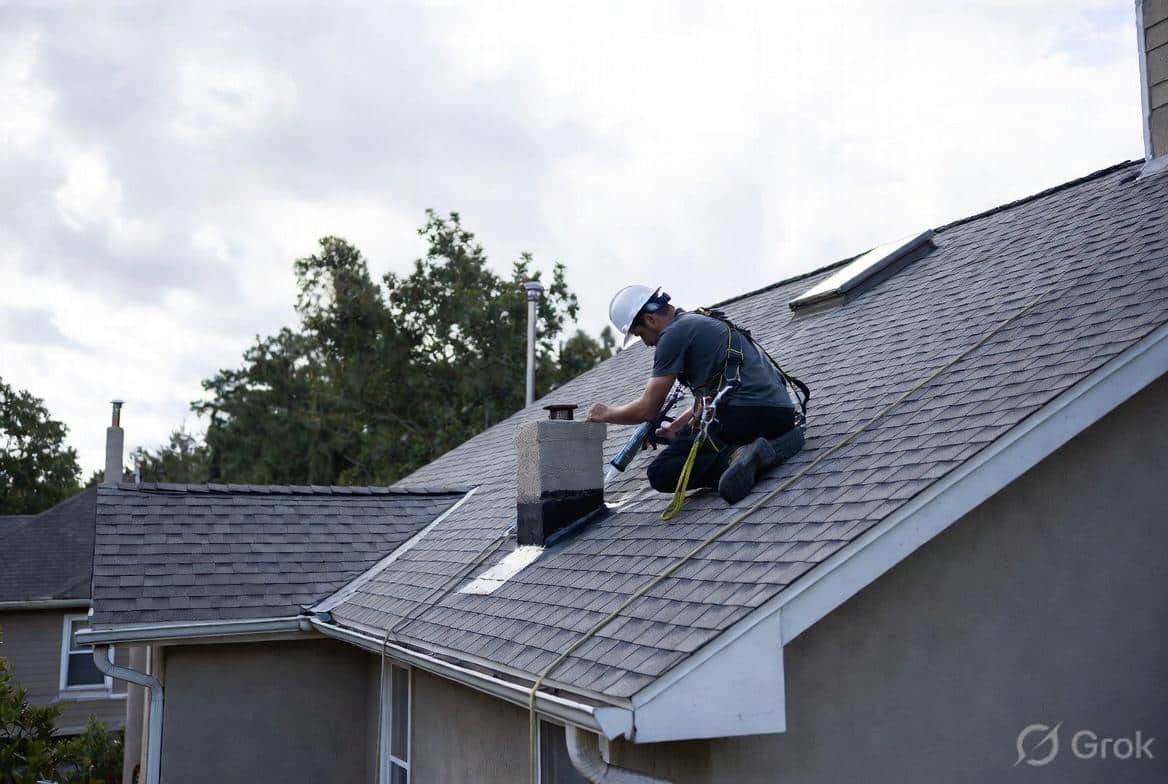
Calling a qualified roofer in Lafayette or your local area for an annual inspection is the single most effective step you can take. A trained inspector will get on the roof and assess things that simply aren’t visible from the ground, soft spots in the decking, lifted flashing edges, granule loss patterns, cracked ridge caps. What costs a few hundred dollars to fix in March can cost several thousand after the first storm of the season opens it up further.
“I kept putting off getting the roof looked at because nothing was visibly wrong,” said Cheryl Broussard, a homeowner in Scott. “When they finally came out, there was a section near the valley where the underlayment had completely failed. Water had been sitting in the decking for at least one full season. We caught it before it hit the ceiling, but just barely.”
That experience is not unusual. The relationship between roof failure and visible interior damage is almost always delayed, which is exactly why waiting for an obvious sign is the wrong strategy in this climate.
Gutters and Drainage: The System Nobody Thinks About Until It Fails
A roof inspection without a gutter evaluation misses half the picture. Gutters are part of the water management system, and when they’re clogged, sagging, or discharging in the wrong direction, they actively direct water toward the parts of the home you most want to keep dry.
In Louisiana, gutters fill with organic debris faster than in most other regions. Spanish moss, pine needles, leaf accumulation from summer storms, and seed pods from the live oaks that line most neighborhoods mean gutters that were clean in spring can be fully clogged by midsummer. When that happens, water overshoots the gutter entirely and runs down the exterior wall, saturating the fascia board, pooling at the base of the foundation, and finding its way into the slab edges and any low-lying wall cavities.
Clean your gutters at minimum twice a year, and inspect them after any significant storm. Check that every downspout is firmly connected and that the discharge point carries water at least four to six feet away from the foundation. If your yard naturally slopes toward the house, that’s a drainage problem that needs grading or a French drain solution, not just cleaner gutters.
Flashing Is Small, and It Matters More Than Most People Know
Flashing is the thin metal material installed wherever the roof meets a vertical surface or where two roof planes intersect. Around chimneys, skylights, dormers, pipe boots, and in roof valleys, flashing is the detail that keeps water from running directly into the structural cavity of the home.
It’s also one of the most storm-vulnerable components on the entire exterior. High winds peel it back from its sealed edges. Thermal expansion and contraction over Louisiana’s extreme temperature range cause the sealant that holds it in place to degrade faster than in more temperate climates. Hail dents and distorts it, creating channels that direct water inward rather than outward.
Because flashing sits at transition points, a failure there introduces water deep into the roof structure. It doesn’t just wet the surface. It reaches the decking, the insulation, and sometimes the framing before any visible sign appears inside the home. Professional inspection is the only reliable way to assess flashing conditions, and it’s one of the primary reasons a ground-level visual check is insufficient after a storm.
Seal the Envelope: Caulking, Siding, and Penetrations
The roof isn’t the only way water enters a home. Every point where two different materials meet on the exterior, and every place where a pipe, wire, or vent penetrates the wall, is a potential moisture entry point.
Exterior caulking around windows, doors, and trim has a finite lifespan, particularly in Louisiana’s climate where UV exposure and heat cycling degrade the compound quickly. Walk the perimeter of your home once a year and press on existing caulk lines. It should be firm, continuous, and fully adhered on both sides. Caulking that is cracking, pulling away, or missing in sections should be replaced before the next heavy rain.
Siding requires the same attention. Wood siding and trim that are no longer properly sealed absorb moisture and begin to rot from the inside out. Fiber cement holds up better but still needs intact paint and caulked joints to perform as intended. Stucco homes are particularly vulnerable at cracks near corners and penetrations, where water can enter the wall cavity and remain trapped for extended periods.
The U.S. Department of Housing and Urban Development’s guidance on moisture control identifies air sealing and proper exterior maintenance as among the most cost-effective strategies for preventing interior water damage in high-humidity climates. More information is available at hud.gov.
Attic Ventilation and Insulation: The Hidden Factor
Most homeowners think about water damage in terms of what enters from outside. The attic tells a different story. In Louisiana homes, inadequate attic ventilation traps heat and moisture that accumulates from inside the living space. Over time, that trapped moisture condenses on the roof decking and in the insulation, creating conditions for mold growth and structural degradation that have nothing to do with a roof leak.
Signs of an attic moisture problem include dark staining on the rafters or decking, insulation that appears compressed or discolored, and a persistent musty smell in upper-floor rooms. These are not storm damage issues. They’re ventilation issues, and they require a different kind of professional attention.
If your home has a ridge vent and soffit vents, make sure both are unobstructed. Insulation pushed against the soffit vents blocks the airflow that the ventilation system depends on. This is a common finding in Louisiana attics, particularly in older homes where insulation has been added over time without attention to the ventilation pathways.
Foundation and Grading: Where Water Ends Up Matters
Everything above the ground sheds water downward. Where that water goes when it reaches grade level determines whether it drains safely away or becomes a long-term threat to the foundation.
Louisiana’s clay-heavy soils don’t absorb water efficiently. During heavy rain events, water that would percolate into the ground in other regions sits on the surface and migrates toward the lowest point it can find. If that low point is against your foundation, you have a problem. Hydrostatic pressure against a slab edge or stem wall causes cracking over time, and standing water against the exterior creates the moisture conditions that lead to mold inside the wall cavity and eventual deterioration of the concrete itself.
Walk your property after a significant rain and observe where water pools and how long it takes to drain. Low spots adjacent to the foundation should be regraded to create positive slope away from the structure. Downspouts should be extended or directed into underground drain lines where standing water near the foundation is a recurring issue.
Water damage in Louisiana is not a matter of if, it’s a matter of how well-prepared the home is when the next storm arrives. The homes that fare best aren’t necessarily newer or more expensive. They’re the ones where the owner has paid consistent attention to the roof, the drainage, the exterior envelope, and the attic, and has addressed small problems before the next weather event turned them into large ones. That kind of maintenance isn’t complicated. It just has to actually happen.