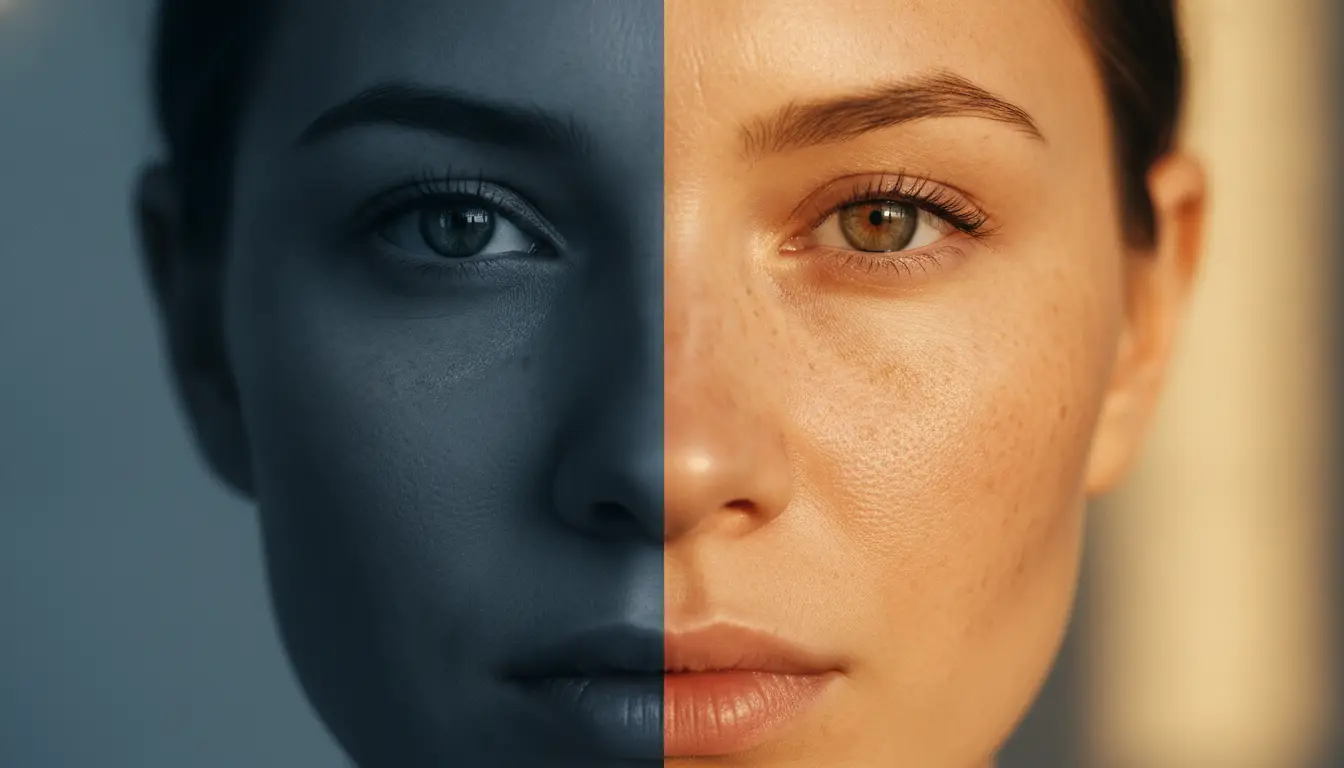
A sunny afternoon fades from memory pretty fast. Your skin, though, tends to hold onto it a lot longer.
Sun exposure isn’t only a problem when it leaves you with a painful sunburn. UV radiation can affect skin cells even when there’s no redness, no peeling, nothing you’d notice at all. That’s why, alongside protecting your skin from further UV exposure booking a regular skin cancer check may help identify concerning changes early. Over the years, repeated exposure can chip away at skin texture, pigmentation, and elasticity, and it raises the risk of skin cancer along the way.
That’s really why dermatologists talk about sun protection as an everyday habit, not something you only think about on the hottest, sunniest days.
What Actually Happens When Sunlight Hits Your Skin
Sunlight carries several types of radiation, but when it comes to skin, UVA and UVB are the two that matter most.
UVB mostly affects the outer layers of skin and is the main culprit behind sunburn. It can damage DNA inside skin cells directly, which is part of why repeated UVB exposure is linked to skin cancer.
UVA digs deeper. It might not burn you as quickly or as obviously as UVB, but it drives oxidative stress and slowly breaks down collagen and elastin, the proteins that keep skin firm, structured, and elastic.
Both types matter, even if they show up in different ways.
Sun Damage Doesn’t Always Look Like a Sunburn
One of the most common misconceptions about UV exposure is that skin only gets damaged when it burns.
A sunburn is an obvious sign that skin got more UV than it could handle, but no sunburn doesn’t mean no damage. UV radiation can set off changes at the molecular and cellular level without any redness to show for it.
That’s part of what makes cumulative exposure so easy to miss. A walk outside, sitting near a window, the commute, an outdoor workout, a weekend spent in the sun, it all adds to your overall UV exposure.
Any single moment might seem like nothing. Add them up over years, though, and they don’t stay nothing.
What Does “Cumulative UV Damage” Actually Mean?
It helps to think of sun exposure less as a one-off event and more as a running tally.
Skin does have ways of repairing itself. When UV radiation damages a cell’s DNA, repair systems kick in to try to fix it. But those systems aren’t flawless.
With enough repeated exposure, mutations can start to build up in cells. At the same time, the oxidative stress UV radiation causes can wear down proteins, lipids, and other structures in the skin.
None of this means one afternoon outside is going to wreck your skin. It just means lifetime exposure is what really counts, which is exactly why staying consistent with protection tends to beat the occasional extreme precaution.
Why Does Sun Exposure Make Skin Look Older?
A lot of what people call “aging skin” actually has more to do with environmental exposure, sunlight especially, than with age itself.
Chronic UV exposure speeds up collagen breakdown and reshapes the skin’s underlying structure. Over time that can show up as fine lines, wrinkles, rougher texture, sagging, and uneven pigmentation.
There’s a name for this: photoaging.
It’s distinct from intrinsic aging, the natural kind that just comes with time. Photoaging is driven mostly by outside exposure, so it can look very different from person to person depending on lifestyle, where they live, their job, and how seriously they take sun protection.
Spots that see the most sun (face, neck, hands, forearms) tend to show these changes first and most clearly.
Pigmentation Tells Its Own Story

UV exposure ramps up melanin production, which is really the skin’s built-in defense mechanism kicking into gear.
That’s why skin tans after time outdoors. But repeated exposure can also lead to uneven pigmentation: freckles, sunspots, patches of hyperpigmentation becoming more pronounced as time goes on.
Skin tone plays a role in how visible this damage is. More melanin does offer some natural protection from UV radiation, but it’s not immunity. No skin tone is exempt from UV-related damage.
So sun protection matters across the board, even though how the damage shows up, and how visible it is, can vary a lot from person to person.
Where Does Sunscreen Fit In?
Avoiding the sun entirely isn’t realistic, and honestly, it isn’t necessary either. Sun protection is really about cutting down on the exposure you don’t need.
Shade during peak sun, protective clothing, hats, sunglasses, sunscreen: these work best as a combination, not a single fix.
When it comes to picking a sunscreen, broad-spectrum coverage matters a lot, since that’s the label that tells you it protects against both UVA and UVB.
SPF is useful too, but it’s worth knowing what it actually measures: mostly protection against UVB-driven sunburn. A high SPF number isn’t the whole story of how well a sunscreen performs.
Application matters just as much as the product itself. Skimping on how much you use, missing spots, or forgetting to reapply can quietly undercut the protection you’d otherwise be getting.
What About Mineral Sunscreens?
Sunscreens rely on UV filters to cut down the radiation that actually reaches your skin.
Mineral sunscreens typically use zinc oxide, titanium dioxide, or a blend of the two. Zinc oxide stands out because it can cover both UVA and UVB wavelengths on its own.
The science behind these ingredients has come a long way, too. Modern zinc oxide used in sunscreens can be engineered with real precision: particle size, dispersion, how it behaves once it’s in a finished formula. All of that shapes how well a mineral filter actually performs on skin.
If you’re curious about the ingredient science behind mineral sun protection, Vizor has resources on zinc oxide technology and how it’s used in modern sunscreen formulation.
Whether someone reaches for a mineral sunscreen, a chemical one, or a hybrid of the two, the best sunscreen is really just the one that offers solid protection and that you’ll actually use correctly, every time.
Prevention Works Better as a Habit
It’s easy to only think about sun protection during summer vacations, beach days, or the hottest afternoons. But UV exposure doesn’t run on temperature.
Radiation still reaches your skin on cool, overcast days. UVA in particular can pass through window glass more easily than UVB, so exposure can sneak up on you even in situations that don’t feel “sunny” at all.
That’s why small, repeatable habits end up mattering so much.
Sunscreen before you head out for a while, shade when it’s an option, covering up exposed skin, keeping an eye on the UV index, none of this needs to be a special occasion. It just needs to be routine.
Your Skin Has a Long Memory
The effects of UV radiation are rarely about any single afternoon in the sun.
They build up over years, shaped by exposure, biology, genetics, environment, and whatever protective habits you keep, or don’t. Some of it shows up as pigmentation or photoaging you can see. Some of it happens at a cellular level where nothing is visible at all.
That might sound like a lot to worry about, but there’s a upside buried in it: sun protection doesn’t have to be perfect to be worth doing.
Cutting back on unnecessary UV exposure today means one less thing adding to that lifetime tally. And when those small choices turn into everyday habits, they genuinely add up to something that matters for your skin down the road.