One of the biggest makeup myths I still hear is that foundation makeup is meant to hide your skin. It isn’t.
A good foundation should still let freckles peek through, soften redness instead of masking your face, and make people notice you, not your makeup.
That’s why understanding what foundation makeup is makes such a difference.
Once you know what foundation is designed to do, choosing the right formula, finish, and coverage becomes much less overwhelming.
What Is Foundation Makeup?
Foundation makeup is a tinted cosmetic you spread over your face to even out skin tone and soften the look of redness, dark spots, and texture.
The name “foundation” follows the same idea as its architectural meaning: a base layer that supports everything built above it.
While complexion cosmetics date back to ancient civilizations like Egypt and Greece, where people used ingredients such as chalk and white lead to create a lighter, more even complexion, modern foundation makeup developed much later.
Today’s foundation formulas use pigments suspended in water, oil, or silicone bases to create an even-looking canvas before applying other makeup.
Foundation is not a treatment, and it is not skincare, even when the label lists hyaluronic acid or niacinamide. It sits on the surface, and it washes off at night.
In the United States, the Food and Drug Administration (FDA) regulates foundation makeup under the Federal Food, Drug, and Cosmetic Act, and any foundation carrying an SPF claim counts as both a cosmetic and a drug.
That detail matters more than it sounds. It is the reason SPF foundations list active ingredients and drug facts on the carton.
What Does Foundation Makeup Do?
Here is the practical job description, based on what I actually notice on my own face when I wear foundation versus when I skip it entirely.
- Evens skin tone: Foundation softens patchiness, post-acne marks, and pigmentation so the face reads as one color rather than several competing ones.
- Reduces the look of redness: Flushed cheeks, a red nose in winter, and irritation after a facial all calm down visually under a thin layer of foundation makeup.
- Blurs texture: Foundation does not erase pores or fine lines, but it dulls the shadow inside them, which reads as smoother skin.
- Creates grip for everything else: Blush, bronzer, and cream contour blend far better over a foundation base than over bare skin, which is why I apply it first.
- Controls or adds shine: Depending on the finish, foundation either absorbs oil through the afternoon or gives back the glow that mattifying skincare stripped away.
- Adds a light physical barrier: Pigments and mineral filters sit between your skin and pollution or wind, though this is a small bonus rather than protection.
I noticed this most clearly on a week I had a mild breakout along my jaw. Bare-skinned, the red patches drew the eye first, before anything else about my face.
With two thin pumps of foundation makeup blended over them, the same patches faded into the rest of my skin tone, and people complimented my glow instead of asking if I was okay.
Where Foundation Fits in Your Makeup Routine
Order matters more than product count. I have watched good foundation slide off simply because it went on before the skincare underneath had settled.
My sequence is cleanser, moisturizer, sunscreen, then a two-minute pause, then primer only if I need extra grip that day. This sequencing mirrors the logic behind a full Korean skincare routine explained with simple steps, where each layer is given time to settle before the next one goes on.
Foundation goes on next. It is the first step of makeup rather than the last step of skincare, and that distinction keeps my base stable.
Concealer, then powder, blush, bronzer, and setting spray follow in that order. Cream products go directly over foundation, and powder products go on last.
Sunscreen stays a separate step for me, always. The Prevent Cancer Foundation notes that SPF in makeup is rarely enough, because we apply a far thinner layer than the tested one.
So I treat SPF in foundation as insurance, never as the plan.
How Does Foundation Differ From Concealer?
Both products cover, so beginners often buy one foundation and expect it to do the work of both. The difference between foundation and concealer comes down to pigment load and spread.
| Feature | Foundation | Concealer |
|---|---|---|
| Purpose | Evens overall skin tone | Hides specific spots |
| Pigment level | Moderate, built for large areas | Very high, built for small areas |
| Texture | Thinner, spreads easily | Thicker, stays where placed |
| Where I use it | Full face, neck, jawline | Under eyes, blemishes, scars |
| Amount used | One to three pumps | A dot or two |
| Shade choice | Matches your skin exactly | Often one shade lighter under eyes |
| If used alone | Skin looks even, spots still faintly show | Spots vanish, rest of face looks uneven |
The short version: foundation sets the base color and concealer handles the exceptions. Using both foundation and concealer in small amounts always looks better than using either one heavily.
Different Types of Foundation Makeup
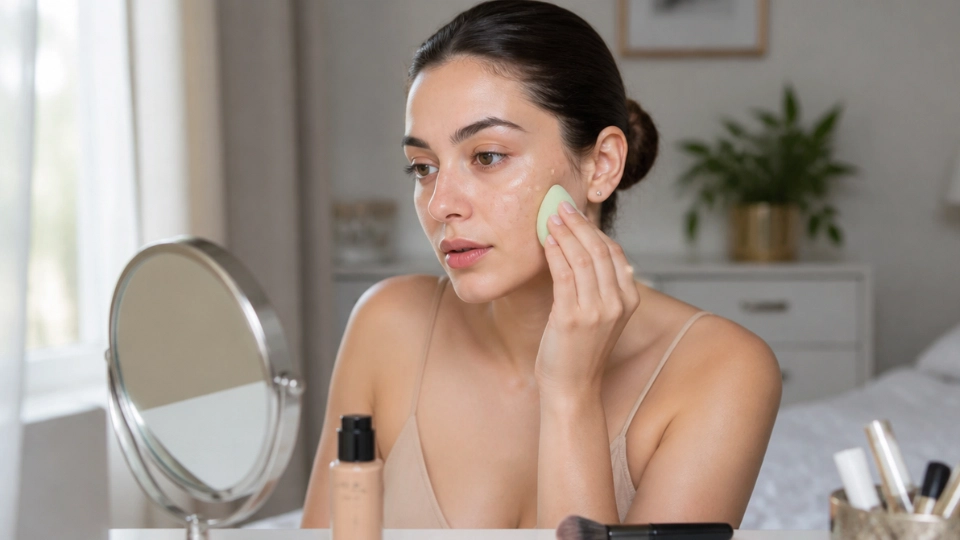
Type refers to the texture in the bottle, not the finish on your face. Each type of foundation behaves differently once it meets skin oil and warmth.
1. Liquid Foundation
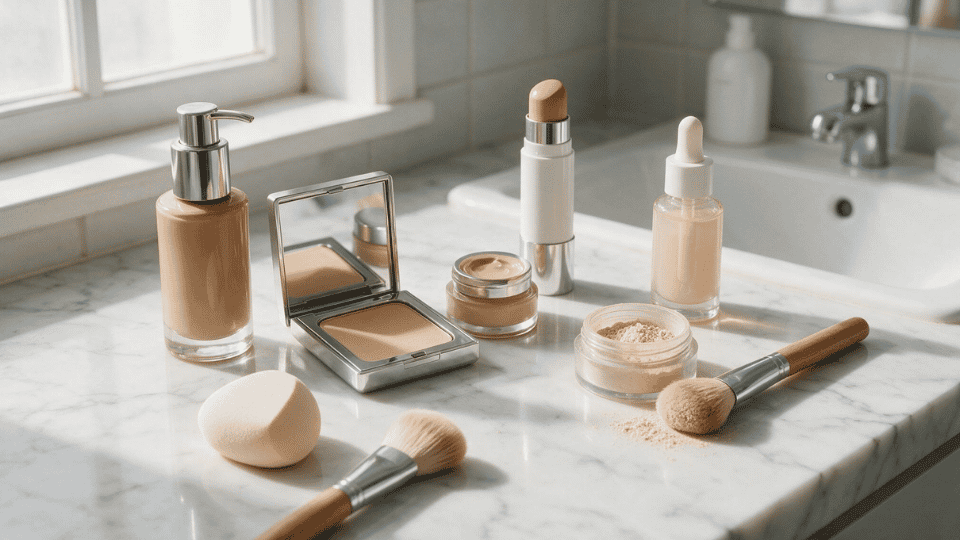
The most flexible option and the one I recommend to anyone starting out with foundation makeup. Coverage runs from sheer to full, depending on the formula and how you layer it.
Liquid foundation blends with fingers, a damp sponge, or a brush, and it suits nearly every skin type. I keep one hydrating liquid foundation and one longwear liquid on my shelf.
Longwear liquid formulas often rely on film-forming polymers or silicones to resist transfer, which is why they can feel slightly tacky until they set.
2. Powder Foundation
Pressed pigment in a compact, usually giving light to medium coverage and a matte result. Powder foundation absorbs oil, so it earns its place on humid days and in gym bags. Dry skin can find it clingy around the nose and mouth.
I use mine mostly for touch-ups rather than as a full base. Most pressed powders lean on silica or talc to soak up shine, which is the actual mechanism behind that blotting paper effect.
3. Cream Foundation
Thicker and richer, often in a pot, jar, or stick. Cream foundation delivers medium to full coverage and moves smoothly over dry or mature skin without settling into lines. Warmth helps it blend, so I press it in with my fingers first.
It layers well when one spot needs extra help. Cream formulas typically use oils or emollients like dimethicone as their base, which is what gives them that slip and cushion liquids don’t have.
4. Stick Foundation
A cream formula in twist-up form, built for speed and precision. I draw a few lines on my cheeks, forehead, and chin, then blend with a damp sponge.
Coverage tends to sit medium to full with stick foundation. It travels without leaking, which is why mine lives permanently in my work kit.
Sticks firm up with waxes like beeswax or candelilla, which is why they hold their shape at room temperature but melt on contact with warm skin.
5. Serum Foundation and Skin Tints
The lightest category, closer to tinted skincare than traditional foundation makeup. Coverage stays sheer to light, and freckles show through, which I like. Formulas often carry humectants for hydration.
These are my default on days off, when I want color balance and nothing that feels like a layer. Many rely on hyaluronic acid or glycerin as the humectant of choice, pulling moisture into the skin rather than just sitting on top of it.
6. Mineral Foundation
Loose or pressed powder built around minerals like titanium dioxide, zinc oxide, and iron oxides, usually fragrance-free and oil-free. Coverage builds from sheer to medium. Sensitive and reactive skin often tolerates mineral foundation well.
This is especially relevant if you’re already managing skin quality in mature patients or reactive skin conditions where fragrance and oil content matter more than usual.
Buffing in small circles with a dense brush avoids the chalky look people complain about. Titanium dioxide and zinc oxide are also physical UV filters, which is why some mineral foundations double as light, unrated sun protection even without an SPF claim.
What Foundation Finish Should You Wear?
Finish is what your skin looks like an hour later, and it changes how the same foundation shade reads on camera or in daylight.
| Finish | Looks Like | Best For | My Note |
|---|---|---|---|
| Matte | Flat, shine-free | Oily skin, humid weather, long events | Set lightly, or it can look dry by evening |
| Dewy | Wet, reflective glow | Dry, dull or mature skin | Skip it on very oily days; it can read as shine |
| Natural | Real skin, neither flat nor shiny | Combination skin, everyday wear | The safest choice if you own only one foundation |
| Satin | Soft low sheen | Photos, office days, mixed skin | My most reached-for finish by a wide margin |
| Radiant | Lit from within, light reflecting particles | Evening looks, flash photography | Keep it off the T-zone to avoid patchy shine |
| Velvet | Soft focus, blurred texture | Visible pores and fine lines | Blends best over a smoothing primer |
A similar logic applies to eye makeup: the right primer for long-lasting eyeshadow keeps color and finish from shifting the same way foundation finish does over the course of a day.
Finish and type are separate choices. A liquid foundation can be matte or dewy, so read both words on the bottle before you decide.
How Much Foundation Coverage Do You Need?
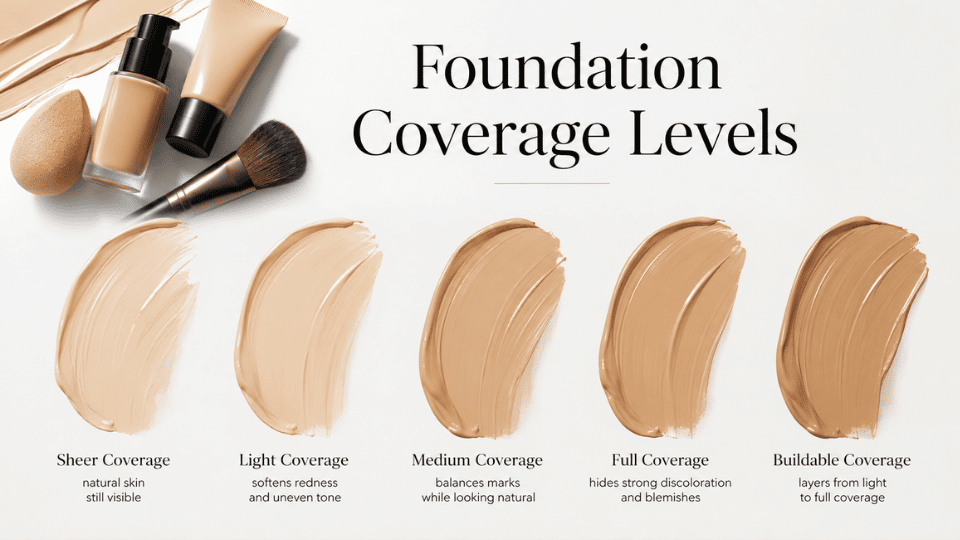
Foundation coverage describes how much of your natural skin still shows through the layer, and it is the label detail beginners misread most often.
- Sheer coverage: Evens tone by a shade or two while freckles, moles, and marks stay visible. My pick for weekends and for anyone nervous about looking made up.
- Light coverage: Softens redness and mild unevenness without hiding it. This is where skin tints and most serum foundations land.
- Medium coverage: Covers post-acne marks, mild pigmentation, and general patchiness while skin still looks like skin. The most useful foundation coverage level for daily wear.
- Full coverage: Masks strong discoloration, scarring, melasma, and active blemishes. I reserve full coverage foundation for events, film, and days when I want zero fuss about touch-ups.
- Buildable coverage: Starts light and layers up to medium or full. One bottle covers several needs, which makes buildable foundation the smartest single purchase.
Coverage is not a quality ranking. Heavier foundation is not better, and I get more compliments on a thin medium layer than on a full face of full coverage.
How to Choose the Right Foundation for Your Skin Type
Skin type decides the formula, undertone decides the shade, and the two failures look completely different in daylight.
Before you match foundation shade, figure out your undertone. Flip your wrist over in natural light and check your veins.
- Blue or purple veins mean a cool undertone
- Green veins mean a warm undertone
- Blue-green veins mean a neutral undertone
This one check prevents most of the ashy or orange foundation mismatches people end up blaming on the wrong formula entirely, when it was really an undertone mismatch all along.
| Skin Type | Look For | Avoid | Finish That Works |
|---|---|---|---|
| Oily | Oil-free liquids, powder, longwear formulas | Heavy oils, thick balms | Matte or satin |
| Dry | Serum foundations, cream formulas, glycerin and hyaluronic acid | Strong mattifying powders | Dewy or natural |
| Combination | Buildable liquids, lightweight formulas | Full coverage cream over the whole face | Satin or natural |
| Sensitive | Fragrance free, short ingredient lists, mineral options | Added fragrance, essential oils, drying alcohols | Natural |
| Acne prone | Labels reading noncomedogenic or oil free, thin layers | Heavy liquid layers that trap oil | Matte or satin |
| Mature | Hydrating liquids and serums, light hand around lines | Dry powder over dry patches | Natural or radiant |
For acne-prone skin, the American Academy of Dermatology (AAD) recommends foundation products labeled noncomedogenic or oil-free.
If persistent redness on your skin is the main concern rather than tone or texture, a color correcting or green-based primer often does more work than switching foundations entirely.
Test foundation shades on your jawline in daylight, never under store lighting, and wait ten minutes before you judge the match.
How to Apply Foundation Makeup Step by Step
This is the foundation routine I run on myself most mornings, and it takes under five minutes once the skincare underneath has settled properly.
- Start with clean, moisturized skin: Foundation clings to flakes and slides off wet moisturizer, so wait two minutes after your last skincare step.
- Use less than you think: One pump for light coverage, two for medium. I start at the center of my face where redness sits and work outward.
- Dot, then blend outward: Place small dots of foundation on cheeks, forehead, chin, and nose, then blend toward the hairline and jaw so the edges disappear.
- Pick your tool for the result you want: A damp sponge sheers foundation out, a dense brush builds coverage, and fingers give the most natural, skin-like press.
- Blend past the jawline and onto the neck: This single step is the difference between a natural foundation base and a visible mask line in daylight.
- Add concealer only where you still need it: Usually two blemishes and the inner corners of my eyes, nothing more.
- Set selectively: A whisper of powder on the T-zone and under the eyes, leaving the cheeks alone so the foundation base still looks alive.
- Check in natural light: I step to a window before I leave. Every foundation mismatch I have ever caught, I caught there.
The whole method rests on thin layers and blended edges. Two light passes of foundation always beat one thick one, and my base lasts longer that way.
Foundation vs. Other Base Products
Base products overlap heavily, and the shelf label rarely tells you which one your skin actually needs on a given morning.
| Product | Coverage | Main Job | Choose It When |
|---|---|---|---|
| Primer | None | Grips makeup, smooths texture, controls oil | Your foundation base slides or fades by noon |
| Tinted moisturizer | Sheer | Hydrates and adds a hint of color | Skin is dry and mostly even already |
| BB cream | Sheer to light | Light coverage with skincare extras | You want one step instead of three |
| CC cream | Light | Corrects redness or sallowness | Color is the issue, not texture |
| Skin tint | Sheer to light | Balances tone, keeps skin visible | You want the freckles to stay |
| Foundation | Sheer to full | Evens the whole face at your chosen level | You want control over how much shows |
| Setting powder | None to light | Locks the base, cuts shine | You get oily through the afternoon |
Brands keep launching new foundation hybrids to chase every possible routine, and North America alone accounted for 32.68 percent of face makeup revenue in 2025, per Mordor Intelligence, which is partly why this shelf keeps growing crowded. Pick foundation by need, not by novelty.
Do You Need Foundation Makeup Every Day?
No, and I say that as someone who owns more than four bottles of foundation.
I wear foundation maybe three days a week. On the other days, my skin gets sunscreen, a little concealer on two spots, and that is it.
Daily foundation wear does not damage healthy skin as long as you remove it properly every single night. Sleeping in it is the real problem.
Skipping foundation is also fine. Foundation is a styling choice, closer to picking earrings than to brushing your teeth.
On bare skin days, SPF after self-tanning use still matters just as much, since a tan or bronzer offers no real defense against UV exposure.
The one habit I never skip is removal. A cleansing balm followed by a gentle cleanser takes everything off, including the stubborn longwear foundation formulas.
If your skin feels congested from foundation, try alternating. Two foundation days, one bare day, and see how your face responds over two weeks.
Final Thoughts
Foundation makeup has changed a lot, but one thing remains the same: the right foundation should work with your skin, not fight against it.
Once you understand what foundation makeup is, choosing between liquid, powder, cream, or a lighter skin tint becomes much simpler.
You don’t need a drawer full of foundation bottles to create a beautiful base. You just need a formula that matches your skin, your routine, and the look you want to create.
Frequently Asked Questions
How long does foundation last before it expires?
Most liquid foundations last 6 to 12 months after opening. Replace foundation sooner if it develops an unusual smell, changes color, or starts to separate.
Why does my foundation look darker hours later?
This is called oxidation. Skin oils and air can cause foundation to darken, so using a primer and choosing the right foundation shade can help.
How often should I clean my foundation brushes and sponges?
Wash foundation sponges after every use and clean foundation brushes at least once a week. Replace sponges every 1 to 3 months.
Can I wear foundation while working out?
It’s best to avoid wearing foundation during workouts because sweat and friction can clog pores. If you do wear foundation, cleanse your skin soon after exercising.
Does storing foundation in the bathroom ruin it?
Yes, heat and humidity can shorten a foundation’s shelf life. Store foundation in a cool, dry place away from direct sunlight.