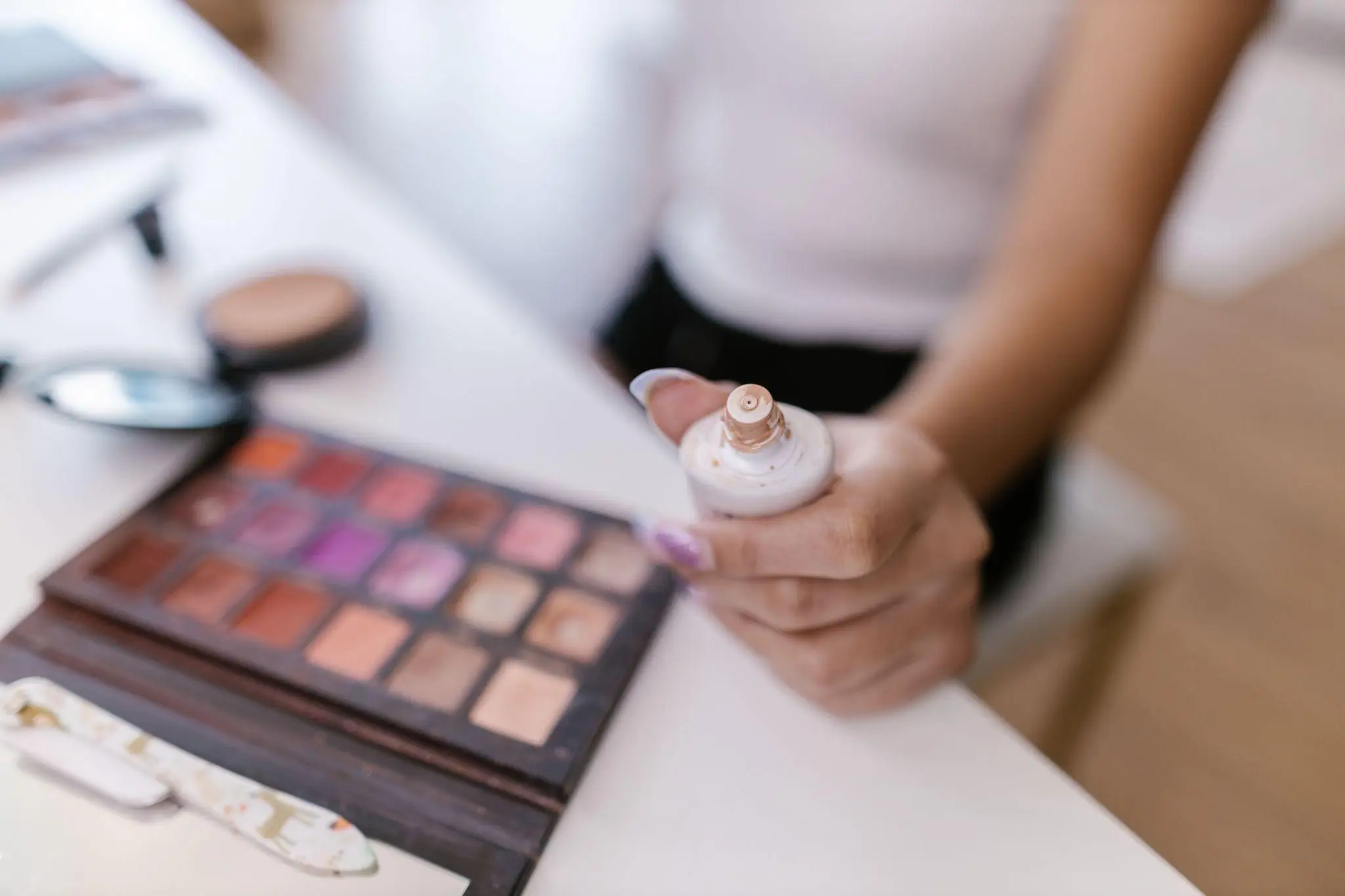
Moisturizer or primer first? Moisturizer comes first, every time. That answer is easy.
The part most people miss is why.
I’ve lost count of how many times a foundation blamed for pilling, patchiness, or fading turned out to be sitting on skin that wasn’t prepped in the right order.
Moisturizer and primer aren’t competing products.
They do completely different jobs, and knowing where each one belongs is what separates a makeup base that lasts all day from one that starts falling apart before lunch.
What Moisturizer and Primer Actually Do
These two products get treated as interchangeable, and that is where things go wrong. They belong to different routines and solve different problems.
Moisturizer is skincare. It pulls water into the upper layers of skin and holds it there with humectants (ingredients that pull water into skin) like glycerin and hyaluronic acid.
According to the National Library of Medicine, these are the same ingredients dermatology references point to for drawing water into the skin. It also supports your barrier, which is why I use one even on bare skin days.
Primer is makeup. It sits on the surface instead of sinking in. Depending on the formula, it blurs texture, absorbs oil, or gives foundation something to grip. Moisturizer preps the skin itself. Primer preps the makeup that goes over it.
Once you see one as skin care and the other as makeup, the sequence stops being a debate.
Moisturizer or Primer First? The Short Answer
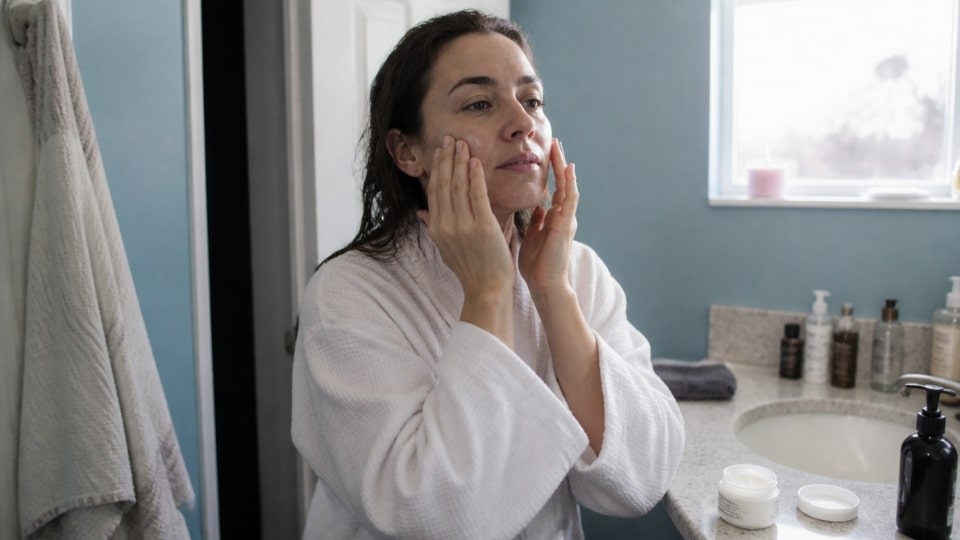
Moisturizer first is the order I follow every single morning, and the reasons are practical rather than traditional. Here is what each one buys you.
- Hydration Needs Direct Skin Contact: Humectants can only draw water into skin they actually touch. Primer underneath blocks that contact, so your moisturizer sits on plastic instead of skin.
- Primer Is Designed to Sit on Top: Silicones and film formers (ingredients that form a thin surface layer) work by staying on the surface. Burying them under cream cancels the gripping effect you paid for.
- The Order Prevents Pilling: Cream over a set film layer rolls into little balls. That mess shows up the second your foundation goes on.
- Foundation Grips Prepped Skin Better: Hydrated skin holds pigment evenly. Tight, thirsty skin drinks foundation in patches and looks blotchy by noon.
- Dry Texture Reads Through Makeup: Primer blurs pores well. It cannot fake softness on flaky skin, so hydration has to happen first.
Skincare finishes, then makeup begins. Keep that split in your head, and the order sorts itself out on autopilot.
Moisturizer vs. Primer, Side by Side
Here is the short comparison I would sketch on a napkin if you asked me across a table. It covers what each product is for.
| Feature | Moisturizer | Primer |
|---|---|---|
| Category | Skincare | Makeup |
| Main job | Adds and holds water in skin | Smooths surface, grips makeup, controls shine |
| Where it works | Absorbs into upper layers | Sits on top of skin |
| Typical ingredients | Glycerin, hyaluronic acid, ceramides, squalane | Silicones, film formers, silica, pigments |
| Place in routine | Last skincare step | First makeup step |
| Can you skip it? | No, your barrier needs it | Yes, on low-key days |
Notice that only one of these is optional. Moisturizer earns a permanent spot, while primer is a tool you pull out when the day asks for it.
The Correct Skincare and Makeup Order
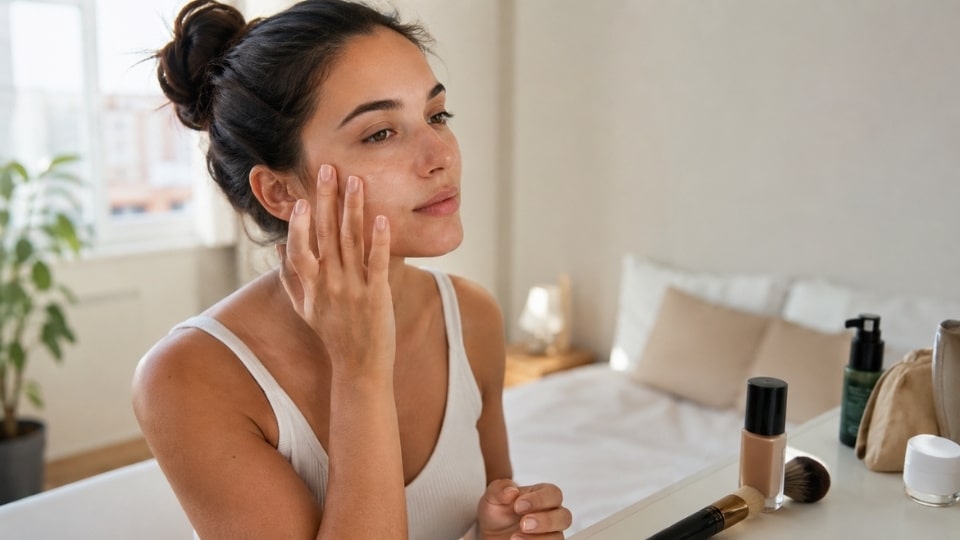
Five steps, in this sequence, on every base I build. Nothing here takes long once your hands know the pattern, so treat it as muscle memory.
Step 1: Cleanse, Then Pat Almost Dry
Start with a gentle cleanser and lukewarm water. I leave my skin slightly damp rather than bone dry, because moisturizer spreads further on it.
Damp is the goal, not wet. Standing water under makeup turns tacky and drags your foundation around later.
Step 2: Treatments and Serums
Thin textures go before thick ones. Watery essences and serums land here, and each one gets about 30 seconds to sink in.
On mornings when I am using vitamin C, I let it settle a little longer, since anything still wet on the surface tends to slide under makeup.
Step 3: Moisturizer
A pea-sized amount covers my whole face. I press it in with flat fingers instead of rubbing in circles. Rubbing pushes product around without helping it absorb.
Dry skin gets a second thin layer only where it needs one, usually my cheeks and the sides of my nose.
Step 4: Sunscreen
The FDA classifies sunscreen as a drug product, not a cosmetic, and treats it as the final protective layer on skin, which is exactly why it belongs after your skincare and before any makeup step, including primer.
Give it at least three to five minutes before primer; longer if it’s a chemical formula rather than mineral, since chemical filters need more time to fully bind to skin to perform the way they’re tested.
Primer applied too soon can sit on top of sunscreen that hasn’t set, which breaks up the even film SPF needs to actually protect you.
If your sunscreen already blurs and controls shine on its own, this is also your cue that primer might be skippable more on that below.
Step 5: Primer, Then Foundation
Primer opens the makeup half of the routine. I use roughly a pea-sized amount, patted on with fingers or a damp sponge, and only where I need it.
My T-zone gets a mattifying formula. My cheeks stay bare. Wait about 30 seconds for the tackiness to fade, then apply foundation.
How Long Should You Wait Between Moisturizer and Primer?
One minute is the number I work with. Two is better if you have it. That short pause is what lets the moisturizer settle instead of mixing into whatever goes on next.
My own test is touch, not a timer. If my fingertip lifts off cleanly with no slip, I move on. If it feels slick, I wait another 30 seconds.
Richer creams and colder weather both stretch that wait. In winter I am closer to two or three minutes. In summer, with a gel moisturizer, 45 seconds is plenty.
Sunscreen needs more patience than moisturizer; give it at least three to five minutes before primer, and lean toward the longer end if it’s a chemical rather than mineral formula.
A doughy or slightly gummy feel means you moved too fast. On rushed mornings, I switch to lighter textures instead of skipping the wait, since thin layers dry down in seconds.
Does the Order Change for Different Skin Types?
Moisturizer still goes first for everyone. What changes is the texture you reach for and where on the face primer actually belongs.
| Skin Type | What I Change | Why It Helps |
|---|---|---|
| Dry | Richer cream, longer wait, hydrating primer | Foundation clings to dry patches without enough water underneath |
| Oily | Light gel moisturizer, mattifying primer on T zone | Skin still needs water, but shine control needs to be targeted |
| Combination | One light moisturizer, two primers by zone | Cheeks and T zone rarely want the same finish |
| Sensitive | Fragrance-free moisturizer, primer only if needed | Fewer layers means fewer chances of stinging or redness |
| Textured or mature | Hydrate well, then blur only where needed | Silicone primers settle into lines when applied too heavily |
Read your skin week to week rather than sticking to one label. Mine runs oily in July and flaky in January, and my products move with it.
How to Choose Compatible Moisturizer and Primer Formulas
Most pilling I see is a compatibility problem, not a technique problem. These are the checks I run before two products share my face.
- Match the Bases: Water-based moisturizers sit well under silicone primers. Heavy oil or balm textures under silicone often repel and ball up.
- Look at the First Five Ingredients: Anything ending in “cone” or “siloxane” high on the list means a silicone film. Pair it with a water-based moisturizer.
- Think About Your Foundation Too: Water-based foundation goes over water-based primer. Silicone-based foundation prefers a silicone primer.
- Patch Test on Your Jawline: Apply moisturizer, wait, add primer, then foundation. If it pills within 10 minutes, that pairing is out.
- Use Less Than You Think: Pea-sized for each layer. Excess product is the fastest route to a pilling mess.
Get the pairing right once, and you can stop rebuying products in search of a fix that was never about the product.
Do You Need Both Moisturizer and Primer?
Moisturizer is not negotiable. Primer is, and I skip it more often than you might expect. Here is how I decide.
When Primer May Be Worth Using
- Your pores or fine lines show through foundation
- Your T-zone goes shiny before lunch
- You are on a long day, a flight, or in front of a camera
- Your foundation slides or separates by mid-afternoon
- You are wearing full coverage and want it to stay put
When You May Be Able to Skip Primer
- You are only wearing a sheer tint or concealer
- Your moisturizer already leaves a soft, grippy finish
- Your makeup wears fine for the four or five hours you need
- Your skin is irritated, and you want fewer layers on it
- You are using an SPF that already blurs and mattifies
Skipping primer is not laziness. On my own days off, moisturizer and a skin tint are all that touch my face.
| Can a Hydrating Primer Replace Moisturizer?
Not reliably. Hydrating primers add surface water and slip, but most lack the ceramides and occlusives that repair and seal your barrier. They are formulated for makeup performance, not skin health. Use one after your moisturizer, not instead of it. Your skin needs both jobs done. |
Common Moisturizer and Primer Mistakes
I see the same handful of habits behind most base problems. Fix these five and your makeup will already wear better.
- Applying Primer Onto Wet Moisturizer: The layers mix, then roll off in flakes. Give it that one minute.
- Priming the Whole Face by Default: Primer belongs where you have a problem. My cheeks have never needed it.
- Using Primer as a Hydration Step: A silicone film over dehydrated skin traps tightness in place. It fixes nothing.
- Piling On Too Much Product: Thick layers cannot set. They separate around your nose and mouth within hours.
- Not Removing It Properly: Silicone and film formers need a real cleanse at night. I double cleanse whenever I wear primer.
None of these need new products. They need slightly slower hands and a little less on your fingers.
Final Thoughts
There’s no need to overcomplicate moisturizer or primer first.
Keep your skincare and makeup in their own lanes: moisturize first to care for your skin, then apply primer only if your makeup needs the extra help.
A few minutes of proper prep can make more difference than switching to a new foundation.
When each product is used for its intended purpose, the result is a smoother base that looks better and lasts longer with less effort.
If pilling is still showing up once your order is right, the mismatch is probably further down the routine, our full foundation guide covers what comes next.
Frequently Asked Questions
What Happens If I Only Have Time for One Step?
Skip primer before moisturizer, never the reverse. Bare, hydrated skin with no primer still looks fine under makeup; primer with no moisturizer underneath will grip onto dry patches and emphasize them.
Can I Use Primer Every Day Without Clogging My Pores?
Yes, if you remove it thoroughly each night. Choose a non-comedogenic primer if you’re prone to breakouts.
Should I Use Face Primer on My Eyelids and Lips?
No, use an eye primer for eyeshadow and a lip primer or lip balm for lipstick. They are designed to perform better on those areas.
Does Primer Help Powder Foundation or Only Liquid?
Primer helps both. It creates a smoother base for liquid foundation and helps powder apply more evenly without looking patchy.
Do I Still Need Setting Spray if I Use Primer?
Yes, if you want longer-lasting makeup. Primer prepares the skin, while setting spray helps lock everything in place.