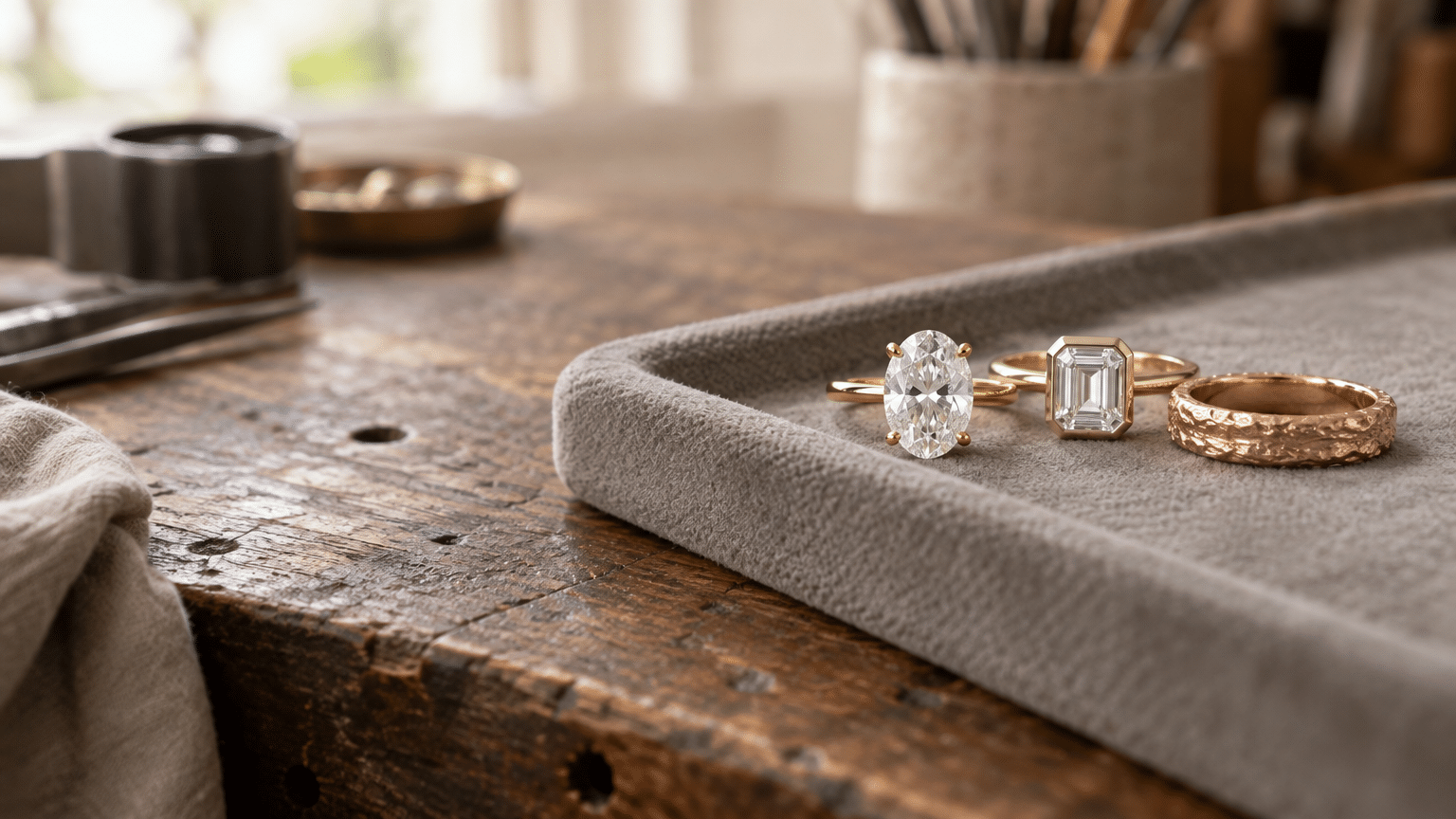
An engagement ring feels personal when its design reflects the wearer’s taste, daily habits, and shared history. A distinctive choice starts with more than a popular stone or setting; it depends on details that carry meaning for the couple. Shape, metal, texture, and proportion all affect the final impression. The clearest path begins with identifying what feels familiar, useful, and genuinely memorable before comparing rings. The first step is to gather those personal clues before examining ring styles.
Start With Personal Clues
Research should clarify preferences, not replace them. A couple can compare proportions, stone shapes, setting height, and metal finishes, then note recurring preferences. Photographs from clothing, architecture, or jewelry can reveal patterns that verbal descriptions miss.
A guide such as Frank Darling can organize those comparisons while keeping wearability, budget, and symbolism in view. Personal notes stop attractive details from becoming disconnected choices. That record also gives a jeweler clearer direction during later discussions.
Choose a Shape With Meaning
The center stone shape sets the ring’s visual character. A round stone creates symmetry, while an oval shape adds length across the finger. An emerald cut emphasizes clean geometry and broad flashes of light.
Personal associations can guide the decision. A couple might choose an oval because it echoes a vintage family ring or select an emerald cut for its architectural lines. The reason behind the shape matters more than following a seasonal preference.
Proportion also affects the result. A slender finger can suit a narrower stone, while a wider band can balance a larger hand. Trying several silhouettes reveals which shape feels natural before a final selection.
Use the Setting to Express Style
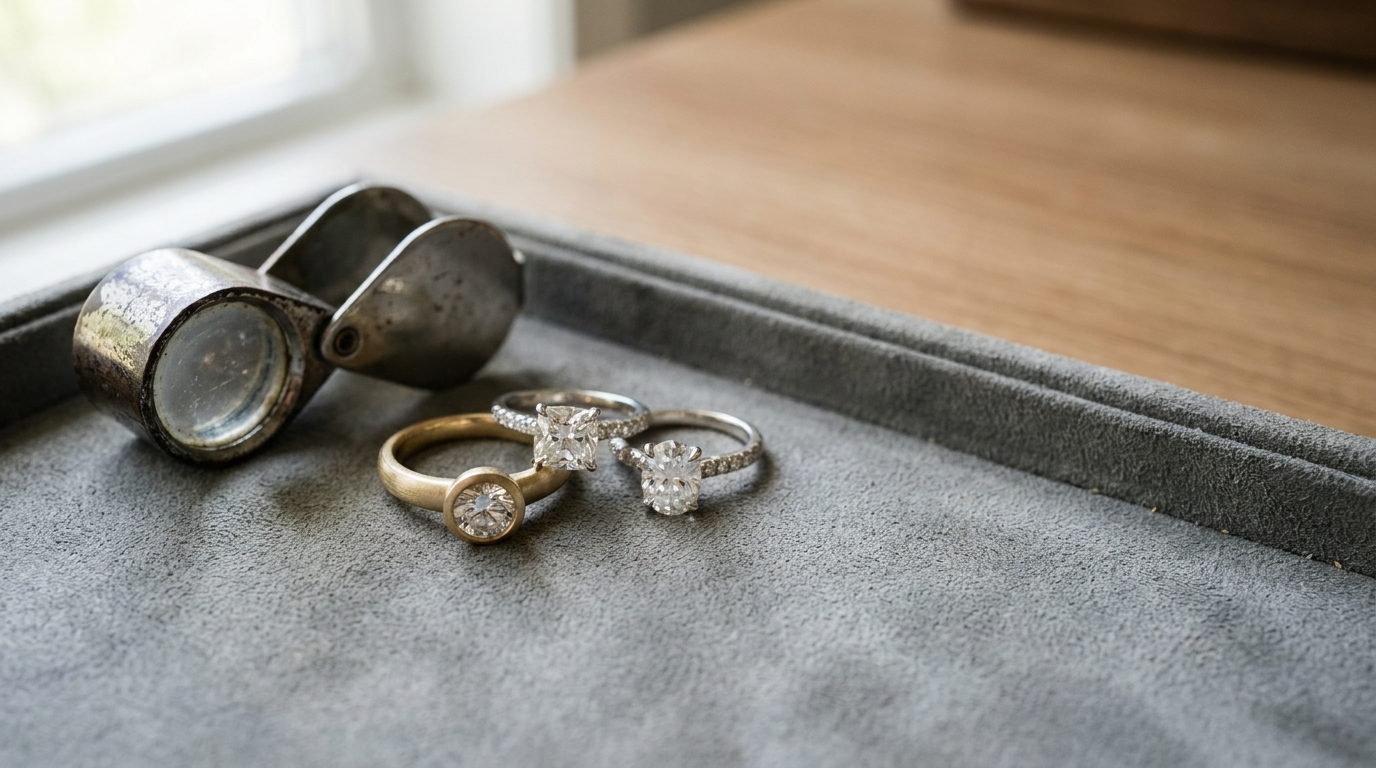
The setting controls how the center stone sits, catches light, and interacts with the band. A low-profile setting suits someone who works with their hands, while a higher setting creates more presence.
A bezel setting surrounds the stone with metal and gives the ring a clean outline. Prong settings expose more of the stone and create a lighter visual effect. East-west placement changes the expected orientation and gives an oval or marquise shape a fresh appearance.
A hidden detail can carry private meaning without changing the ring’s main look. A small engraving, colored accent, or unusual gallery shape gives the wearer something personal to discover.
Select Materials for Daily Life
Metal choice affects color, maintenance, and the way a ring ages. Yellow gold creates warmth, white gold gives a cooler appearance, and rose gold adds a pink-toned surface. The wearer’s existing jewelry can provide a useful reference.
Daily routines should guide the decision. Someone who wears gloves, exercises often, or handles equipment needs a secure setting and a profile that avoids catching. Someone with a desk-based routine can prioritize finer details that require less clearance.
A distinctive ring does not need an unusual material. Texture, a mixed-metal detail, or a polished edge can create separation while keeping the design comfortable and practical.
Balance Originality and Wearability
A personal design should remain comfortable during ordinary activities. The band needs enough width for visual balance, while its interior shape should sit smoothly against the finger. Sharp edges can become irritating during repeated movement.
Distinctive details work best when they support the main design. A split shank, an offset stone, or a sculptural shoulder can add character without making the ring difficult to wear. Too many competing elements can obscure the detail that first attracted the couple.
An engagement ring also needs room for future maintenance. The setting should permit inspection, cleaning, and resizing when appropriate. Asking how each component will age prevents appearance from becoming the only measure.
Build a Clear Decision Process
A short list of engagement rings makes comparisons more useful. The couple can record a preferred stone shape, setting style, metal color, comfort requirement, and one meaningful detail. Each candidate then receives a simple review against those points.
Budget decisions should cover the complete ring, including the center stone, setting, band, and any custom work. A fixed spending limit keeps distinctive details from creating unexpected compromises.
Before choosing, the wearer should try similar shapes and profiles in person whenever possible. Photos show proportions, but a hand reveals comfort, balance, and how the ring fits beside existing jewelry.
Conclusion
A distinctive engagement ring feels personal because its details connect to a real person’s habits, memories, and visual preferences. The most useful process starts with those clues, then tests stone shape, setting, metal, comfort, and long-term care. Couples should write down their top preferences and remove any feature that lacks a clear purpose. That short list gives the final design direction while leaving room for one meaningful detail that makes the ring unmistakably personal.